← Journal/18 May 2026·6 min de lecture
How does CBD oil work? Mechanisms and limits
Par The Phytogrammes team ·
CBD oil interacts with the endocannabinoid system, a network of receptors (CB1, CB2) involved in regulating many physiological functions. Unlike THC, CBD does not bind directly to these receptors: it acts indirectly, by modulating the activity of enzymes and other biological targets. Clinical effects in humans remain insufficiently documented to underpin health claims in France.
The endocannabinoid system in a few words
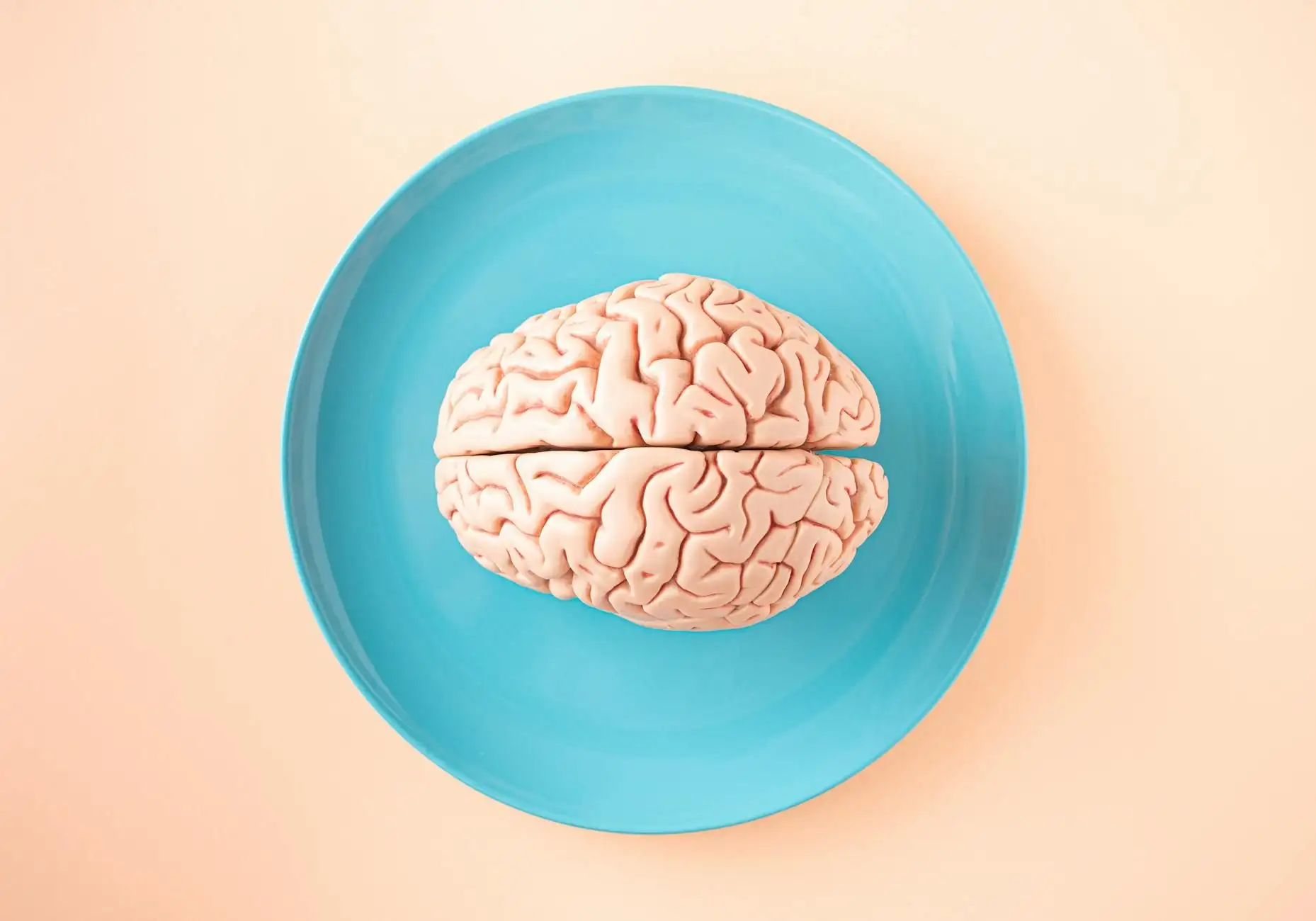
Identified from 1988 onwards, the endocannabinoid system (ECS) is a cellular communication network present throughout the human body. According to Inserm's dossier, it is involved in regulating functions as varied as appetite, sleep, pain, memory, mood, thermoregulation and immune function.
The ECS rests on three elements. First, receptors: CB1, found predominantly in the central nervous system, and CB2, located mainly in immune cells and peripheral organs. Next, endocannabinoids produced by the body: anandamide (AEA) and 2-arachidonoylglycerol (2-AG). Finally, enzymes that synthesise and break down these molecules, notably FAAH (fatty acid amide hydrolase) and MAGL.
CBD and receptors: an indirect interaction
This is where the fundamental difference between CBD and THC plays out.
- THC binds directly, and with strong affinity, to the CB1 receptors of the brain. That binding produces the psychoactive effect characteristic of cannabis: altered perception, euphoria, impaired short-term memory.
- CBD, by contrast, has a very weak affinity for CB1 and CB2. It therefore does not activate the receptors directly. Its action is described as "modulatory": it partially inhibits FAAH (the enzyme that breaks down anandamide), which lets that endogenous endocannabinoid circulate in the body for longer. It also acts on other targets: 5-HT1A serotonergic receptors, TRPV1 receptors, PPAR receptors, GPR55.
It is this plurality of biological targets that explains why research on CBD covers so many fields (anxiety, sleep, pain, inflammation), but also why it is difficult to attribute a precise and reproducible effect to the molecule.
Where does the CBD sold in France come from?
The cannabidiol placed on the market is extracted from hemp varieties listed in the common European catalogue or the official French catalogue, whose THC content in the plant is below 0.30%. The most widespread extraction methods are supercritical CO2 (preserving heat-sensitive compounds, leaving no solvent residue) and ethanol extraction (good yield, a different aromatic profile).
The resulting extract is then diluted in a carrier oil (MCT oil from coconut, hemp oil, olive oil). The final concentration is expressed in mg of CBD per bottle or as a percentage. Compliance with the 0.30% THC threshold in the finished product, set by the Conseil d'État ruling of 29 December 2022, determines whether the product is lawful.
Routes of administration: what they change
The form of the product influences the kinetics of absorption.
- Sublingual route (oil under the tongue, held for 60 to 90 seconds): absorption through the oral mucosa, with an effect felt within 15 to 45 minutes where there is any sensation at all.
- Oral route (capsules, gummies, infusions): passage through the digestive system, a later effect (60 to 120 minutes), a longer duration but lower bioavailability (hepatic first-pass effect).
- Topical route (cosmetics, balms): local action on the skin and surface tissues, with no significant systemic passage.
- Pulmonary route (vaping): a rapid effect (a few minutes), a shorter duration.
What the French and European authorities permit you to say
The mechanism of action set out above, well documented in experimental pharmacology, does not automatically translate into established clinical effects in humans. No French authority (ANSM, HAS, ANSES) has validated a health claim for wellbeing CBD. The EFSA has authorised no claim at European level.
ANSES, in its 2024-2025 opinion, has even raised toxicological concerns, notably about reproductive risk (a proposed CLP classification in category 1B, "presumed toxic for reproduction"). On 9 February 2026 the EFSA published a very low provisionally safe daily dose (0.0275 mg/kg/day, that is roughly 2 mg/day for a 70 kg adult).
In practical terms, a French seller cannot assert that CBD "relieves", "treats", "cures" or "reduces" anything at all. The permitted vocabulary is that of wellbeing: "a relaxation ritual", "a moment of pause", "a relaxation practice", "a complement to a routine".
Precautions
CBD oil remains inadvisable for women who are pregnant, breastfeeding or of childbearing age, for minors and for people undergoing medical treatment. Several drug interactions have been documented, notably with anticoagulants, antiepileptics and certain immunosuppressants. Medical advice is recommended where the two are taken together.
CBD is not a medicine. In the event of medical symptoms, consult a healthcare professional.
Key points
- CBD acts on the endocannabinoid system but does not bind directly to the CB1 and CB2 receptors.
- Its action is indirect: enzymatic modulation (FAAH) and interactions with serotonergic, TRPV1 and PPAR receptors.
- Unlike THC, CBD is not psychoactive.
- No therapeutic claim is authorised in France or in Europe for wellbeing CBD.
- Wellbeing use only, inadvisable for pregnant or breastfeeding women, minors and people undergoing treatment.
FAQ
How long does it take to feel an effect?
That depends on the route: 15 to 45 minutes sublingually, 60 to 120 minutes orally, a few minutes by vaping. The sensations reported are subjective and vary from one person to another.
Is CBD psychoactive?
No. At customary doses, CBD does not produce a psychoactive effect. It is that absence of effect which distinguishes it legally from THC and allows it to be sold in France subject to the threshold condition.
Why do people talk about the "entourage effect"?
The entourage effect is a hypothesis formulated in the 1990s according to which cannabinoids and terpenes would act in synergy. It remains debated and has not been validated by the European health authorities.
Can CBD be combined with medicines?
Several drug interactions have been documented (anticoagulants, antiepileptics, immunosuppressants). Medical advice is essential before combining CBD with a treatment.
To explore our selection compliant with the French framework, [see our catalogue](/categorie-produit).
Sources
Written by the Phytogrammes team
Every article in this journal draws on primary sources (ANSM, EFSA, EUR-Lex, peer-reviewed publications) and on the lab's own practice: batch-by-batch HPLC analyses, measured cannabinoid profiles. Our approach.
Article published on . CBD is not a medicine.
Phytogrammes products that pair well
Further reading
cbd·18 May 2026
How is a CBD oil made? The process explained
From plant to bottle: CO₂ or ethanol extraction, winterisation, decarboxylation - the complete manufacturing process of a CBD oil.

utilisation-cbd·18 May 2026
How to take CBD: oils, gummies and cosmetics
Sublingual, oral or topical, CBD can be taken in several ways. Formats, usual amounts and the French legal framework in 2026.

sommeil·18 May 2026
How to fall asleep faster: the validated levers
Light, temperature, caffeine, evening ritual: the levers the INSV and the HAS regard as the most solid for shortening the time it takes to fall asleep.