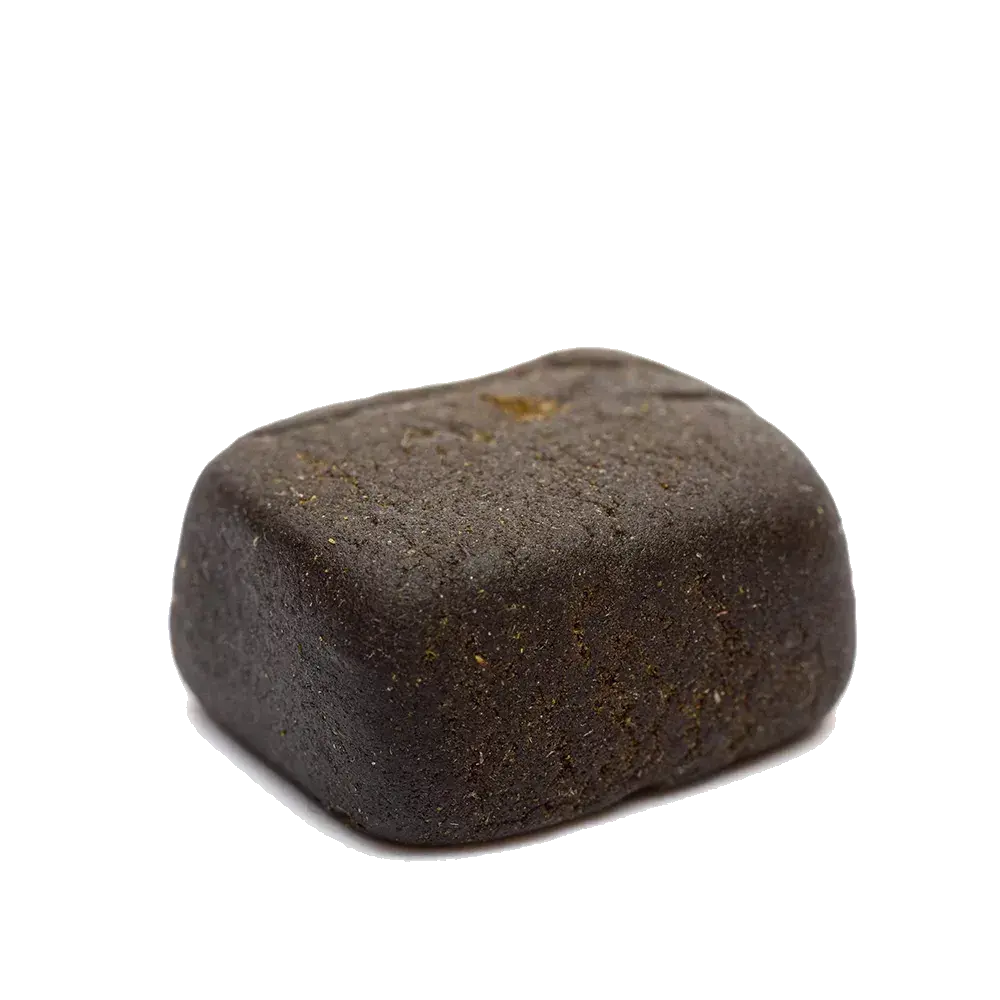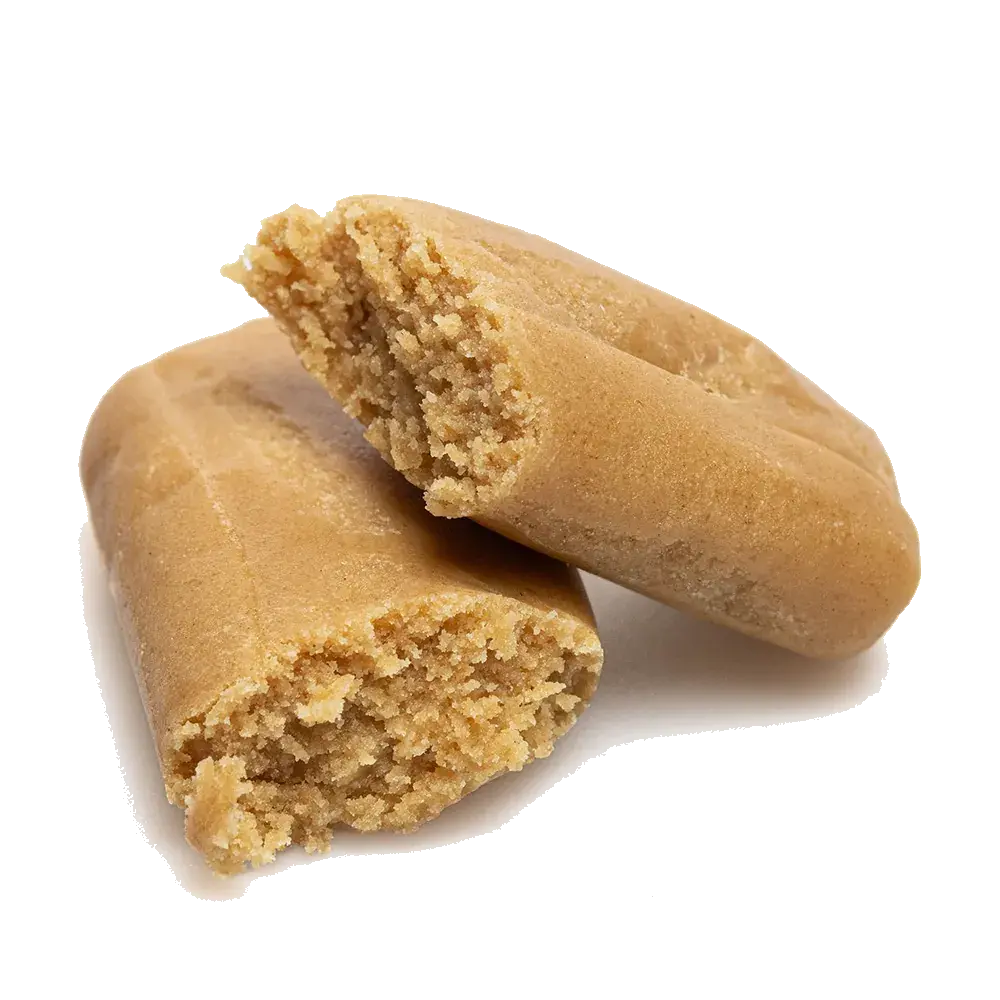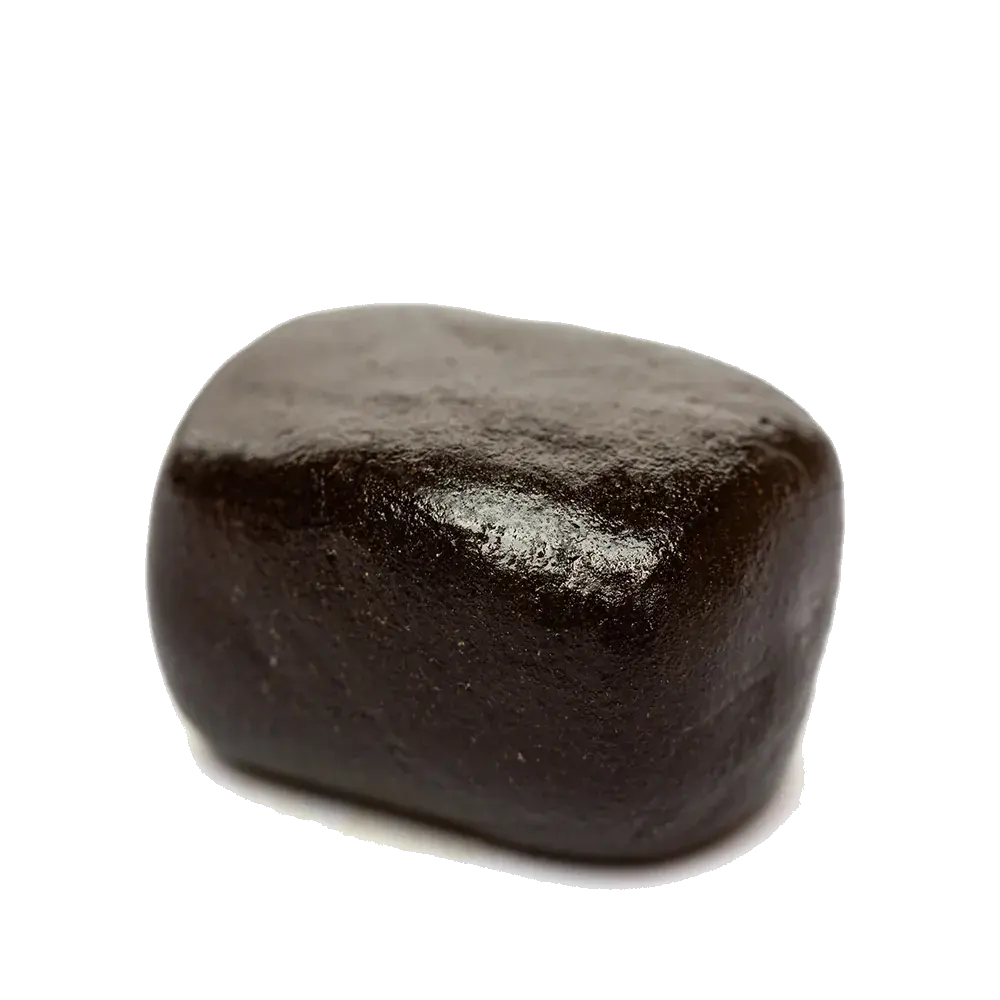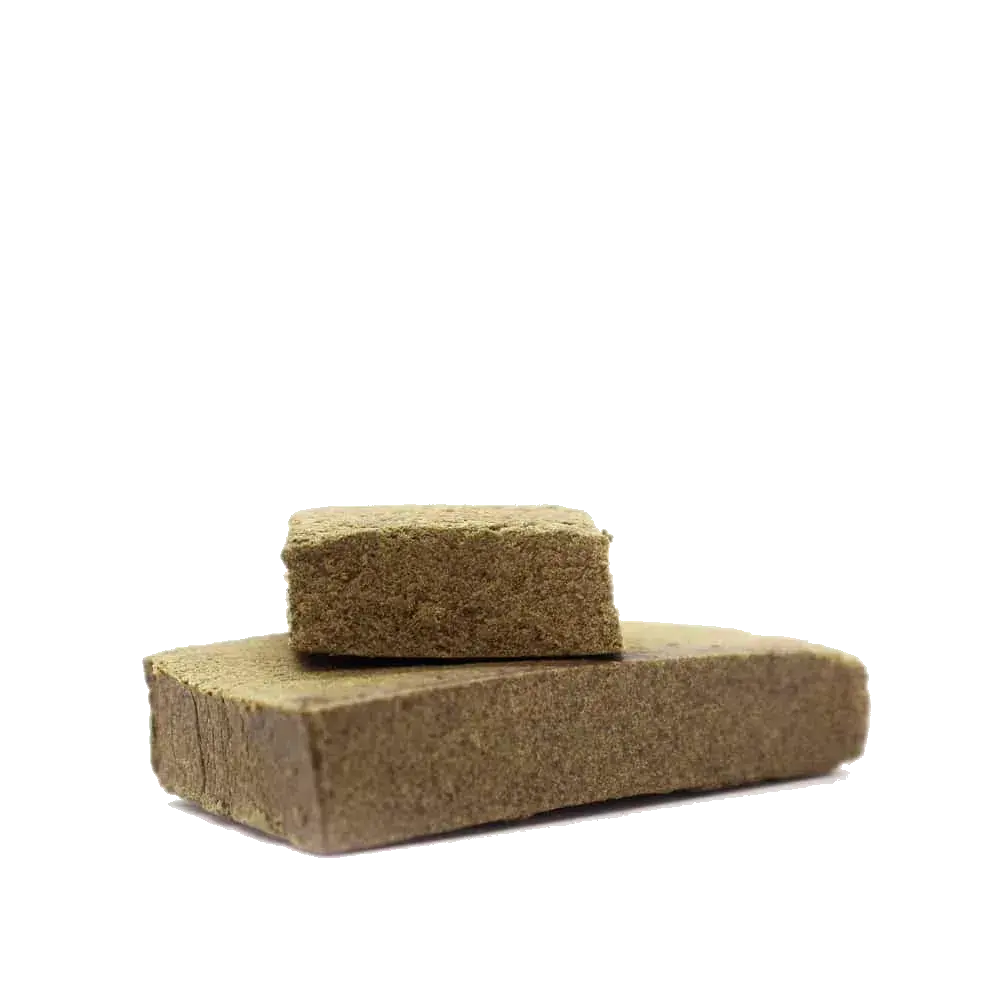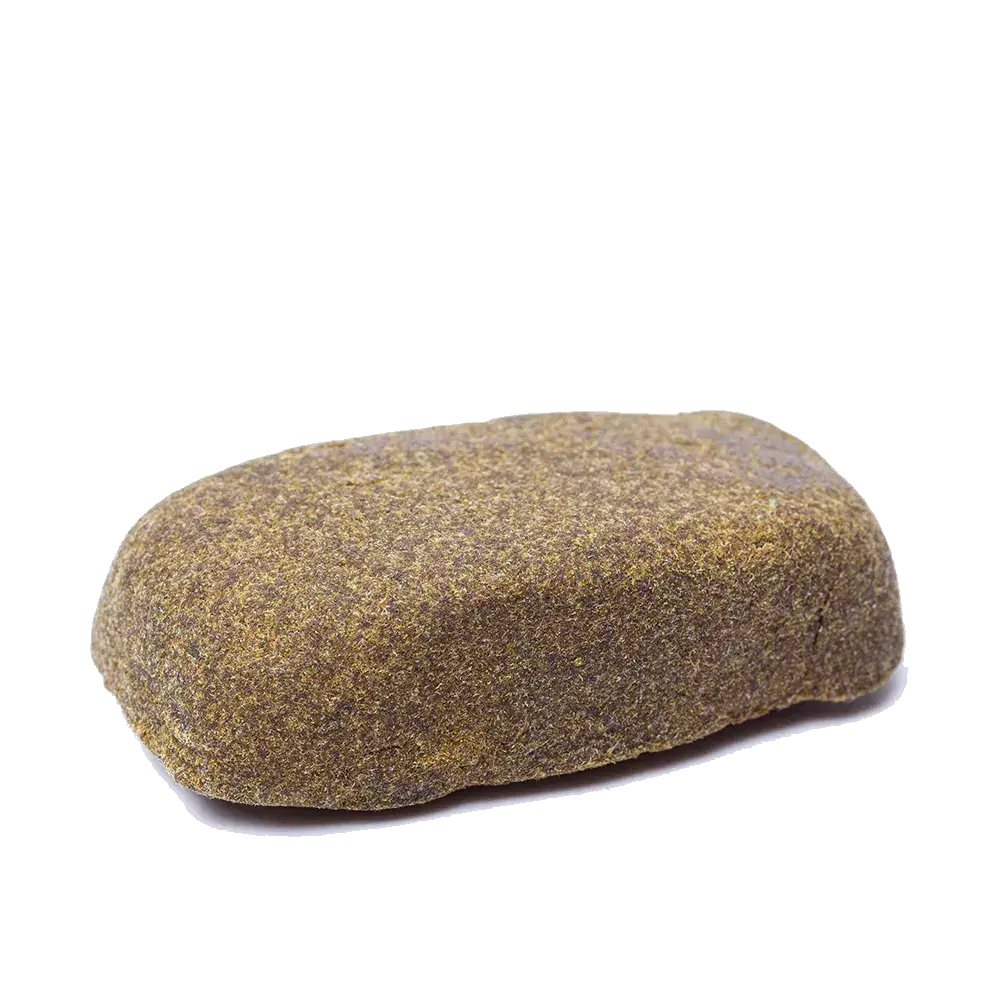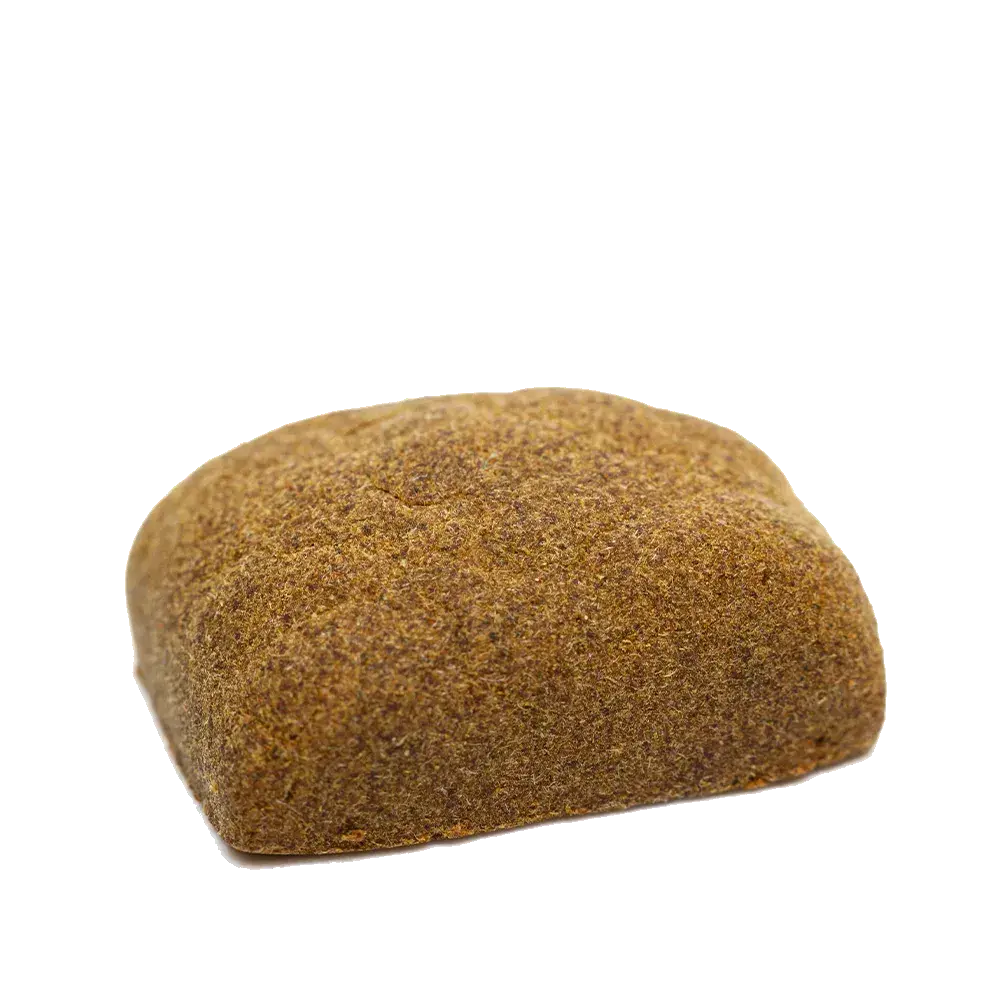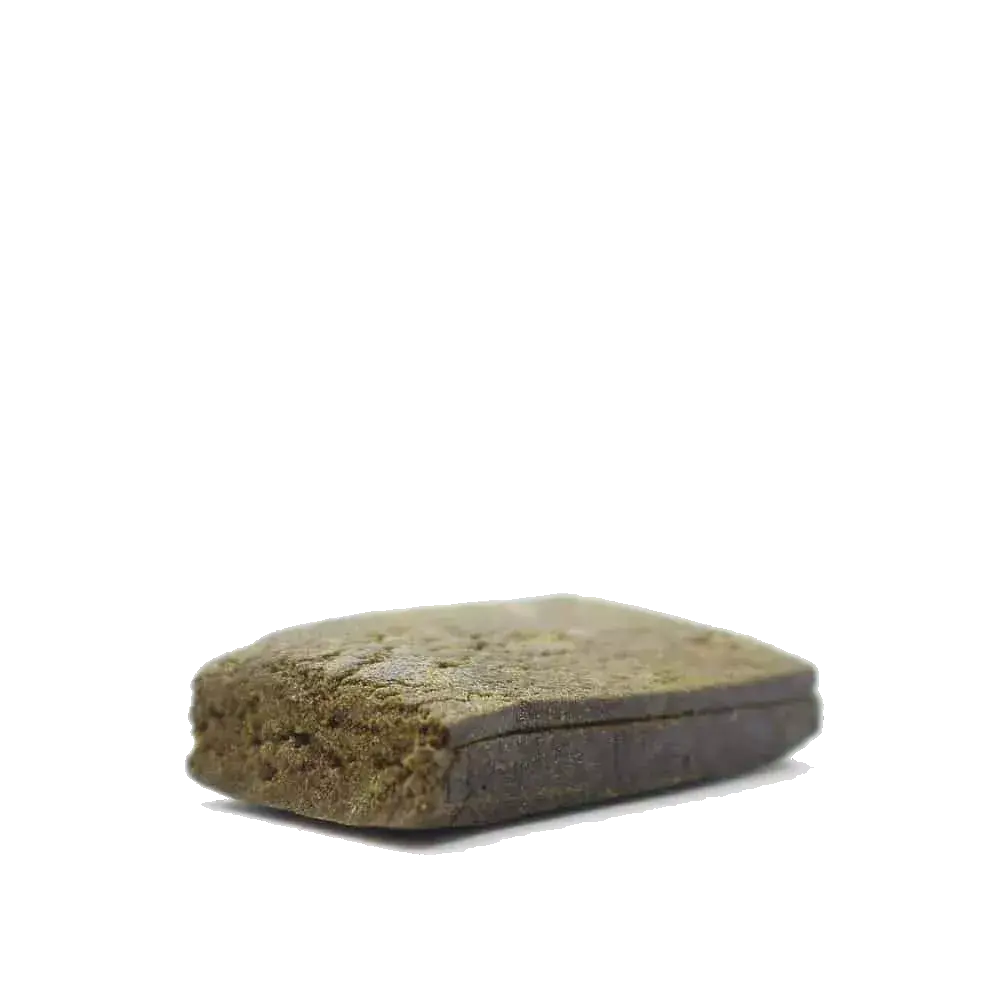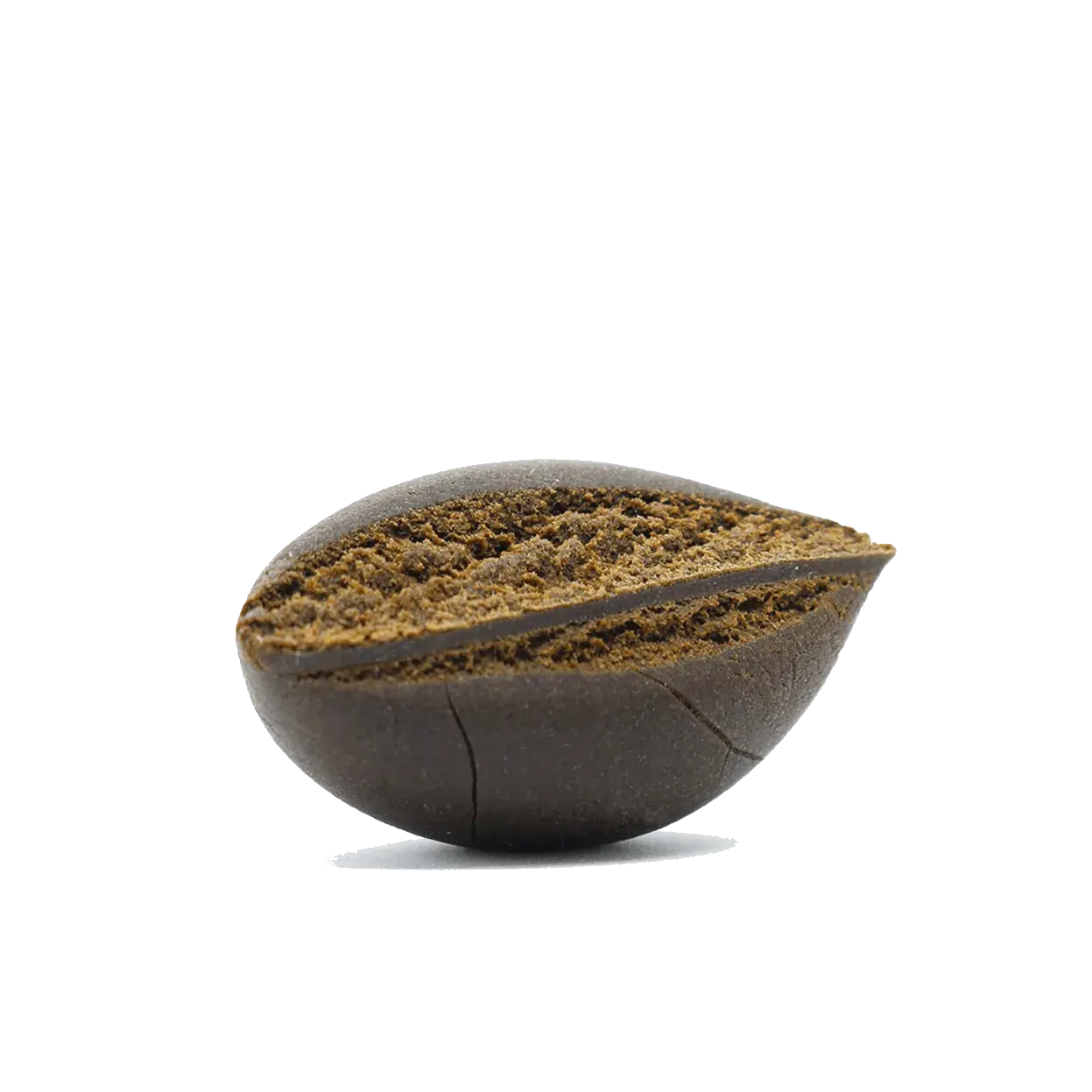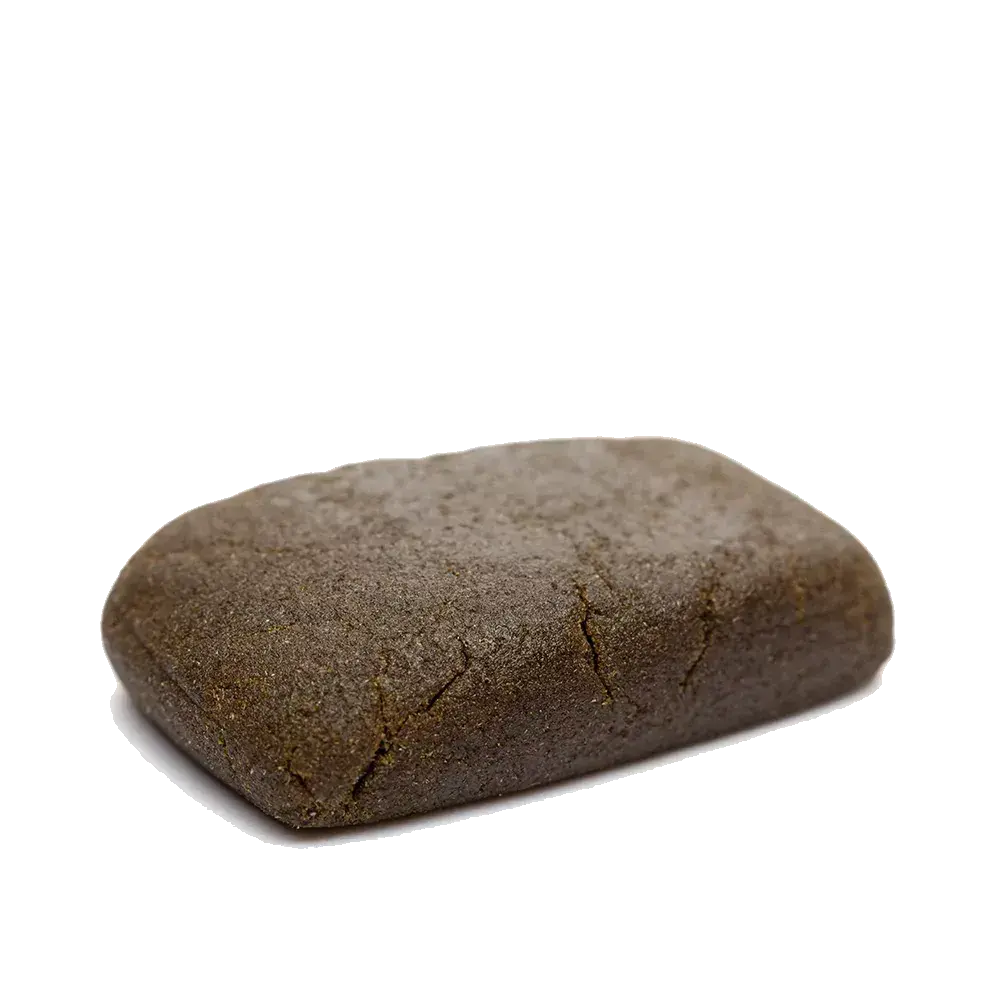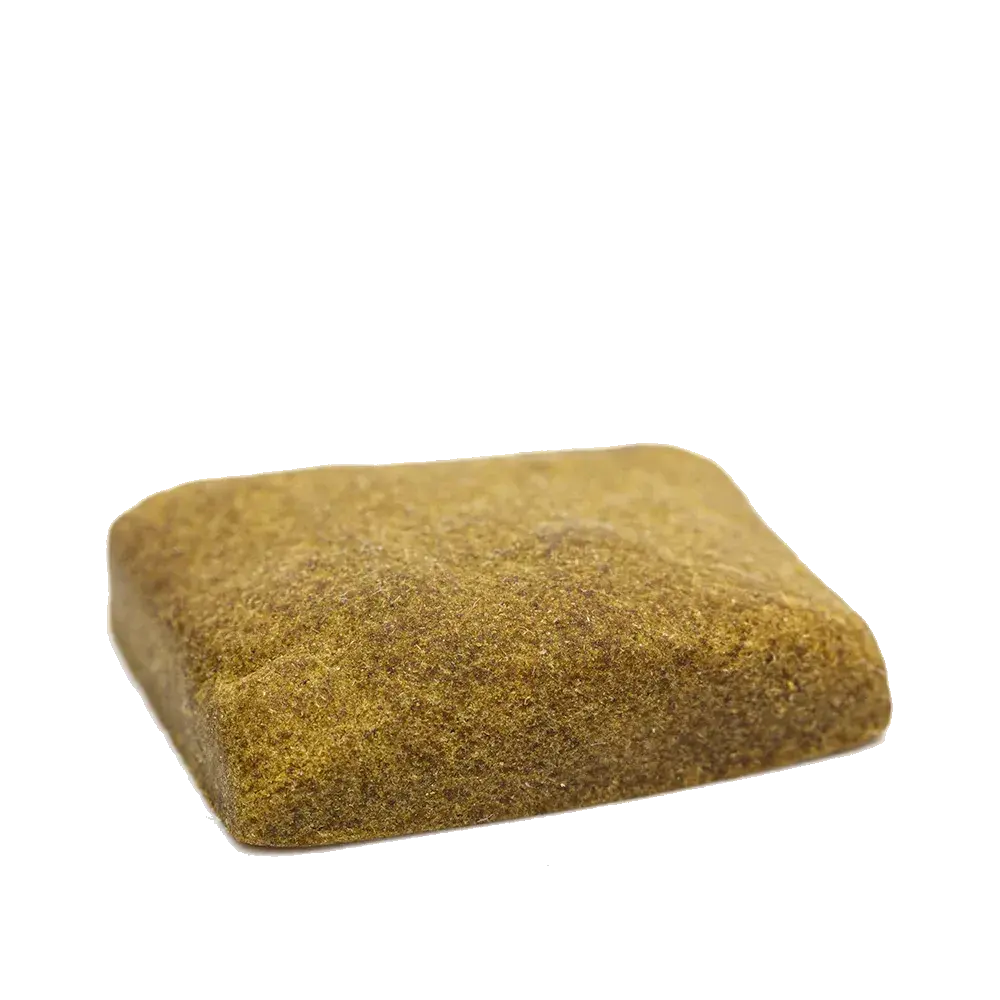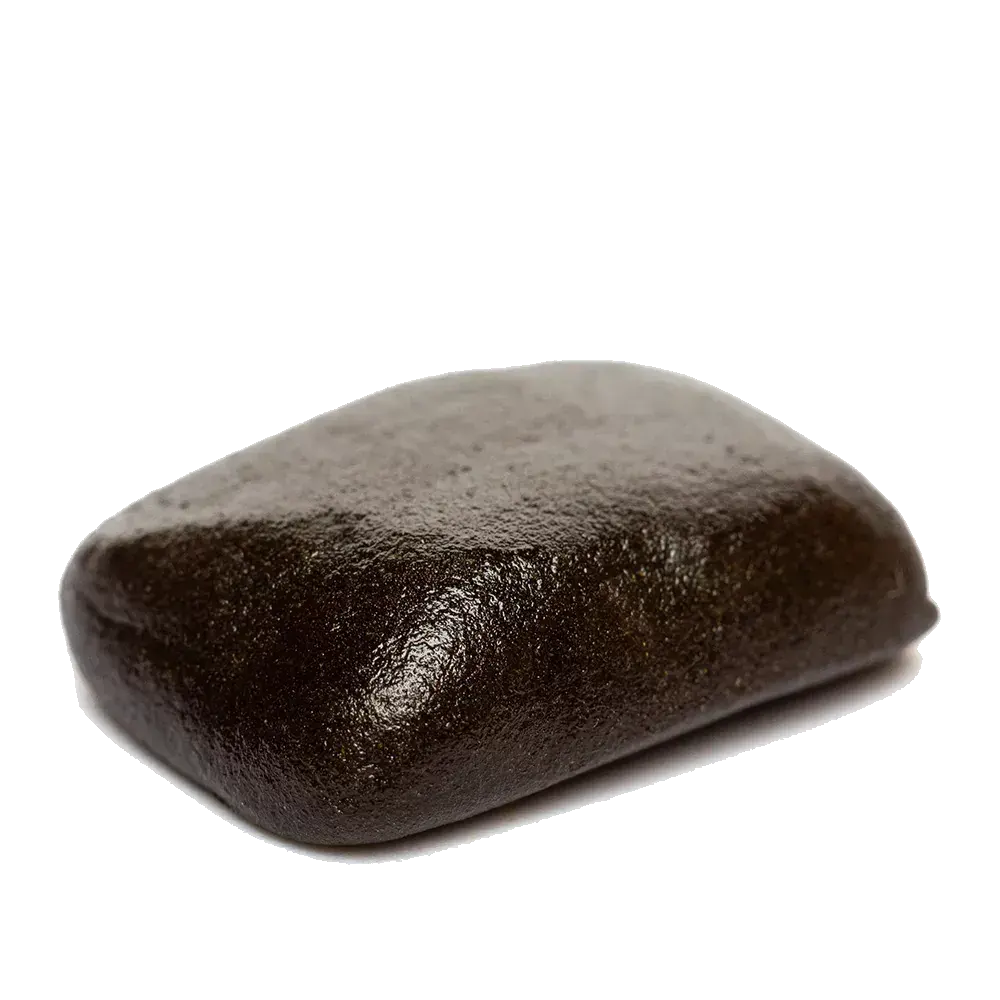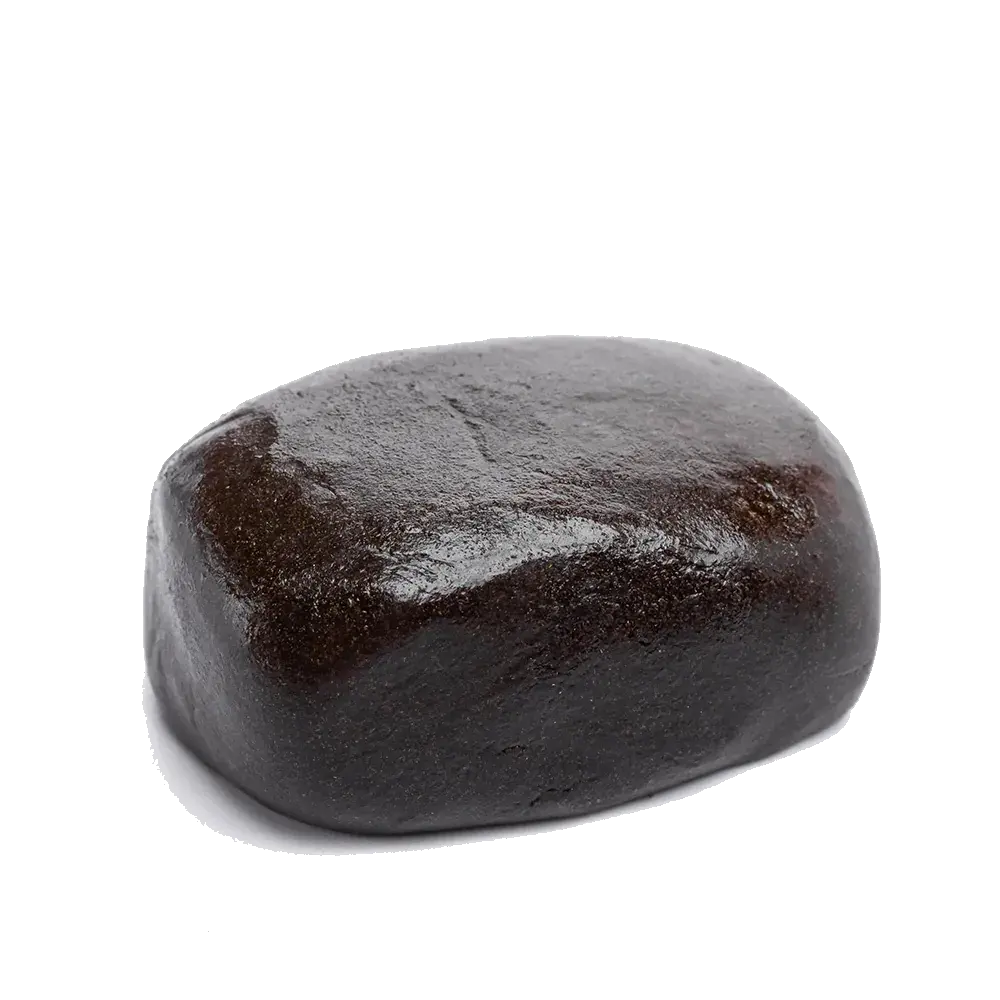
CBG 90µ — CBD 4.22 %
A tropical, sweet terpene profile, cold-water separation method, without solvent.
From€2.02/g
Batch PG-26-83EF4.2 % CBD
Hashs & Extracts from the Phytogrammes catalogue: formats, prices and available traceability information on each product page.
15 references
15 products
Members-only code
It shows here once your account is created. Valid once per customer. Already a member?
A hash's name describes a method first. The method sets the texture, the share of terpenes kept and the price per gram; the cannabinoid level is read on the batch analysis, never on the name. Frozen hash and ice-o-lator are separated in ice water, the first from material frozen at harvest (WPFF), the second from dried flowers sorted through bags of decreasing mesh (120 microns, 45u). Dry sift and static sift are sieved dry, the second with the help of an electrostatic charge. Piattella adds several weeks of cold curing under vacuum. Pressed hashes (beldia, charas) remain the traditional route.
In this family, several products are dominated by CBG rather than CBD: the product title then names the main cannabinoid, and the reference profile details each line. The frozen, piatella, 120u and static comparison sets the methods side by side.
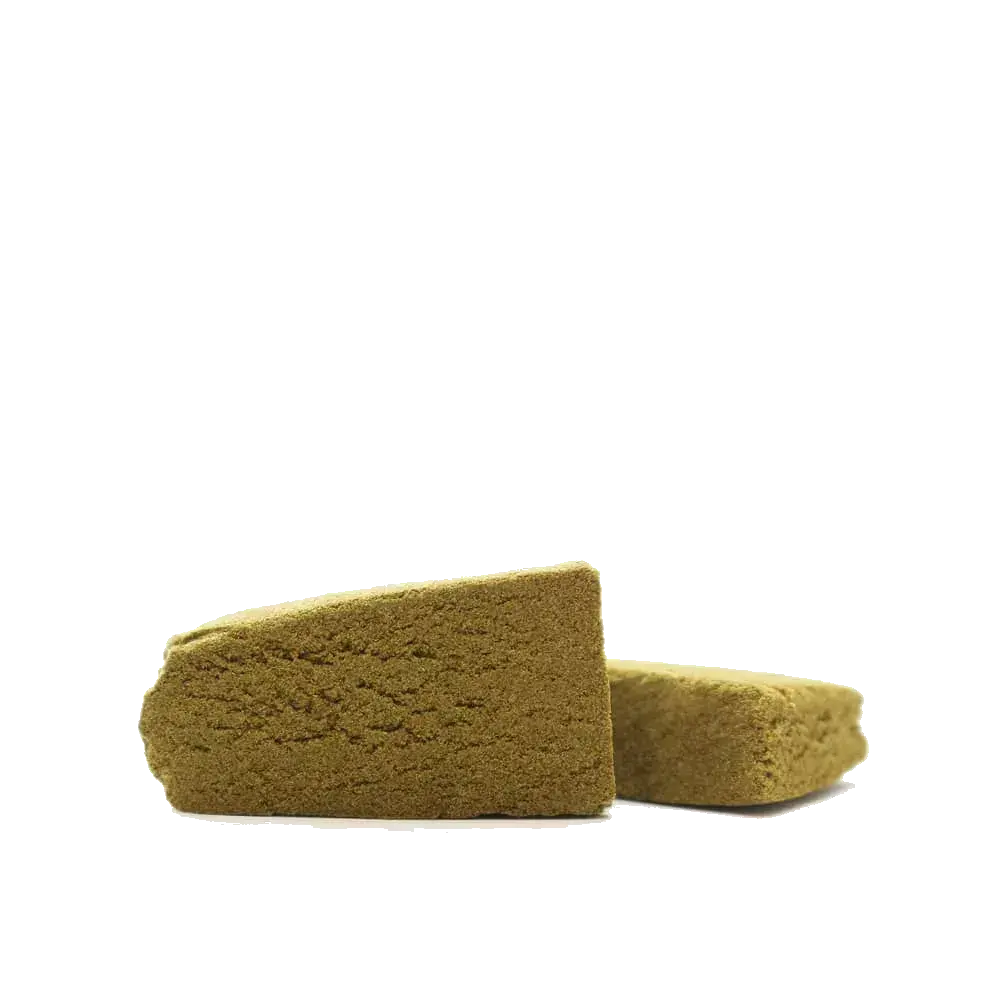
A dry-sieved resin separates the trichomes from the dried flower by passing it over a screen, without water. The resulting powder is called pollen, or kif in Morocco, as long as it stays lightly pressed or unpressed: the word means trichomes, not botanical pollen. Dry sift refines that powder on screens graded in microns; static hash adds a sort by electrostatic charge, which attracts the lighter trichome heads. Dry sieving is also the historical method of Moroccan hash. Among the products, the Drysift 90u belongs to this method.
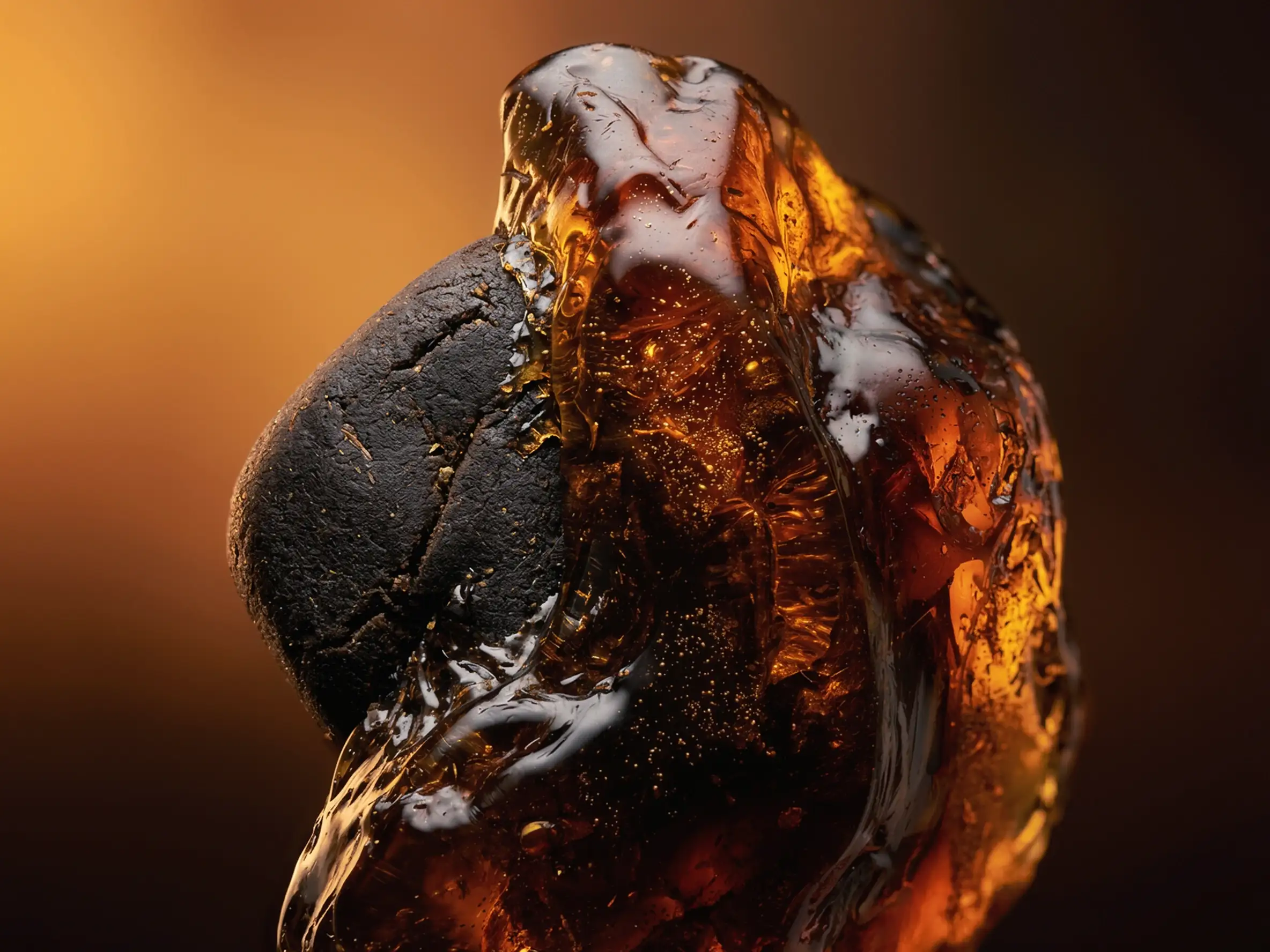
A water-separated resin breaks off trichomes stiffened by the cold in ice water, then sorts them through filter bags of decreasing mesh. On dried flowers, the method gives ice-o-lator or bubble hash; on flowers frozen at harvest, frozen hash. Piattella, also spelled piatella, starts from a washed fraction and adds several weeks of cold curing. Among the products, the Bubble, the Ice-o-lator 120u and the Caramelo 120u are listed as ice-o-lator; the Frozen Hash and the Piatella, as frozen hash.
A pressed hash is a trichome powder compacted into a slab, by hand or with a press: pressing changes the texture and how the resin keeps, not its composition. The word hashish covers all these resins. Beldia, the landrace of the Moroccan Rif, gave its name to the region's sieved and pressed hash; charas is the hand-rubbed resin of the Himalayan valleys. Among the products, the Afghan, cold-separated then hand-pressed according to its product page, is a pressed hash. The 3x filtered hash in the same family carries a declarative label, which the lexicon defines under its Italian name, triplo filtrato; its percentage is a reference value as long as its product page shows “Certificate not published”.
The number gives the opening, in microns, of the screen or filter bag that held the fraction back: each mesh keeps what does not pass and lets the rest through to the next one. The heads of glandular trichomes measure 40 to 110 microns across in the varieties studied by Punja et al. (Journal of Cannabis Research, 2023). In theory, a 120u fraction therefore gathers mostly heads still on their stalks, clumps and plant fragments; a 90u or 73u fraction, more loose heads; a 45u fraction, smaller heads and fragments. A 120u is neither better nor worse than a 45u in absolute terms: they are two fractions of the same wash, and only the batch certificate says which one holds more cannabinoids.
The notation follows no standard: “120u” and “90u-120u” can label the same jar, and a 73u-90u fraction is often sold as the full melt grade. Among the products, the Ice-o-lator 45u, the Drysift 90u and the two 120u resins allow the meshes to be compared, and the hash micron tool places each screen on the 25 to 220 µm scale.
On our product pages, a resin's percentage is a reference value as long as the “Certificate of analysis” line in the “Product traceability” section reads “Not published”; the cannabinoid panel is then titled “Reference cannabinoid profile” and carries the note “Certificate not published”. A hash's name, its micron or its colour cannot replace that document.
A batch certificate is read on four lines: the laboratory and its ISO/IEC 17025 accreditation; the batch number, identical to the one on the pouch; the cannabinoids quantified by HPLC (CBD, CBDA, CBG, Δ⁹-THC); the contaminants, heavy metals by ICP-MS and pesticides by LC-MS/MS. A resin percentage announced without a batch analysis cannot be compared with a measured one. The guide to reading a certificate and our laboratory page explain how.
The price per gram of a resin follows its yield first: the narrower the fraction sought or the longer the work, the less a harvest produces. A narrow mesh, the several weeks of curing a piattella needs or the repeated passes of a 3x filtered hash therefore weigh on the price; on product pages with tiered pricing, the gram then drops at each weight tier. To compare two products, set the price against the content: 15% CBD means 150 mg per gram. On our product pages, that percentage remains a reference value until the batch certificate is published.
Keep it cool, away from light and air, in the original sealed pouch or an opaque glass container. Water-separated resins (frozen, bubble, ice-o-lator, piattella) keep their terpene profile better in the fridge; the target of about 4 °C applies to pressed hashes and pollens too, with stable humidity. A pressed hash that comes out of the fridge too hard becomes workable again after a few minutes at room temperature, packaging closed: tempering a resin that is too hard or too soft.
The French order of 30 December 2021 (0.30% Δ⁹-THC threshold in the finished product), the Conseil d'État ruling no. 444887 of 29 December 2022, sale restricted to adults. Products for adults only, not intended for ingestion. They are not medicines and no property is claimed. The batch number appears on the label; the documents available are listed on the product page.
CBD hash is a hemp resin: the trichomes of the flower, separated mechanically, dry or in ice water, then pressed or left as a powder. It comes from a hemp variety dominated by CBD, or by CBG for some products. Its name gives the separation method; its content is checked on its batch certificate.
Yes, when the product's Δ⁹-THC is strictly below 0.30% and the hemp variety is listed in the EU common catalogue (order of 30 December 2021; Conseil d'État ruling of 29 December 2022). Sale is restricted to adults; our resins are not presented as food.
Three words for the same family: trichomes separated from the flower. “Pollen” refers to the dry-sieved fraction, lightly pressed or unpressed; “hash” and “resin” refer to the pressed fraction, dry or water-separated. On our product pages, the method is written out in full.
The mesh, in microns, of the screen or filter bag that held the fraction back. Glandular trichome heads measure 40 to 110 microns (Punja et al., 2023): in theory, a 120u holds back mostly heads still on their stalks and clumps, a 90u or a 73u more loose heads. The micron tells you about the sorting, not the potency: only a dated certificate of analysis for the batch can verify that.
On four lines: the laboratory, whose accreditation can be checked with the body that issued it; the batch number, identical to the one on the pouch; the quantified cannabinoids (CBD, CBDA, CBG, Δ⁹-THC); the contaminants, heavy metals and pesticides. On our product pages, the “Certificate of analysis” line reads “Not published” as long as no dated certificate is attached to the batch.
Three separation methods: in ice water on material frozen at harvest (frozen), dry with static electricity (static), in water followed by several weeks of cold curing (piatella, or piattella). Texture and terpene profile differ; the THC < 0.30% requirement is the same.
Not necessarily: a product page's percentage is a reference value as long as its “Certificate of analysis” line reads “Not published”. For a published certificate, check that its batch number matches the one printed on the pouch, as well as its date and the issuing laboratory.
Several products in this family are dominated by CBG. The product title then names the main cannabinoid, and the product profile details the values available.
Mostly the yield of the method: a narrow mesh, several weeks of curing or repeated passes reduce the quantity produced and push up the price per gram. To compare two products, set the price against the content, bearing in mind that the percentage on a product page without a published certificate remains a reference value.
Cool, away from light and air, in its original container; water-separated resins are best kept in the fridge, like a fresh product.