
Skip to content
Varieties from the European CatalogueGrown in FranceSlow dryingDispatched within 24 working hours — before noonEU delivery — 24-72 hRight of withdrawal — 14 daysCertificate available — per batch

Canna·wiki: the cannabinoid encyclopaedia

The cannabinoid encyclopaedia.

EncyclopaediaVerified on 1 May 2026

Cannabinoids

Cannabinoids are a group of compounds that bind to the CB1 and CB2 cannabinoid receptors of the endocannabinoid system. Three families are distinguished by origin: the endocannabinoids produced by the body, the phytocannabinoids synthesised by Cannabis sativa, and synthetic cannabinoids. The reference critical inventory lists close to 150 of plant origin.[1] (reference 1)

In brief

Families
3endogenous, plant, synthetic
Receptors
CB1 · CB2G-protein coupled
Phytocannabinoids recorded
≈ 150
THC structure elucidated
1964Gaoni & Mechoulam
Legal threshold in France
< 0,3 %of Δ⁹-THC

Definition

A cannabinoid is a molecule able to activate the cannabinoid receptors, chiefly CB1 and CB2, two G protein-coupled receptors. The term gathers compounds of very different structures and origins, joined by this single pharmacological property: recognising the same target.[1] (reference 1) The chemical boundary of the group remains debated, the reference inventory proposing a biogenetic rather than a purely structural definition.[1] (reference 1)

Phytogenic cannabinoids

Phytocannabinoids are produced by Cannabis sativa, which accumulates them mainly in the trichomes of the flower heads. The structure of Δ⁹-tetrahydrocannabinol (THC), the main psychotropic compound, was elucidated in 1964 by Yehiel Gaoni and Raphael Mechoulam at the Weizmann Institute; the same work also described cannabidiol (CBD).[2] (reference 2) Close to 150 phytocannabinoids have since been recorded, at very unequal concentrations. A few dominate the profile of a given chemotype: THC and CBD, but also CBG, CBN, CBC or THCV.[1] (reference 1)

The plant does not synthesise THC or CBD directly. It first produces a common precursor, cannabigerolic acid (CBGA), often called the "mother molecule". Three synthases (THCA-, CBDA- and CBCA-synthase) convert it into THCA, CBDA and CBCA acids respectively, the forms actually present in the fresh plant.[1] (reference 1) These acid forms are almost inactive at CB1. It is decarboxylation, the loss of a carboxyl group (−CO₂) under heat (slow drying, combustion, cooking), that turns THCA into THC and CBDA into CBD. CBN is not synthesised by the plant: it results from the slow oxidation of THC, which makes it a marker of ageing.

CBGATHCA-synthaseTHCAΔ · heatTHC
From the “mother molecule” (CBGA) to THC: a synthase sets the acid form, heat decarboxylates it.

Endocannabinoid system

If the plant acts on humans, it is because the body already carries the system. The CB1 receptor was cloned in 1990; it is densely expressed in the central nervous system, where it modulates neurotransmitter release.[3] (reference 3) The CB2 receptor, identified in 1993, is carried above all by immune cells and peripheral tissues.[4] (reference 4)

The endogenous ligands of these receptors are the endocannabinoids. Anandamide (AEA), the first to be identified, was isolated in 1992 from pig brain; its name comes from the Sanskrit ananda, "bliss".[5] (reference 5) The second, 2-arachidonoylglycerol (2-AG), was described in 1995.[6] (reference 6) These lipids are not stored but synthesised on demand, then rapidly degraded: FAAH hydrolyses anandamide, MAGL hydrolyses 2-AG.

At the synapse they operate by retrograde signalling: released by the post-synaptic neuron, they travel back to the pre-synaptic neuron to curb neurotransmitter release there.[7] (reference 7) The system thus takes part in the modulation of pain, mood, appetite, memory, sleep and inflammation. Anandamide also activates the TRPV1 receptor, which places it at the boundary between endocannabinoids and endovanilloids.

“If the plant acts on us, it is because the body already carried the system.”

Synthetic & semi-synthetic

Synthetic cannabinoids are agonists designed in the laboratory (the JWH series of the chemist John W. Huffman, the HU series of the Hebrew University of Jerusalem, or CP), originally as pharmacological tools for mapping the receptors. Diverted into herbal smoking mixtures ("Spice", "K2"), they show an affinity that is often far higher than that of THC and a distinct toxicological profile, and have caused poisonings that are sometimes severe.

“Often far greater affinity than THC, for a distinct toxicological profile.”

Semi-synthetic cannabinoids, for their part, are obtained by chemical modification of a plant cannabinoid: hydrogenation of THC for hexahydrocannabinol (HHC), acetylation for THC-O. Recent arrivals on the market, several have since been the subject of scheduling measures (see Legal status).

Production by genetic engineering

The complete cannabinoid biosynthesis pathway has been reconstituted in the yeast Saccharomyces cerevisiae: from a simple sugar (galactose), modified strains produce CBGA, then THCA, CBDA and their short-chain homologues (THCVA, CBDVA), as well as analogues that do not exist in nature when the yeast is fed other fatty acids.[8] (reference 8) The main technical obstacle, making the THCAS and CBDAS synthases work in yeast, was removed by addressing them to the vacuole of the cell. The benefit: controlled production, with no plant growing and no extraction.

Under French law, CBD is not a narcotic. On 29 December 2022 the Conseil d'État annulled the order of 30 December 2021 which banned the sale in raw form of cannabis flowers and leaves low in THC, holding that a general and absolute ban was disproportionate.[9] (reference 9) Products whose Δ⁹-THC content stays below 0.3% are deemed free of narcotic properties; only varieties listed in the European Catalogue may be grown.

The framework nevertheless changes molecule by molecule. Because of the risks they present, the ANSM added HHC and several semi-synthetic cannabinoids to the narcotics list with effect from 3 June 2024.[10] (reference 10) A cannabinoid that is legal today may therefore be scheduled tomorrow: the status is always read compound by compound.

References

  1. 1.Hanuš L. O., Meyer S. M., Muñoz E., Taglialatela-Scafati O., Appendino G. « Phytocannabinoids: a unified critical inventory. » Natural Product Reports 33, 1357–1392 (2016).
  2. 2.Gaoni Y., Mechoulam R. « Isolation, structure, and partial synthesis of an active constituent of hashish. » Journal of the American Chemical Society 86, 1646–1647 (1964).
  3. 3.Matsuda L. A. et al. « Structure of a cannabinoid receptor and functional expression of the cloned cDNA. » Nature 346, 561–564 (1990).
  4. 4.Munro S., Thomas K. L., Abu-Shaar M. « Molecular characterization of a peripheral receptor for cannabinoids. » Nature 365, 61–65 (1993).
  5. 5.Devane W. A. et al. « Isolation and structure of a brain constituent that binds to the cannabinoid receptor. » Science 258, 1946–1949 (1992).
  6. 6.Mechoulam R. et al. « Identification of an endogenous 2-monoglyceride, present in canine gut, that binds to cannabinoid receptors. » Biochemical Pharmacology 50, 83–90 (1995).
  7. 7.Wilson R. I., Nicoll R. A. « Endogenous cannabinoids mediate retrograde signalling at hippocampal synapses. » Nature 410, 588–592 (2001).
  8. 8.Luo X. et al. « Complete biosynthesis of cannabinoids and their unnatural analogues in yeast. » Nature 567, 123–126 (2019).
  9. 9.Conseil d’État, 1ère–4ème ch. réunies, 29 décembre 2022, n° 444887, annulation de l’arrêté du 30 décembre 2021.
  10. 10.ANSM. « L’ANSM inscrit de nouveaux cannabinoïdes sur la liste des stupéfiants » : HHC et dérivés semi-synthétiques, à compter du 3 juin 2024.

Index of molecules.
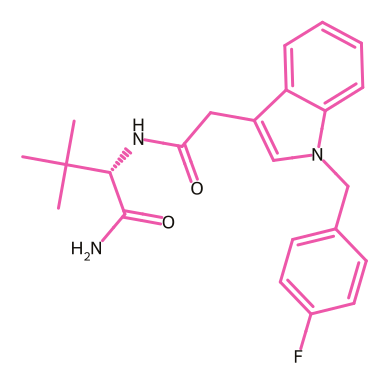
One entry per molecule: structure, targets, affinity, French legal status. From the plant's phytocannabinoids (THC, CBD and their acids CBDA, THCA) to the endocannabinoids the body makes, down to the pharmacological tools used to study them.

374 molecules

A → Z
  • A60
  • SCRA
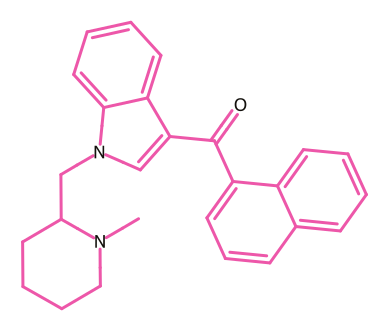
    2D chemical structure of (+/-)-AM-2233

    (+/-)-AM-2233

    (+/-)-AM-2233

    A synthetic cannabinoid, a full CB1 agonist: a laboratory tracer diverted into a smoking product.

    C₂₂H₂₃IN₂O

    Narcotic: named in schedule
  • SCRA
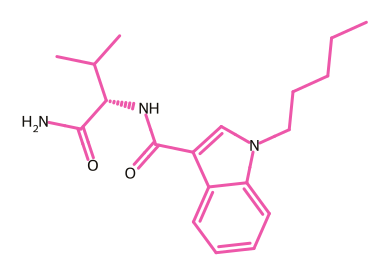
    2D chemical structure of (±)-ADBICA

    (±)-ADBICA

    (±)-ADBICA

    A synthetic cannabinoid agonist at CB1 and CB2, a narcotic in France, with no human data.

    C₂₀H₂₉N₃O₂

    Narcotic: generic clause
  • Endogenous
    2D chemical structure of 1-arachidonoylglycerol

    1-arachidonoylglycerol

    1-AG

    Spontaneous isomer of 2-AG: weaker CB1 agonist, TRPV1 activator, with no human data.

    C₂₃H₃₈O₄

    Endogenous
  • Endogenous
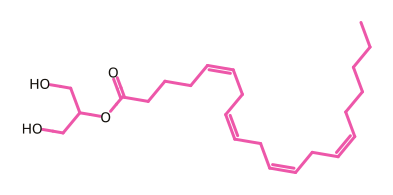
    2D chemical structure of 2-Arachidonoylglycerol

    2-Arachidonoylglycerol

    2-AG

    The principal endocannabinoid by brain concentration, a full CB1/CB2 agonist. Target of the MAGL inhibitors in clinical development.

    C₂₃H₃₈O₄

    Endogenous
  • Endogenous
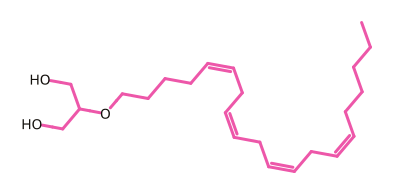
    2D chemical structure of Noladin ether

    Noladin ether

    2-AGE

    The ether analogue of 2-AG, a nanomolar CB1 agonist; endogenous status debated, no human data.

    C₂₃H₄₀O₃

    Unscheduled
  • SCRA
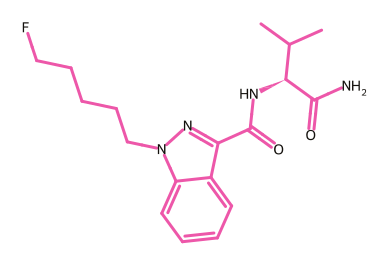
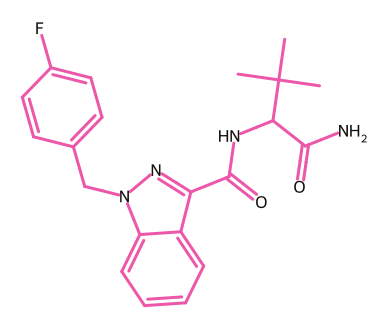
    2D chemical structure of 5F-AB-PINACA

    5F-AB-PINACA

    5F-AB-PINACA

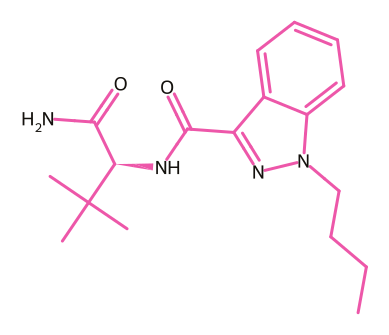
    Very potent synthetic cannabinoid, convulsant in animals; a listed narcotic in France.

    C₁₈H₂₅FN₄O₂

    Narcotic: named in schedule
  • SCRA
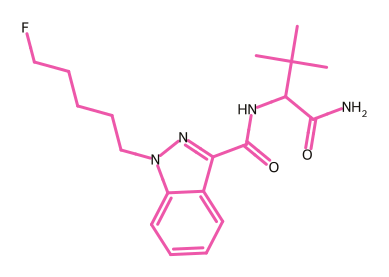
    2D chemical structure of 5F-ADB-PINACA

    5F-ADB-PINACA

    5F-ADB-PINACA

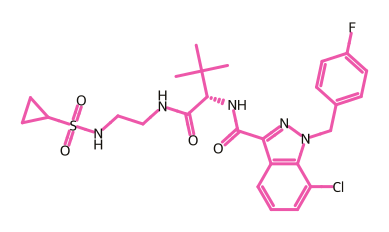
    A fluorinated indazole carboxamide with a tert-leucinamide chain, the most potent at CB1 in its series, classified as a narcotic in France.

    C₁₉H₂₇FN₄O₂

    Narcotic: named in schedule
  • SCRA
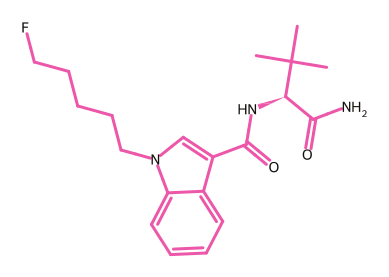
    2D chemical structure of 5F-ADBICA

    5F-ADBICA

    5F-ADBICA

    Fluorinated indole carboxamide with a tert-leucinamide chain, a high-potency agonist, a narcotic in France by generic clause.

    C₂₀H₂₈FN₃O₂

    Narcotic: generic clause
  • SCRA
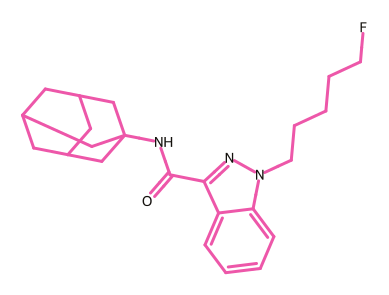
    2D chemical structure of 5F-AKB-48 (5F-APINACA)

    5F-AKB-48 (5F-APINACA)

    5F-AKB-48

    A synthetic cannabinoid, a full agonist at CB1 and CB2, classified as a narcotic and toxic.

    C₂₃H₃₀FN₃O

    Narcotic: generic clause
  • SCRA
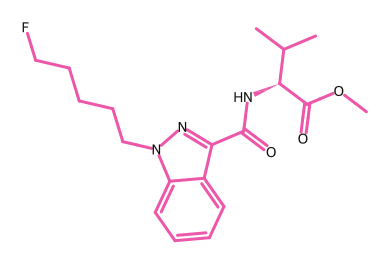
    2D chemical structure of 5F-AMB

    5F-AMB

    5F-AMB

    Synthetic cannabinoid of smoking mixtures, full CB1 agonist, three documented deaths.

    C₁₉H₂₆FN₃O₃

    Narcotic: named in schedule
  • ECS tool
    2D chemical structure of A-40174

    A-40174

    A-40174

    A nitrogen-containing synthetic cannabinoid from Abbott, studied in animals in the 1970s, never marketed.

    C₂₆H₃₇NO₂

    Unscheduled
  • ECS tool
    2D chemical structure of A-41988

    A-41988

    A-41988

    A synthetic azacannabinoid from Abbott, studied in the 1970s and then abandoned.

    C₂₈H₃₂FNO₂

    Unscheduled
  • ECS tool
    2D chemical structure of A-796260

    A-796260

    A-796260

    Selective CB2 receptor agonist designed in the laboratory, with no human data at all.

    C₂₂H₃₀N₂O₂

    Narcotic: generic clause
  • SCRA
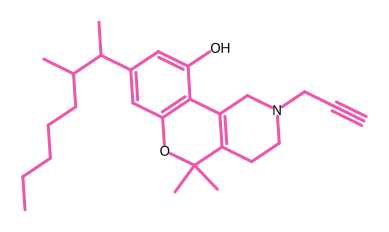
    2D chemical structure of A-834735

    A-834735

    A-834735

    A full synthetic agonist of CB1 and CB2, classified as a narcotic in France, with no human data at all.

    C₂₂H₂₉NO₂

    Narcotic: named in schedule
  • SCRA
    2D chemical structure of A-836,339

    A-836,339

    A-836,339

    A synthetic agonist selective for the CB2 receptor, a laboratory tool, scheduled as a narcotic in France.

    C₁₆H₂₆N₂O₂S

    Narcotic: named in schedule
  • SCRA
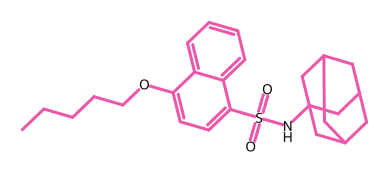
    2D chemical structure of A-PONASA

    A-PONASA

    A-PONASA

    A sulfonamide-bridged synthetic cannabinoid that appeared in 2021; pharmacology unstudied.

    C₂₅H₃₃NO₃S

    Unscheduled
  • ECS tool
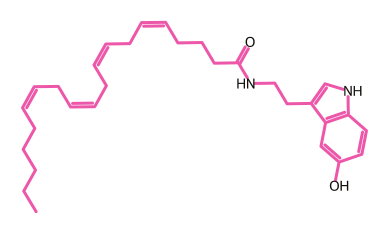
    2D chemical structure of N-arachidonoylserotonin

    N-arachidonoylserotonin

    AA-5-HT

    A mixed FAAH and TRPV1 blocker, a reference tool at the intersection of the cannabinoid and vanilloid systems.

    C₃₀H₄₂N₂O₂

    Unscheduled
  • ECS tool
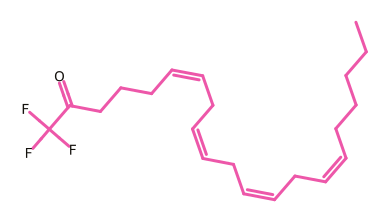
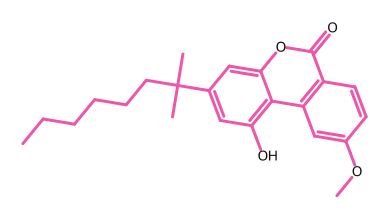
    2D chemical structure of Arachidonoyl trifluoromethyl ketone

    Arachidonoyl trifluoromethyl ketone

    AACOCF3

    A laboratory reagent: it inhibits cPLA2 and FAAH, binds to CB1, no human data.

    C₂₁H₃₁F₃O

    Unscheduled
  • SCRA
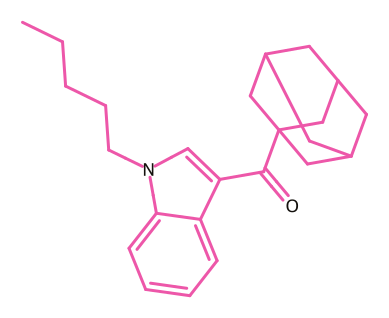
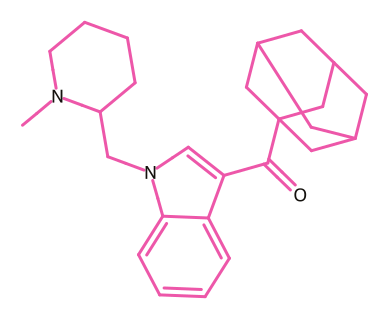
    2D chemical structure of AB-001

    AB-001

    AB-001

    An adamantoyl synthetic cannabinoid, a full CB1 agonist, scheduled by name as a narcotic in France.

    C₂₄H₃₁NO

    Narcotic: named in schedule
  • SCRA
    2D chemical structure of AB-005

    AB-005

    AB-005

    A synthetic cannabinoid with a CB2 preference, classified as a narcotic in France; human data are lacking.

    C₂₃H₃₂N₂O

    Narcotic: named in schedule
  • SCRA
    2D chemical structure of AB-CHFUPYCA

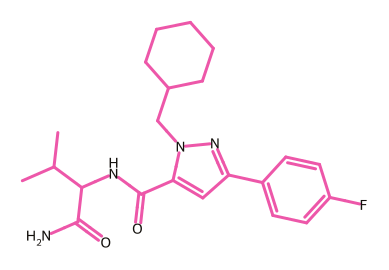
    AB-CHFUPYCA

    AB-CHFUPYCA

    A synthetic cannabinoid with a pyrazole core, very weakly active at CB1 in vitro; no human data.

    C₂₂H₂₉FN₄O₂

    Narcotic: named in schedule
  • SCRA
    2D chemical structure of AB-CHMINACA

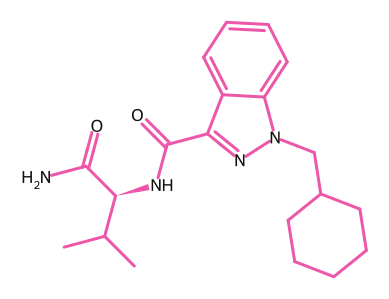
    AB-CHMINACA

    AB-CHMINACA

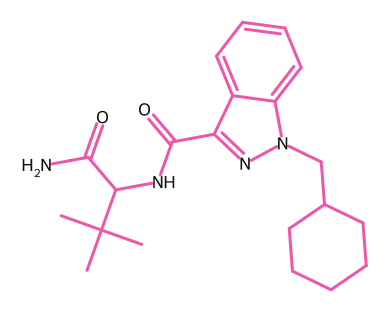
    A synthetic cannabinoid, a full CB1 agonist, associated with convulsions and with deaths.

    C₂₀H₂₈N₄O₂

    Narcotic: named in schedule
  • SCRA
    2D chemical structure of AB-FUBICA

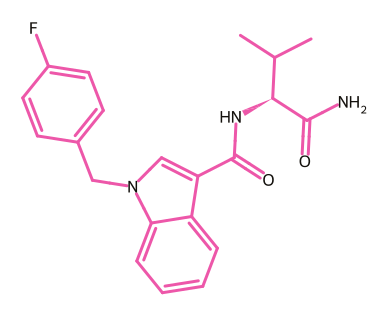
    AB-FUBICA

    AB-FUBICA

    A synthetic CB1 agonist never tested in the laboratory: a high-risk class, with no human data.

    C₂₁H₂₂FN₃O₂

    Narcotic: generic clause
  • SCRA
    2D chemical structure of AB-FUBINACA

    AB-FUBINACA

    AB-FUBINACA

    Synthetic full CB1 agonist, with no human use: severe poisonings documented.

    C₂₀H₂₁FN₄O₂

    Narcotic: named in schedule
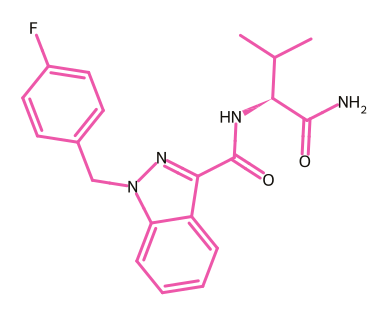
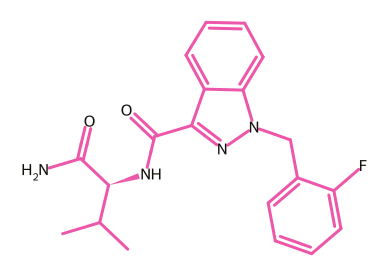
  • SCRA
    2D chemical structure of AB-FUBINACA 2-fluorobenzyl isomer

    AB-FUBINACA 2-fluorobenzyl isomer

    AB-FUBINACA 2-fluorobenzyl isomer

    Synthetic cannabinoid, positional isomer of AB-FUBINACA. Pharmacology undocumented.

    C₂₀H₂₁FN₄O₂

    Narcotic: generic clause
  • SCRA
    2D chemical structure of AB-PICA

    AB-PICA

    AB-PICA

    A synthetic cannabinoid and full CB1 agonist: a narcotic in France, with no human data available.

    C₁₉H₂₇N₃O₂

    Narcotic: generic clause
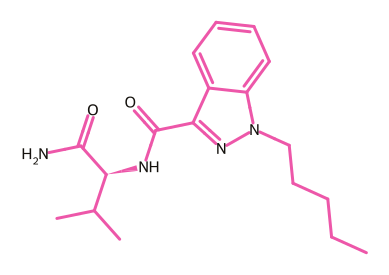
  • SCRA
    2D chemical structure of AB-PINACA

    AB-PINACA

    AB-PINACA

    Full CB1 and CB2 agonist of the PINACA class, associated with seizures and severe poisonings.

    C₁₈H₂₆N₄O₂

    Narcotic: named in schedule
  • ECS tool
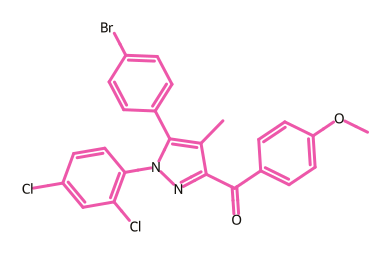
    2D chemical structure of ABD459

    ABD459

    ABD459

    A neutral antagonist at the CB1 receptor, a preclinical research tool with no human data.

    C₂₄H₁₇BrCl₂N₂O₂

    Unscheduled
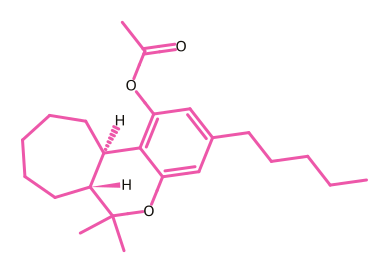
  • Semi-synth.
    2D chemical structure of abeo-HHC acetate

    abeo-HHC acetate

    abeo-HHC acetate

    The acetate ester of a ring-expanded HHC, described in 1984: no published pharmacological data.

    C₂₃H₃₄O₃

    Narcotic: generic clause
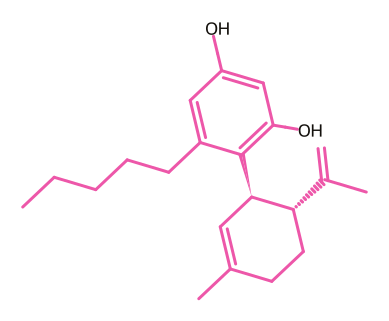
  • ECS tool
    2D chemical structure of Abnormal cannabidiol

    Abnormal cannabidiol

    abn-CBD

    A synthetic regioisomer of CBD, non-psychotropic, a vasodilator acting through a target that is still unidentified.

    C₂₁H₃₀O₂

    Unscheduled
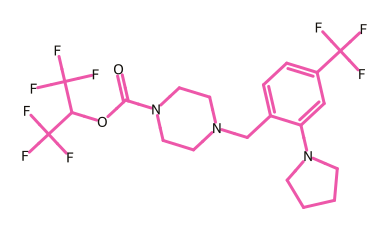
  • ECS tool
    2D chemical structure of ABX-1431 (elcubragistat)

    ABX-1431 (elcubragistat)

    ABX-1431

    A covalent MAGL inhibitor: it raises 2-AG, with no demonstrated clinical efficacy.

    C₂₀H₂₂F₉N₃O₂

    Unscheduled
  • ECS tool
    2D chemical structure of ACEA

    ACEA

    ACEA

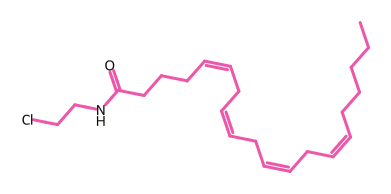
    A synthetic CB1 agonist derived from anandamide, a laboratory tool with no human data.

    C₂₂H₃₆ClNO

    Unscheduled
  • ECS tool
    2D chemical structure of Arachidonylcyclopropylamide

    Arachidonylcyclopropylamide

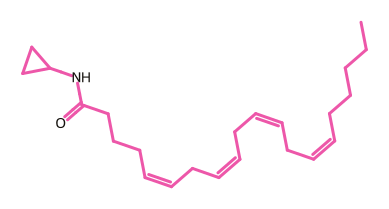
    ACPA

    A synthetic anandamide analogue, a highly selective CB1 agonist, used as a research tool.

    C₂₃H₃₇NO

    Unscheduled
  • SCRA
    2D chemical structure of ADB-4en-PINACA

    ADB-4en-PINACA

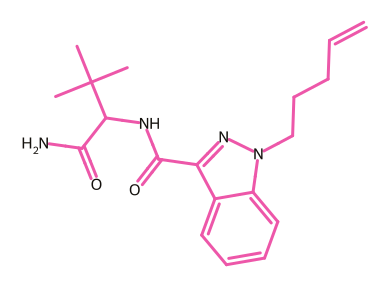
    ADB-4en-PINACA

    An indazole synthetic cannabinoid, a full CB1 agonist, classified as a narcotic in France.

    C₁₉H₂₆N₄O₂

    Narcotic: generic clause
  • SCRA
    2D chemical structure of ADB-5'Br-PINACA

    ADB-5'Br-PINACA

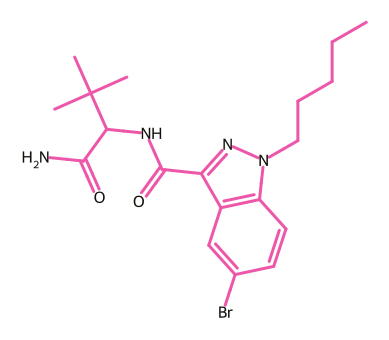
    ADB-5'Br-PINACA

    Brominated synthetic cannabinoid, full CB1 agonist, classified as a narcotic in France under a generic clause.

    C₁₉H₂₇BrN₄O₂

    Narcotic: generic clause
  • SCRA
    2D chemical structure of ADB-BUTINACA

    ADB-BUTINACA

    ADB-BUTINACA

    Very potent synthetic cannabinoid, classified as a narcotic, linked to severe poisonings.

    C₁₈H₂₆N₄O₂

    Narcotic: generic clause
  • SCRA
    2D chemical structure of ADB-CHMINACA (MAB-CHMINACA)

    ADB-CHMINACA (MAB-CHMINACA)

    ADB-CHMINACA

    Synthetic cannabinoid, a very potent full CB1 agonist, the cause of severe poisonings.

    C₂₁H₃₀N₄O₂

    Narcotic: generic clause
  • SCRA
    2D chemical structure of ADB-FUBHQUCA

    ADB-FUBHQUCA

    ADB-FUBHQUCA

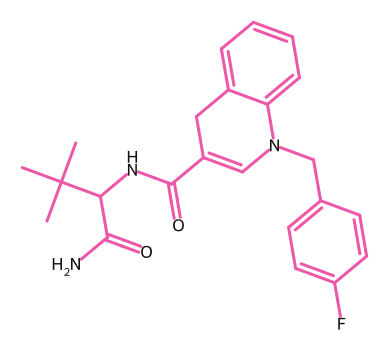
    A synthetic cannabinoid with a dihydroquinoline ring, seized as a powder, with no pharmacological data whatsoever.

    C₂₃H₂₆FN₃O₂

    Unscheduled
  • SCRA
    2D chemical structure of ADB-FUBIATA

    ADB-FUBIATA

    ADB-FUBIATA

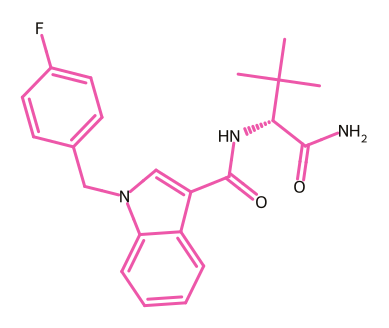
    An indole synthetic cannabinoid, a full CB1 agonist, found in “la chimique” in Mayotte.

    C₂₃H₂₆FN₃O₂

    Unscheduled
  • SCRA
    2D chemical structure of ADB-FUBICA

    ADB-FUBICA

    ADB-FUBICA

    A synthetic CB1 agonist of very high efficacy: a high-risk class, with no human data.

    C₂₂H₂₄FN₃O₂

    Narcotic: generic clause
  • SCRA
    2D chemical structure of ADB-FUBINACA

    ADB-FUBINACA

    ADB-FUBINACA

    A 2009 Pfizer patent diverted. Linked to hundreds of overdoses (United States, Russia 2014-2017).

    C₂₁H₂₃FN₄O₂

    Narcotic: named in schedule
  • SCRA
    2D chemical structure of ADB-HEXINACA

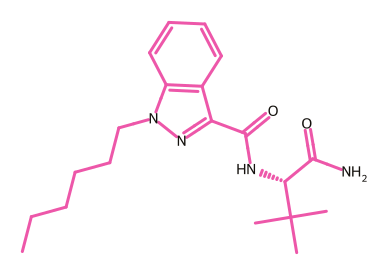
    ADB-HEXINACA

    ADB-HEXINACA

    A synthetic cannabinoid, a full agonist of CB1: far more risky than THC.

    C₂₀H₃₀N₄O₂

    Narcotic: generic clause
  • SCRA
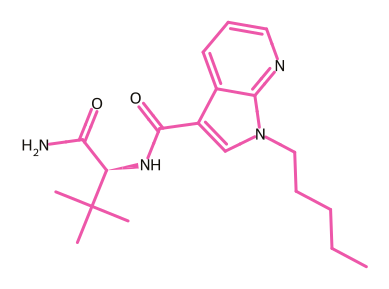
    2D chemical structure of ADB-P7AICA

    ADB-P7AICA

    ADB-P7AICA

    Synthetic cannabinoid, a full CB1 agonist. Identified in 2021; human data absent.

    C₁₉H₂₈N₄O₂

    Status changing
  • SCRA
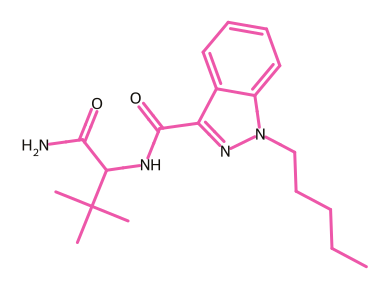
    2D chemical structure of ADB-PINACA

    ADB-PINACA

    ADB-PINACA

    A synthetic cannabinoid, a very potent and toxic full CB1 agonist. A narcotic in France.

    C₁₉H₂₈N₄O₂

    Narcotic: named in schedule
  • SCRA
    2D chemical structure of ADSB-FUB-187

    ADSB-FUB-187

    ADSB-FUB-187

    A patent-derived synthetic cannabinoid with very high CB1 affinity; no human data.

    C₂₆H₃₁ClFN₅O₄S

    Narcotic: named in schedule
  • Endogenous
    2D chemical structure of Anandamide (N-arachidonoylethanolamine)

    Anandamide (N-arachidonoylethanolamine)

    AEA

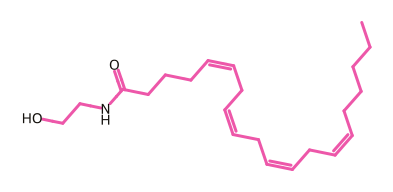
    The first endocannabinoid to be characterised (Devane, Hanuš, Mechoulam - 1992). Synthesised on demand, degraded within minutes by FAAH.

    C₂₂H₃₇NO₂

    Endogenous
  • ECS tool
    2D chemical structure of AEF0117

    AEF0117

    AEF0117

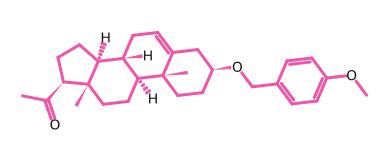
    A pregnenolone derivative studied as a selective brake on the CB1 receptor, with no known effect of its own.

    C₂₉H₄₀O₃

    Unscheduled
  • ECS tool
    2D chemical structure of Ajulemic acid (lenabasum)

    Ajulemic acid (lenabasum)

    AJA

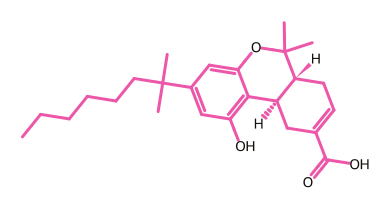
    Synthetic analogue of THC-11-oic acid, with a CB2 preference; its phase 3 trials all failed.

    C₂₅H₃₆O₄

    Narcotic: generic clause
  • SCRA
    2D chemical structure of AKB-48 (APINACA)

    AKB-48 (APINACA)

    AKB-48

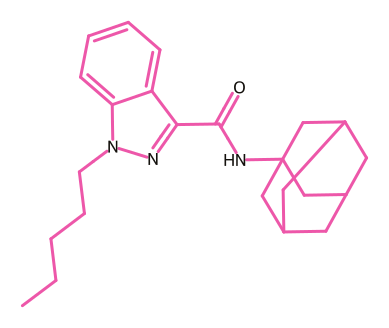
    An adamantyl synthetic cannabinoid, a full CB1 agonist, scheduled by name as a narcotic in France.

    C₂₃H₃₁N₃O

    Narcotic: named in schedule
  • SCRA
    2D chemical structure of AM-087

    AM-087

    AM-087

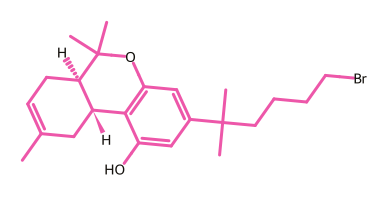
    A brominated analogue of Δ8-THC, a very high-affinity CB1 agonist, a laboratory compound with no human data.

    C₂₃H₃₃BrO₂

    Narcotic: generic clause
  • ECS tool
    2D chemical structure of AM-11245

    AM-11245

    AM-11245

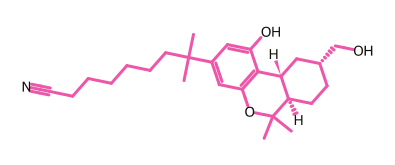
    A hexahydrocannabinol-type laboratory probe, a sub-nanomolar full agonist at CB1 and CB2.

    C₂₆H₃₉NO₃

    Narcotic: generic clause
  • ECS tool
    2D chemical structure of AM-1172 (N-arachidonyl-4-hydroxybenzamide)

    AM-1172 (N-arachidonyl-4-hydroxybenzamide)

    AM-1172

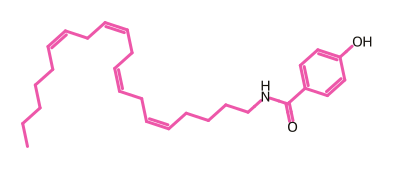
    FAAH-resistant anandamide analogue, used in the laboratory to block its reuptake.

    C₂₇H₃₉NO₂

    Unscheduled
  • SCRA
    2D chemical structure of AM-1220

    AM-1220

    AM-1220

    A synthetic CB1 agonist, around seventeen times the affinity of THC. Harm reduction, not a product.

    C₂₆H₂₆N₂O

    Narcotic: generic clause
  • SCRA
    2D chemical structure of AM-1235

    AM-1235

    AM-1235

    Laboratory synthetic cannabinoid, high affinity for CB1, with no published human data whatsoever.

    C₂₄H₂₁FN₂O₃

    Narcotic: generic clause
  • ECS tool
    2D chemical structure of AM-1241

    AM-1241

    AM-1241

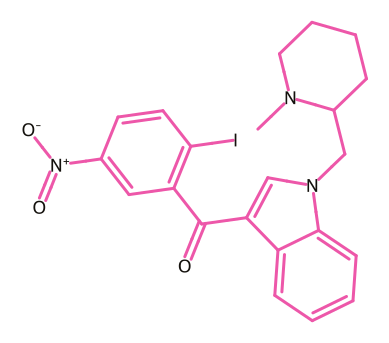
    A CB2-selective agonist used in pain research, whose behaviour depends on the species and the enantiomer.

    C₂₂H₂₂IN₃O₃

    Narcotic: generic clause
  • SCRA
    2D chemical structure of AM-1248

    AM-1248

    AM-1248

    A synthetic cannabinoid agonist at CB1, classified as a narcotic in France, with no human data at all.

    C₂₆H₃₄N₂O

    Narcotic: named in schedule
  • ECS tool
    2D chemical structure of AM-1710

    AM-1710

    AM-1710

    Synthetic cannabilactone, selective CB2 agonist. A laboratory tool, no human data.

    C₂₃H₂₈O₄

    Narcotic: generic clause
  • SCRA
    2D chemical structure of AM-1714

    AM-1714

    AM-1714

    A laboratory cannabilactone, a highly selective CB2 receptor agonist, with no human data whatsoever.

    C₂₂H₂₆O₄

    Unscheduled
  • SCRA
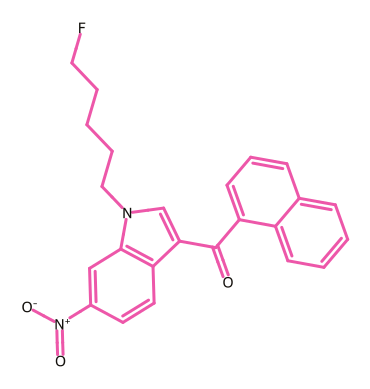
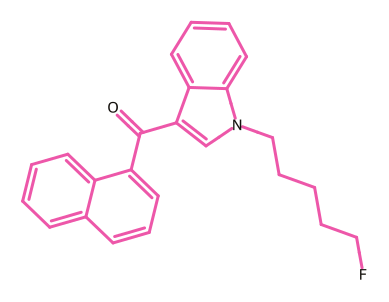
    2D chemical structure of AM-2201 (1-(5-fluoropentyl)-3-(1-naphthoyl)indole)

    AM-2201 (1-(5-fluoropentyl)-3-(1-naphthoyl)indole)

    AM-2201

    Fluorinated analogue of JWH-018, ≈ 9× more potent. Second wave of the Spice market (2010-2012).

    C₂₄H₂₂FNO

    Narcotic: named in schedule
  • SCRA
    2D chemical structure of AM-2232

    AM-2232

    AM-2232

    Synthetic cannabinoid, full CB1 agonist, found sprayed onto smoking mixtures.

    C₂₄H₂₀N₂O

    Unscheduled

Every entry cites its primary sources and carries its verification date. Structures are drawn from the canonical SMILES and checked by InChIKey against the corpus record: a structure that does not match its entry fails the build. Read more about our method. See also the hash glossary.

Editorial wiki. Primary sources cited per entry. Adults only; finished product compliant with the 0.3% Δ⁹-THC threshold. If in doubt, consult a healthcare professional. Verified as of .