Full Spectrum — CBD 5.08 %
A full-spectrum hemp oil.
From€29.90
Batch PG-26-AAD25.1 % CBD
CBD Oils from the Phytogrammes catalogue: formats, prices and available traceability information on each product page.
5 references
5 products
Members-only code
It shows here once your account is created. Valid once per customer. Already a member?
Full spectrum means the extract keeps all the cannabinoids and terpenes present in the source plant, including traces of cannabinoids other than CBD; an isolate, by contrast, contains only purified cannabidiol, with no terpenes and no hemp aroma. On a batch certificate of analysis, the full cannabinoid profile is what tells a full spectrum from an isolate, and only that line, not the commercial label, can verify what a bottle claims.
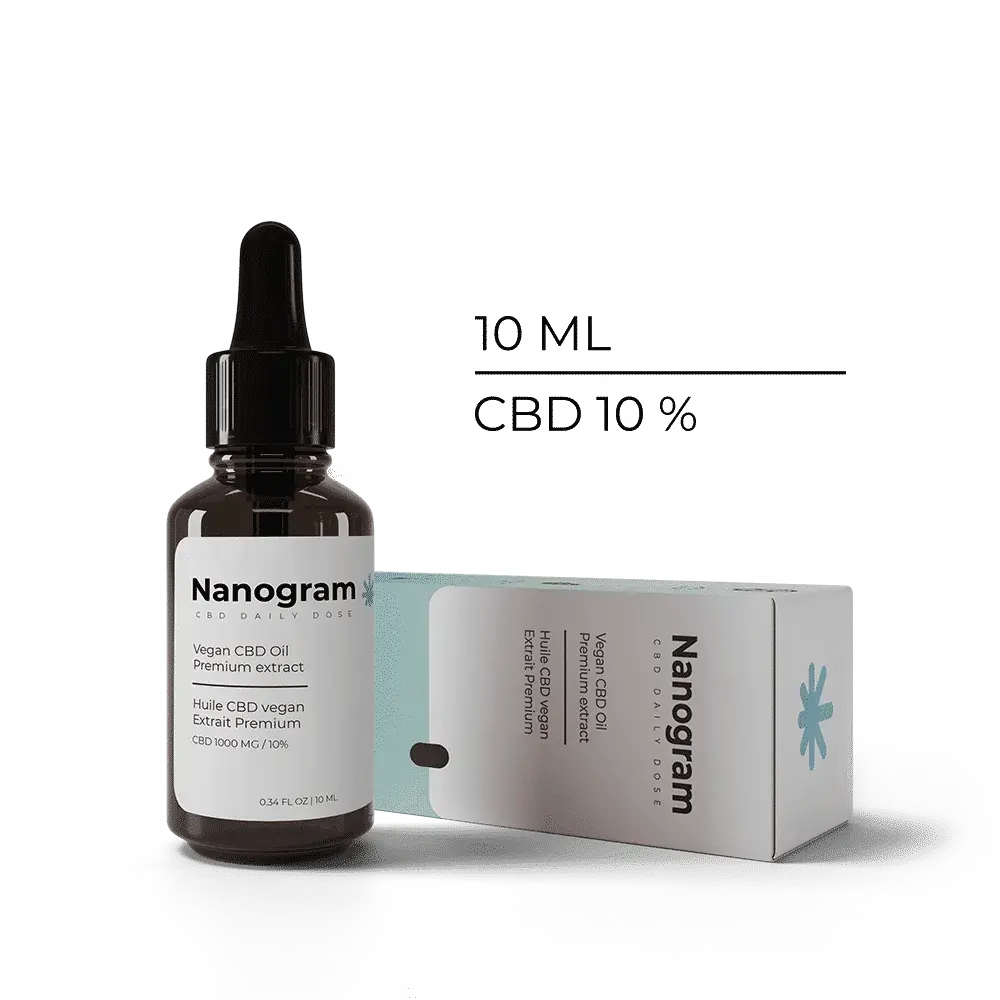
The percentage relates the mass of cannabidiol to the volume of the bottle: a 10% oil contains about 1,000 mg of CBD per 10 ml, or 100 mg per millilitre. The product page gives the data available; only a dated certificate linked to the batch can verify a measurement. The mandatory information on a CBD label.
The concentration shown on an oil's product page is a reference value as long as the “Certificate of analysis” line in the “Product traceability” section reads “Not published”; the cannabinoid panel is then titled “Reference cannabinoid profile”. It only becomes a verifiable measurement with a dated certificate, issued by an identified laboratory and linked to the batch. What 99% means on a certificate shows how to read the cannabinoid line, and our laboratory page explains the difference between a reference profile and an analysis report.
Keep the bottle closed, away from direct light and heat, ideally between 10 and 20 °C: a cupboard is enough, and the fridge is not needed unless the label says otherwise. Closing the dropper properly each time limits oxidation. A change in colour or texture after several months is not unusual for an unfiltered full-spectrum extract; the batch number lets you request the documents available. The oil storage guide.
The French order of 30 December 2021 (Δ⁹-THC strictly below 0.30%), the European cosmetics framework (Regulation (EC) No 1223/2009) for external use, sale restricted to adults. These oils are designed for external application: they are neither foods nor food supplements. Products for adults only, not intended for ingestion. They are not medicines and no property is claimed. The batch number appears on the label; the documents available are listed on the product page.
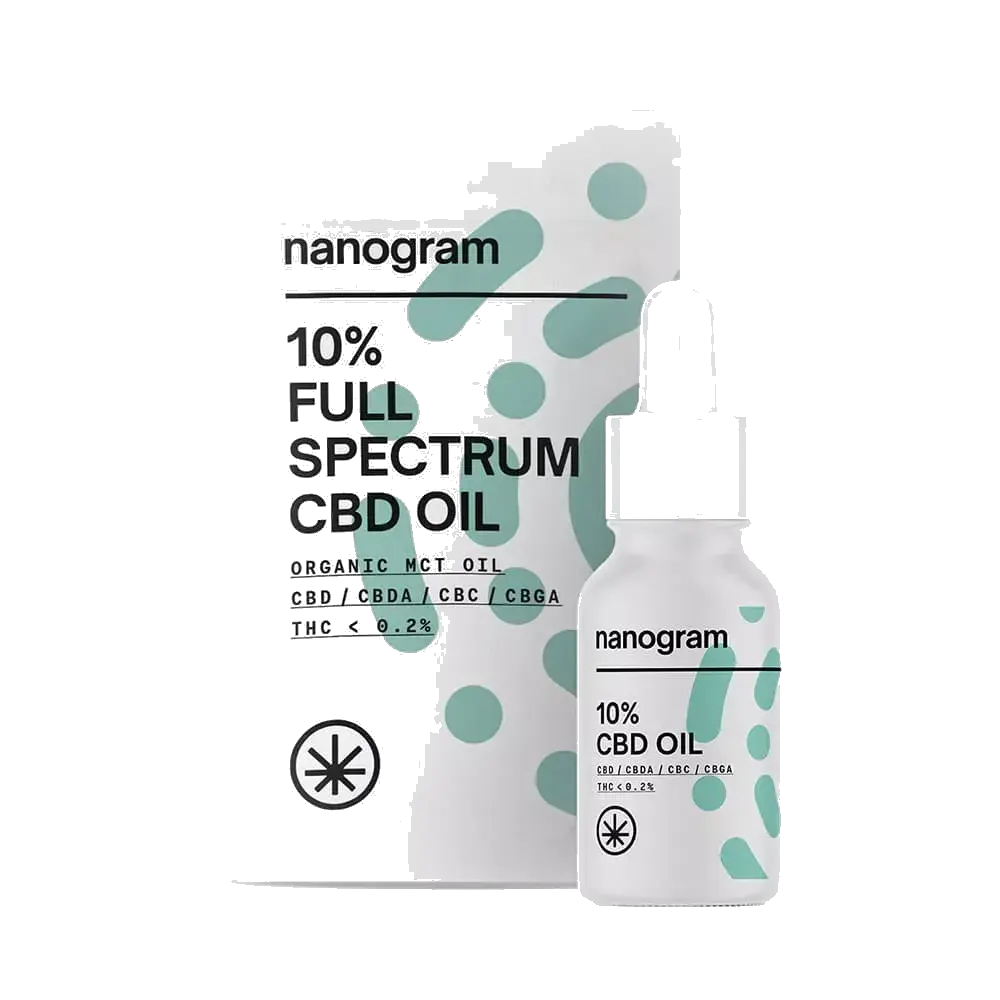
A full-spectrum oil contains the whole hemp extract: CBD, minor cannabinoids (CBG, CBN, CBC) and the plant's terpenes, in a carrier oil named on the label. Its Δ⁹-THC content stays strictly below 0.30%.
The percentage relates the mass of cannabidiol to the volume of the bottle: a 10% oil contains about 1,000 mg of CBD per 10 ml, or 100 mg per millilitre. Check whether that concentration comes from the product reference database or from a dated certificate for the batch.
A dated analysis report, issued by an identified laboratory and linked to the batch, allows the measured THC to be verified. Without one, the percentages from the product reference database do not demonstrate the batch's compliance.
That the “Certificate of analysis” line in the “Product traceability” section points to no dated certificate for the batch. The concentration and profile shown are then a reference value from the catalogue, presented in the “Reference cannabinoid profile” panel: they describe the product, not the bottle on sale.
Three readings of the cannabinoid profile. A full spectrum shows several quantified cannabinoids and Δ⁹-THC below the 0.30% threshold; a broad spectrum keeps minor cannabinoids, with Δ⁹-THC not detected or in trace amounts; an isolate shows only CBD, at 99% or more, with no terpenes. Only these lines, on a batch's dated certificate, can verify the type of extract; the commercial label is not enough.
It identifies the production run the bottle comes from and appears on the label. A certificate of analysis is only valid for the batch whose number it bears, on the date of its analysis: compare the two numbers, the date and the issuing laboratory before relying on a figure.
Bottle closed, away from light and heat, between 10 and 20 °C. Shake well before use. A well-stored oil keeps its original colour and smell; a marked change signals oxidation.