Static 120u, frozen, piatella: what a hash name tells you
In "static 120u" or "frozen 120u", the word names the method or the starting material, and the number names the sieve mesh, in microns, that held the fraction back. Neither tells you the cannabinoid content. Across six hashes in the Phytogrammes catalogue checked on 22 September 2026, the dominant cannabinoid ranges from 15.0 to 19.3%, and the purchase tier weighs far more on price than the method does.
Contents
- 01Reading a hash name: a method, then a mesh
- 02120u: what the mesh actually holds back
- 03Frozen and WPFF: what freezing changes
- 04Ice-o-lator and piatella: ice water, then time
- 05Static sift and dry sift: the dry route
- 06CBD or CBG: the dominant cannabinoid changes, not the method
- 07The comparison: price per 100 mg of cannabinoid
- 08What the name does not guarantee: the batch analysis
- 09Frequently asked questions
> Key takeaways > > - Static, frozen, ice-o-lator, dry sift and piatella are methods or starting materials, not strains. > - "120u" is the mesh that held the fraction back: 120 microns, or 0.12 mm. > - A 2023 study measured trichome heads of 40 to 110 microns: a 120 mesh lets most of them through. > - Per 100 mg of cannabinoid, the six hashes are at most €1.59 apart; from the 2 g tier to the 100 g tier, the price drops by 76%. > - Compliance is read on the batch analysis: no more than 0.30% Δ⁹-THC.
Reading a hash name: a method, then a mesh
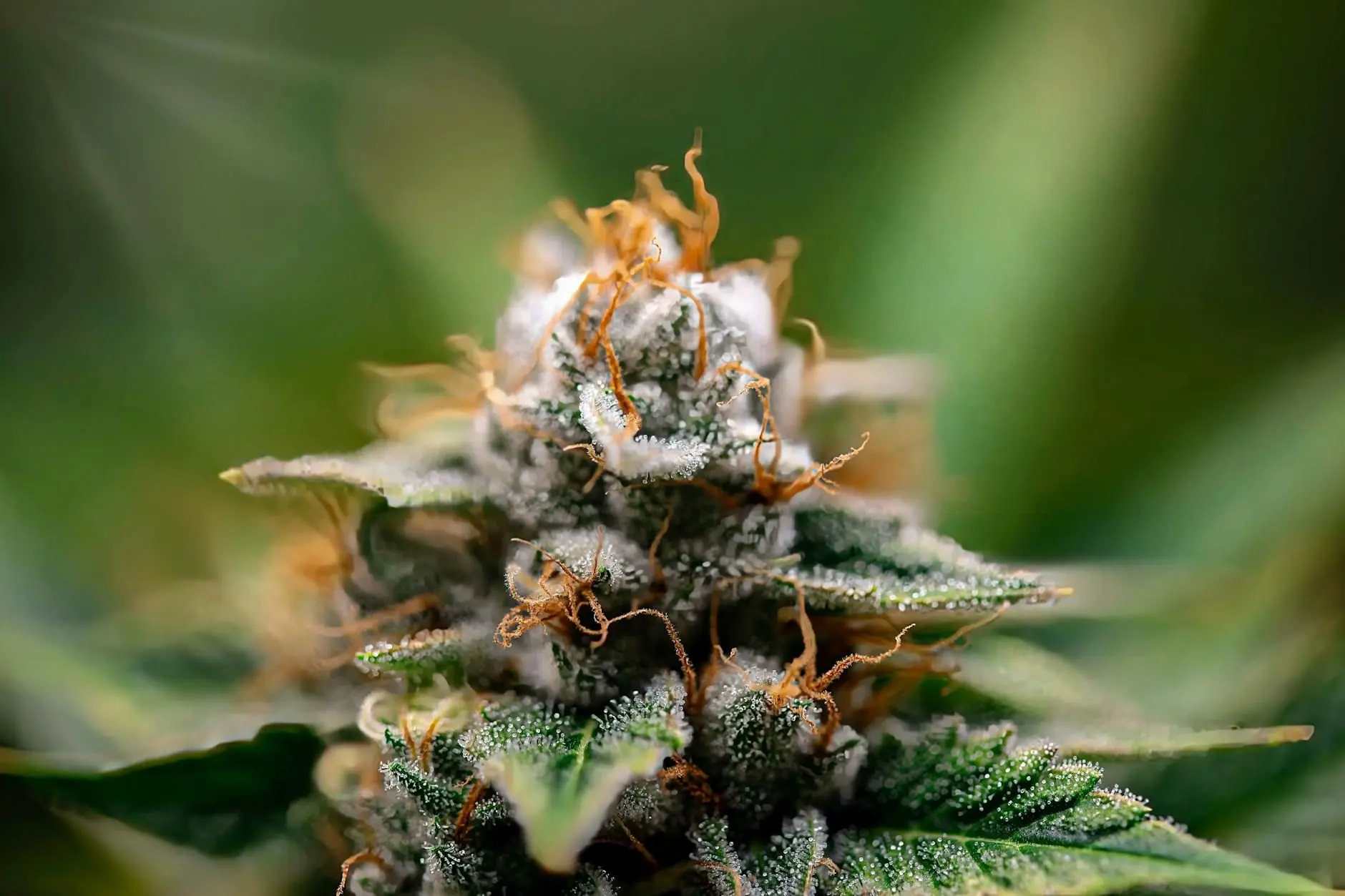
Hash is resin: trichomes, the tiny glands that cover female hemp flowers, detached from the plant and gathered. A study published in 2020 in Scientific Reports notes that cannabinoids and terpenes are produced and stored in the secretory cells of these glands, which are especially dense at the top of seedless female flowers. What sets one hash apart from another is how the trichomes are detached, then how the detached material is sorted.
Trade names often stack two pieces of information. The table pulls them apart.
| Term | What it means | Type |
|---|---|---|
| Frozen | Resin from a plant frozen right after harvest | Starting material |
| WPFF | Whole plant fresh frozen: the entire plant frozen fresh | Starting material |
| Ice-o-lator or bubble hash | Separation in ice water, filtered through stacked bags | Method |
| Dry sift | Dry sieving through stacked screens | Method |
| Static sift | Dry sift refined with an electrostatic charge | Finishing step |
| Piatella | Ice water hash cold-cured for several weeks | Finishing step |
| 120u | 120-micron mesh that held the fraction back | Mesh |
The number means the same thing whatever the method: "frozen 120u" and "static 120u" share a mesh, not a resin.
120u: what the mesh actually holds back
In an ice water wash, the slurry runs through several stacked bags, from the widest to the finest. Each bag keeps whatever cannot pass its mesh and lets the rest through to the next one. Dry sieving follows the same logic with screens. A "120u" fraction therefore holds particles too big to pass 120 microns, yet small enough to have crossed the mesh above, often 160 microns.
The next question is how big a trichome is. A Canadian team measured the trichomes of two cultivars under the microscope and published the results in the Journal of Cannabis Research in 2023. The heads of capitate-stalked trichomes, which carry most of the resin, measured 40 to 110 microns across, with means of 75 and 90 microns depending on the cultivar. Bulbous trichomes are smaller, with heads of 15 to 30 microns.
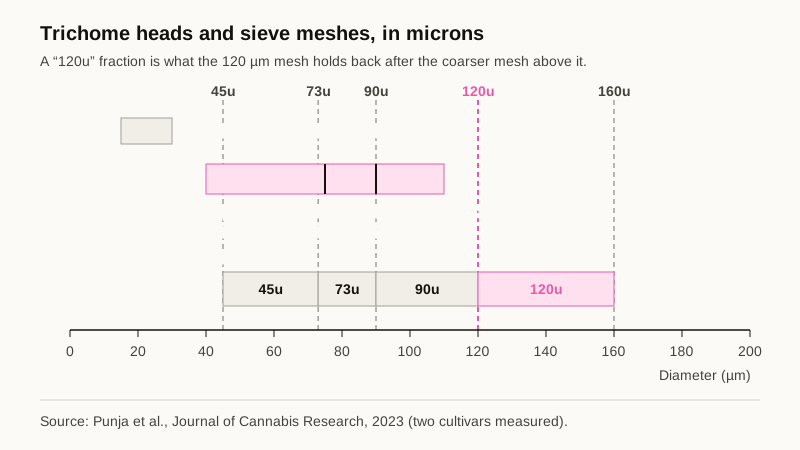
In practice, a 120-micron mesh lets most of the heads measured in that study pass through. It holds back the largest ones, heads still attached to a piece of stalk, resin clumps and some plant debris. The 73 and 90 micron meshes hold back most of the heads, which is why extractors link them with the full melt grade. A "120u" is therefore not purer than a "90u": it is a broader fraction.
Two caveats. Head size varies with cultivar and maturity, and no standard governs how microns are labelled. Our guide to 90u or 120u covers the full bag scale, from 220 down to 25 microns.
Frozen and WPFF: what freezing changes
"Frozen" describes neither a molecule nor a grade. It says the whole plant was frozen right after cutting, without drying, then processed frozen. The case for it is aromatic: monoterpenes, the most volatile aroma compounds, are the ones drying erodes most. A study published in 2024 in the journal Plants compared several drying methods on two cultivars. Monoterpenes proved more sensitive to drying than sesquiterpenes, and β-myrcene lost 3 to 30% of its content depending on the cultivar and the method, d-limonene up to 58% in one of the two cultivars.
Freezing instead of drying aims to limit that loss, provided the cold chain holds until the wash. The typical result is a lighter, more fragrant resin than hash made from dried material, and one that softens quickly in a warm hand. In the catalogue, the Frozen Hash shows 15.0% CBD on batch PG-26-AA10, with a woody profile led by β-caryophyllene.
Ice-o-lator and piatella: ice water, then time
The ice-o-lator method stirs the plant material in a mix of water and ice. The cold makes trichomes brittle: they snap off, fall into the water and are filtered by the stacked bags described above. The collected resin is soaked with water and must dry carefully before it is pressed or stored. The catalogue's 120u hash comes from this process: 15.9% CBD on batch PG-26-A7E3, with a floral opening on linalool. Caramelo 120u, collected on the same mesh, shows 15.5%.
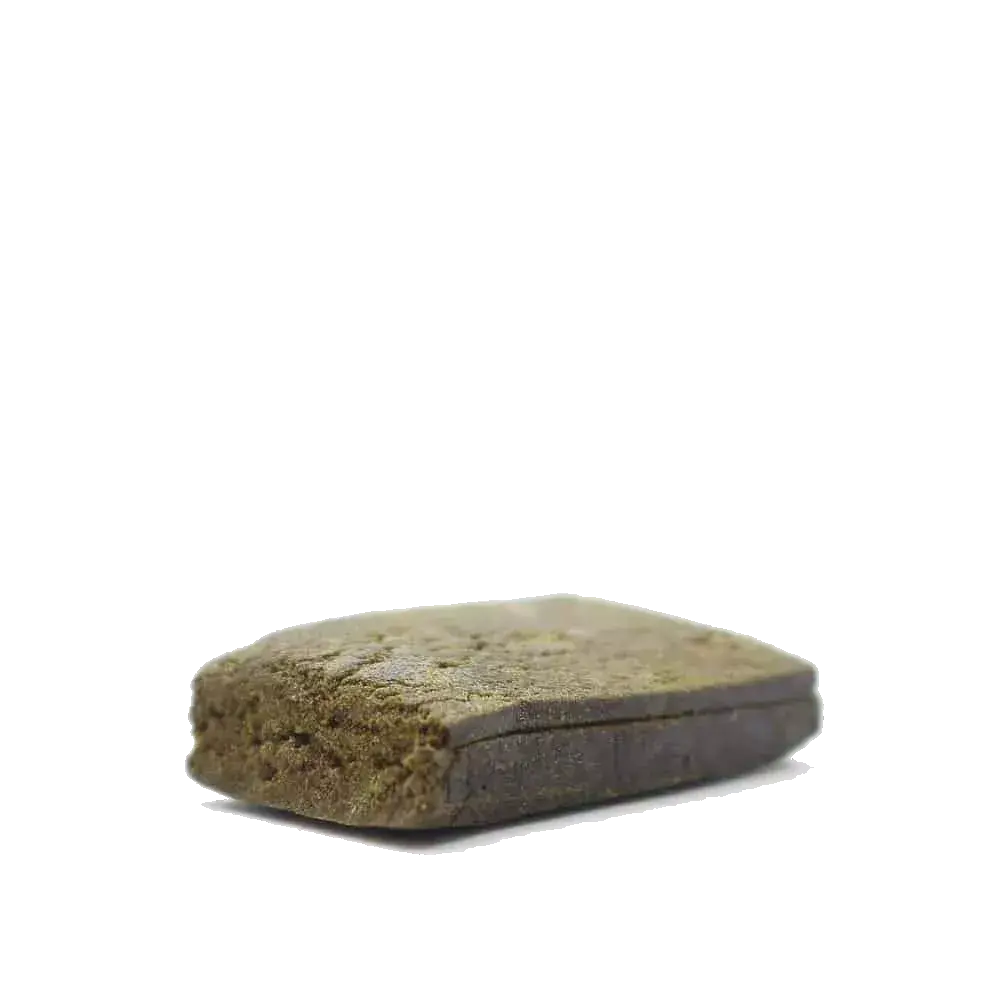
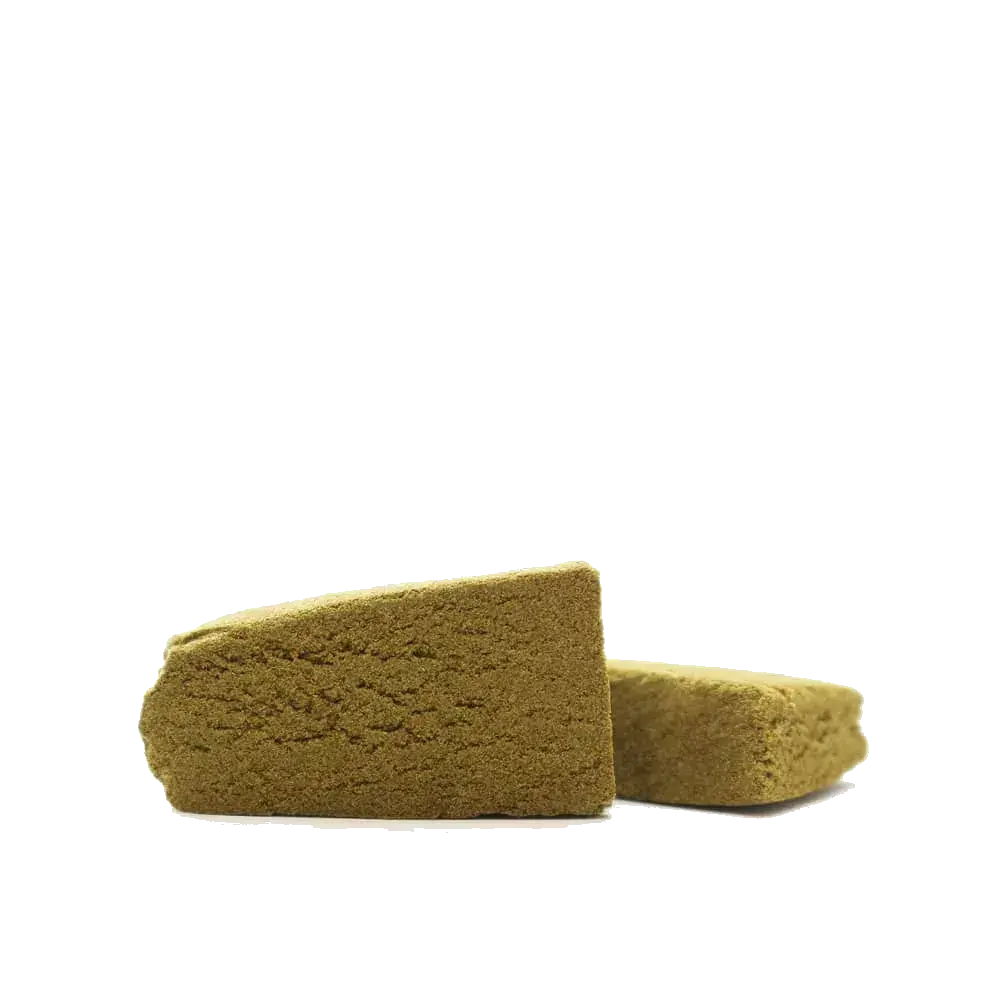
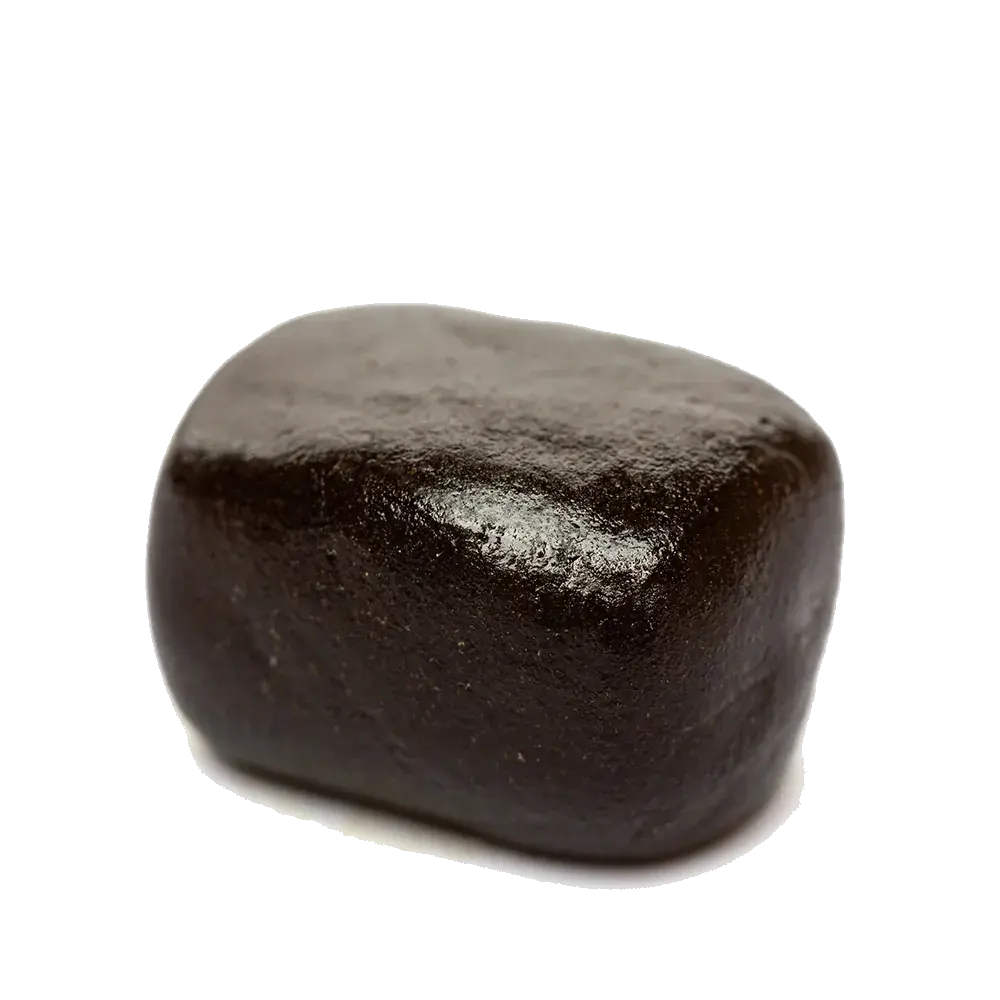
Piatella, also spelled piattella, starts from a full melt grade ice water hash. The Phytogrammes lexicon describes it as vacuum-sealed, then cold-cured for weeks, with no heat and no heavy pressing. The walls of the heads slowly give way and the material fuses into a creamy slab that is kept in the fridge. The catalogue's Piatella shows 18.0% CBD on batch PG-26-F1E2, with a peppery, dry profile.
Static sift and dry sift: the dry route
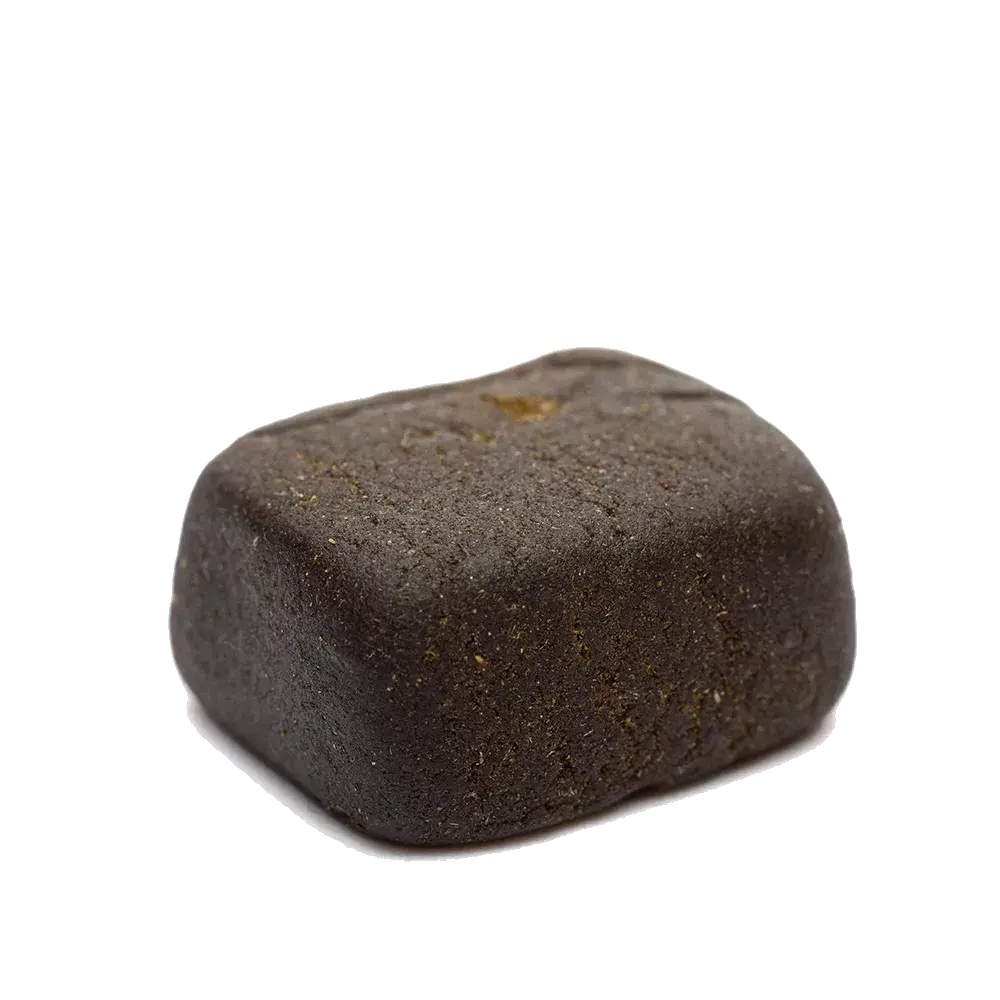
Dry sift is the traditional route. Dry, cold flowers are rubbed over stacked screens, and the trichome powder passes from one mesh to the next, with no water and no freezing. Static sift adds a finishing step: a surface charged by friction pulls up the trichome heads, which are lighter than leaf fragments of the same diameter, and those fragments fall back. Sorting then works on mass, not only on mesh size. Yield is counted in grams per hour, and humid air is enough to dissipate the charge. Our static hash explainer covers the process in detail.
In the catalogue, the Drysift 90u shows 15.1% CBD on batch PG-26-DBD7. The CBG 90µ hash, also collected on a 90-micron mesh, is dominated by CBG: 19.3% on batch PG-26-83EF, with 4.2% CBD.
CBD or CBG: the dominant cannabinoid changes, not the method
Five of the six hashes compared are CBD-dominant, one is CBG-dominant. Neither molecule produces the psychoactive effect of THC, and both fall under the same limit of 0.30% Δ⁹-THC, explained in our article on the legal THC level. CBG is the precursor the plant turns into CBD, and it binds weakly to CB1 and CB2 receptors; our CBG definition sums up what research has measured. Nothing supports the idea that a CBG hash "does more" than a CBD hash: the choice comes down to taste.
The comparison: price per 100 mg of cannabinoid
Price per gram only compares hashes of equal strength. To compare a 15% hash with a 19% one, divide the price of one gram by the milligrams of dominant cannabinoid it contains, then multiply by 100. Example with the 120u at the 2 g tier: €7.95 per gram, 159 mg of CBD per gram, so €5.00 per 100 mg.
| Hash | Mesh | Dominant (batch) | Δ⁹-THC | Price, 2 g | 100 mg at 2 g | 100 mg at 100 g |
|---|---|---|---|---|---|---|
| CBG 90µ hash | 90u | CBG 19.3% | 0.1% | €8.45/g | €4.38 | €1.05 |
| 120u | 120u | CBD 15.9% | 0.2% | €7.95/g | €5.00 | €1.19 |
| Caramelo 120u | 120u | CBD 15.5% | 0.2% | €7.95/g | €5.13 | €1.23 |
| Drysift 90u | 90u | CBD 15.1% | 0.2% | €7.95/g | €5.26 | €1.26 |
| Piatella | not stated | CBD 18.0% | 0.2% | €9.95/g | €5.53 | €1.32 |
| Frozen Hash | not stated | CBD 15.0% | 0.2% | €8.95/g | €5.97 | €1.43 |
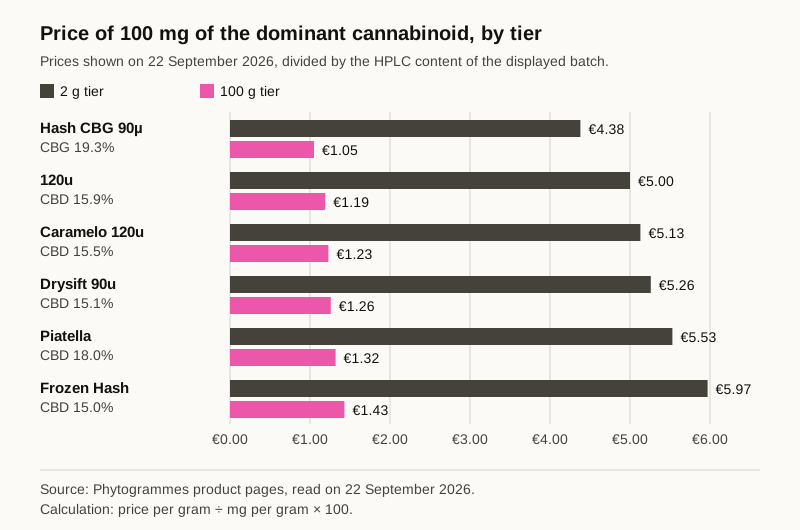
Two findings. First, the CBG 90µ hash, the strongest, is the cheapest per milligram, and the Piatella, the most expensive per gram at €9.95, ends up cheaper than the Frozen Hash once its strength is counted. Second, from the 2 g tier to the 100 g tier, every product's price drops by 76%: for the 120u, €7.95 per gram becomes €1.90. In this catalogue, the quantity you buy matters more than the method. All six products sit in the CBD resin and hash category, and our guide to hash price per gram applies the same calculation to other products. Strengths and prices are those shown on 22 September 2026; a new batch may show a different profile.
What the name does not guarantee: the batch analysis
Neither "frozen", "static" nor "120u" guarantees a strength or compliance. Three lines of an analysis settle it, here as anywhere: the dominant cannabinoid and its measured percentage, Δ⁹-THC at 0.30% or less, and a batch number that matches the product sold. The limit comes from the French order of 30 December 2021, which caps the Δ⁹-THC content of authorised varieties, hemp extracts and products containing them at 0.30%. On 29 December 2022, the Conseil d'État struck down the ban on selling raw flowers and leaves that the same order contained.
For the other lines, pesticides, heavy metals and solvents, see our guide to the certificate of analysis and our laboratory page.
Frequently asked questions
What does 120u mean on a hash?
The number is the mesh, 120 microns, that held the fraction back during sieving or washing. It says nothing about CBD content. Since trichome heads mostly measure under 120 microns, a 120u fraction gathers the largest heads, resin clumps and a little plant material.
What is static 120u?
It is a dry sift refined with static electricity, keeping the fraction held back by a 120-micron mesh. No water or solvent is involved. Its strength is read on the batch analysis, not on the label.
Is frozen hash legal in France?
Yes, if it comes from hemp and the finished product contains no more than 0.30% Δ⁹-THC. "Frozen" describes the starting material, not the molecule: a frozen hash made from high-THC cannabis is still a narcotic. Details are in our article on whether CBD hash is legal.
What is the difference between piatella and ice-o-lator?
Ice-o-lator is the ice water separation method. Piatella starts from a full melt grade ice-o-lator hash, cold-cured for several weeks. Every piatella begins with an ice water wash; the reverse is not true.
Written by the Phytogrammes team
Every article in this journal draws on primary sources (ANSM, EFSA, EUR-Lex, peer-reviewed publications) and on the lab's own practice: batch-by-batch HPLC analyses, measured cannabinoid profiles. Our approach.
Article published on . CBD is not a medicine.