← Journal/18 May 2026·7 min de lecture
What to do when you cannot sleep: 8 useful steps
Par The Phytogrammes team ·
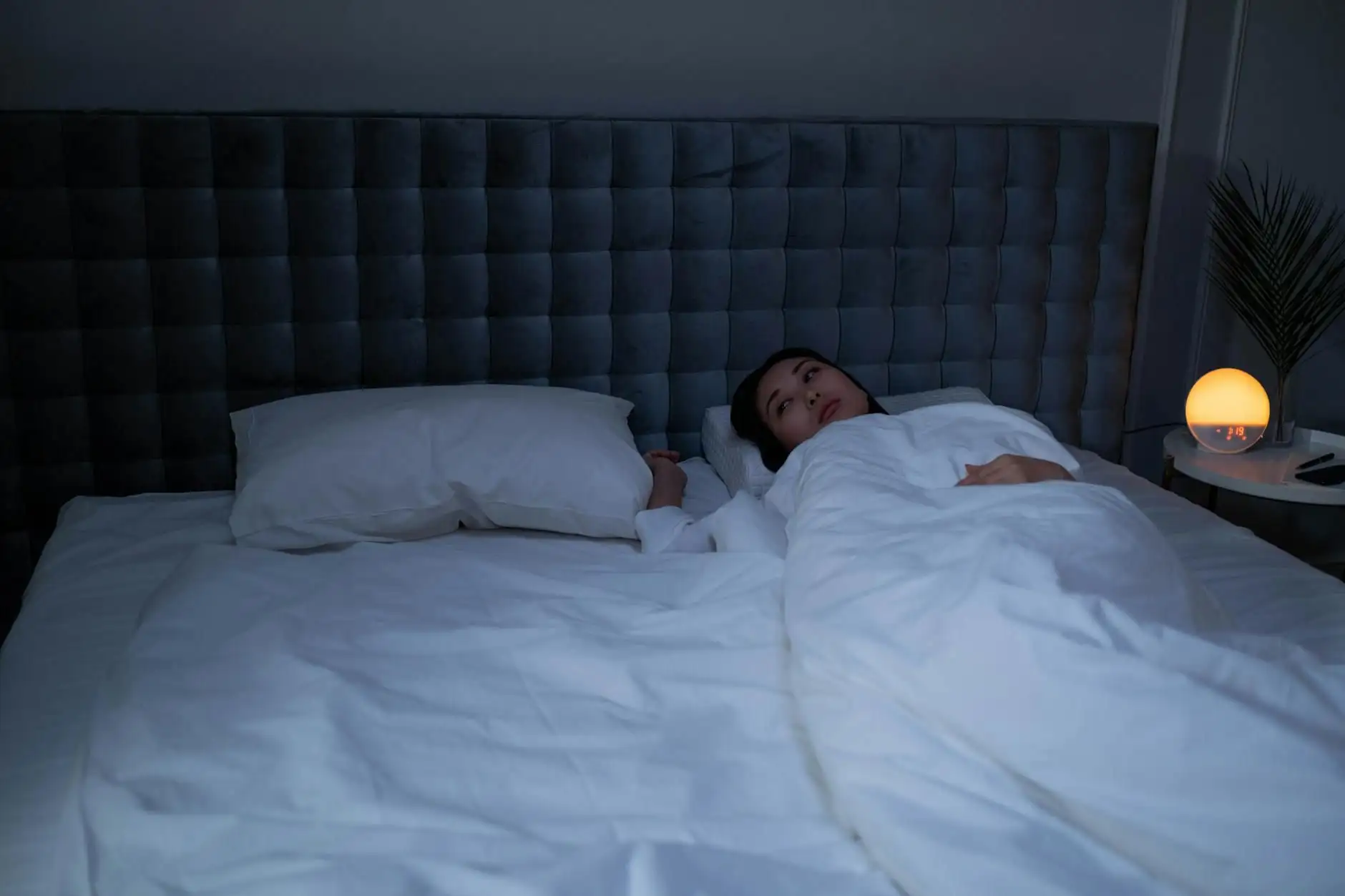
Trying at all costs to get back to sleep is often what prolongs wakefulness. The HAS and the INSV recommend the opposite: get out of bed after 20 minutes awake, take up a calm activity in low light, and only return to bed once the signals of sleep appear. Wellbeing CBD can form part of a soothing ritual, with no therapeutic purpose.
Why forcing sleep makes insomnia worse
Consciously straining to fall back asleep activates the prefrontal cortex and raises alertness — the exact opposite of what the nervous system needs in order to tip into sleep. The HAS, in its 2024 recommendations on the management of insomnia, endorses a counter-intuitive strategy: leave the bed after 20 to 30 minutes awake and only return once the signals of sleep come back (yawning, heavy eyelids).
This principle, known as stimulus control, is one of the pillars of cognitive behavioural therapy for insomnia (CBT-I). It stops the bed from becoming mentally associated with wakefulness and frustration.
Step 1: controlled 4-7-8 breathing
The 4-7-8 technique, popularised by Dr Andrew Weil, works as follows:
- Breathe out completely through the mouth.
- Breathe in through the nose for 4 seconds.
- Hold the breath for 7 seconds.
- Breathe out through the mouth for 8 seconds, tongue behind the upper teeth.
Repeat for 4 to 8 cycles. This lengthened out-breath engages the parasympathetic system, which favours relaxation. The effect is not magical, but it is documented alongside CBT-I protocols.
Step 2: guided meditation
Inserm catalogues the clinical studies on mindfulness meditation and reports documented effects on subjective sleep quality. On a difficult night, a guided session of 10 to 20 minutes can draw attention away from circling thoughts.
Many French-language apps offer sessions designed for bedtime or for getting back to sleep. Favour those without loud sound and without a bright interface.
Step 3: soothing visualisation
Close the eyes and build a calm scene mentally: a white sand beach, woodland after rain, a log fire. The more the scene calls on the senses (sight, smell, sound, temperature), the more it absorbs attention and displaces intrusive thoughts.
This technique is used in behavioural therapy as a guided mental imagery exercise.
Step 4: reading (paper, warm light)
Reading for 15 to 30 minutes can make it easier to return to sleep, on two conditions:
- Favour a paper book, not a bright screen (blue light delays melatonin).
- Warm, dimmed lighting, ideally a low-intensity bedside lamp.
Avoid stressful or intellectually demanding reading. A light novel, a short story, a book of poetry or a narrative works better than a dense essay.
Step 5: counting backwards
Counting backwards in hundreds (1000, 999, 998, and so on) or mentally listing a familiar object: the regularity and monotony of the exercise occupy just enough attention to clear away rumination, without over-activating the brain.
Step 6: get out of bed after 20 minutes
This is the most counter-intuitive and the most important step. If you have been awake for more than 20 to 30 minutes:
- Leave the bed.
- Go into another room, with dimmed light.
- Take up a calm activity (reading, gentle stretching, writing).
- Only return to bed once the signals of sleep come back (yawning, heavy eyelids).
This rule, drawn from CBT-I, is endorsed by the HAS. It prevents the mental association of bed with the struggle against wakefulness.
Step 7: avoid screens and the clock
Two classic traps:
- Checking your phone: blue light stimulates the retina and delays melatonin. The reflex check of notifications also switches the mind back on.
- Looking at the time: seeing "3.47 am" feeds anxiety ("I've only got 3 hours of sleep left!") and makes it harder to get back to sleep. Turn the alarm clock away, hide the phone screen.
Step 8: keep your usual waking time
Whatever the quality of the night, keeping your usual waking time is essential. Lying in to compensate pushes back the following bedtime and sets up a vicious circle of insomnia. The INSV stresses regularity as a key parameter of sleep quality over the long term.
A short nap of 15-20 minutes in the early afternoon can make up for it, but no longer (risk of sleep inertia and of delaying the next bedtime).
Where CBD can fit into the evening ritual
If you wish to include CBD in your bedtime routine, the most commonly described use is a sublingual dose of oil 30 to 60 minutes before going to bed, as part of a moment of relaxation. Wellbeing CBD does not "make you sleep" and does not "improve" sleep: such claims are legally prohibited in France.
The EFSA recommends not exceeding roughly 2 mg/day for a 70 kg adult given the current state of the data. MILDECA points out that CBD is not a medicine and that no French authority has validated any therapeutic claim.
Precautions:
- Not advised for pregnant or breastfeeding women, minors, or people on medication.
- Favour products with a certificate of analysis (CoA).
- Do not drive after taking it (a positive THC saliva test is possible).
CBD is not a medicine. If insomnia persists beyond three weeks, consult a doctor.
Key points
- Forcing sleep makes insomnia worse; it is better to leave the bed after 20 minutes awake.
- 4-7-8 breathing engages the parasympathetic system and eases relaxation.
- Mindfulness meditation is documented by Inserm.
- No screens and no clock-watching during the night.
- Keep your usual waking time, even after a bad night.
- Wellbeing CBD can form part of a soothing ritual, with no therapeutic purpose.
- Insomnia lasting more than 3 weeks: a medical consultation is recommended.
FAQ
How long before leaving the bed?
The HAS recommends getting out of bed after 20 to 30 minutes of unproductive wakefulness. The rule applies both to falling asleep initially and to waking during the night.
Can you watch a film to get back to sleep?
No. Bright screens emit blue light, which delays melatonin secretion. Stimulating content (news, series) switches the mind back on. A paper book is preferable.
Are melatonin gummies effective?
Melatonin is sold as a food supplement in France up to 1.9 mg/day under ANSES recommendations. Its effectiveness is moderate and documented mainly for jet lag and circadian rhythm disorders. It is not a sleeping pill.
Can CBD make you sleep straight away?
No. No immediate effect is guaranteed, nor may any be promised. Perceived effect varies and is self-reported.
When should you seek advice about insomnia?
If your sleep difficulties have lasted more than 3 weeks, come with disabling daytime fatigue, or lead to repeated self-medication.
To explore our selection of laboratory-tested oils and flowers, [browse our sleep catalogue](/categorie-produit).
Sources
Written by the Phytogrammes team
Every article in this journal draws on primary sources (ANSM, EFSA, EUR-Lex, peer-reviewed publications) and on the lab's own practice: batch-by-batch HPLC analyses, measured cannabinoid profiles. Our approach.
Article published on . CBD is not a medicine.
Phytogrammes products that pair well




Further reading
gommes-cbd·18 May 2026
What are CBD gummies and where do they stand in France?
CBD gummies are sweets dosed with cannabidiol. In France, their status changed radically on 15 May 2026: here is the detail.

dosage-cbd·18 May 2026
How much CBD should you take? Usage benchmarks
The useful amount of CBD varies with the person, the product and the goal. Wellness usage benchmarks, label reading and the French framework in 2026.

cbd-sport·18 May 2026
Recovery after a run — rituals and where CBD fits in
What routine to adopt after a running session, and how to bring a CBD cosmetic into your recovery ritual, within the French legal framework.