← Journal/18 May 2026·8 min de lecture
CBD and golf — a post-round recovery ritual
Par The Phytogrammes team ·
Since 2018, CBD has been removed from the World Anti-Doping Agency's list of prohibited substances. Amateur and competitive golfers can build it into a post-round recovery ritual, provided they use THC-free products that comply with the French framework (finished-product THC below 0.30%).
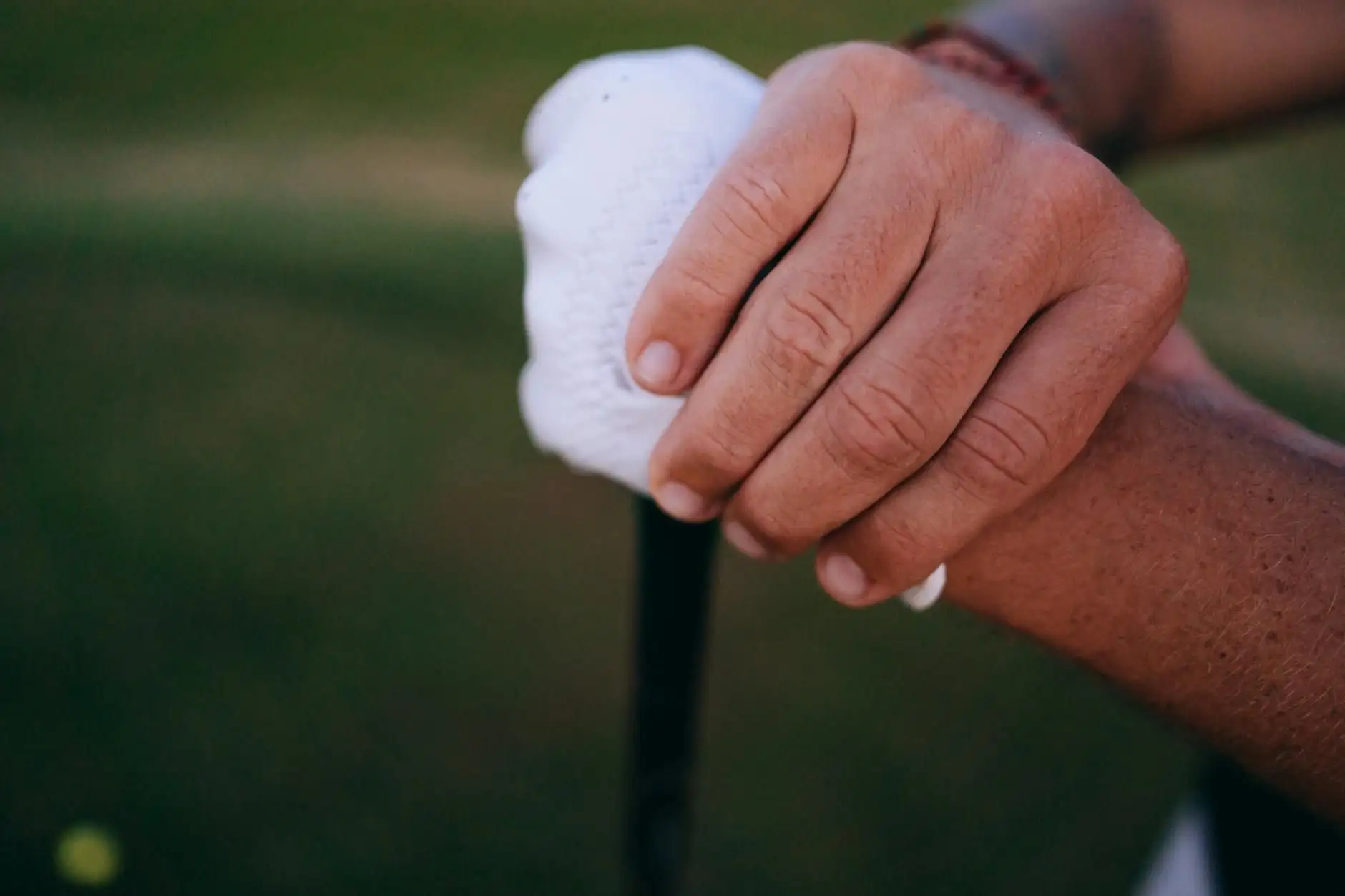
Golf is rarely seen as a demanding sport, and that is a mistake. An 18-hole round means between 8 and 12 kilometres of walking, several hundred high-speed trunk rotations, and sustained demand on the back, shoulders and forearms. Many players finish their round with neck or lower-back tension. This article looks at how CBD can fit, as an accompaniment, into a recovery routine.
What golf asks of the body
The swing combines power and precision: a rapid rotation of the thoracic spine, a transfer of weight through the feet, an abrupt deceleration of the forearms. According to the biomechanical studies relayed by sports federations, the swing places flexion-rotation loads on the lower back comparable to those seen in certain industrial movements. Add to that prolonged walking over uneven ground and the repeated carrying of a bag.
The most exposed areas:
- Lower back (lumbar) — the leading cause of lay-offs among amateur golfers.
- Neck and trapezius — often tight by the end of a round.
- Lead shoulder (the left one for a right-hander) and elbow (the epicondylitis known as "golfer's elbow").
- Forearms and wrists, loaded at every impact.
- Knees and hips, under load throughout the walk.
For common low back pain, the Haute Autorité de Santé recommends maintaining physical activity and avoiding strict rest. Golf therefore remains a sport that favours mobility, provided technique is sound and preparation work is done.
The status of CBD in sport in France
The AFLD (the French anti-doping agency) applies the annual list drawn up by WADA/WADA. Since 1 January 2018, cannabidiol (CBD) has been removed from the list of prohibited substances. It is the only cannabinoid in that position: all the others, natural or synthetic, remain prohibited in competition, starting with THC (urinary threshold of 150 ng/mL).
For licensed amateur golfers liable to be tested (regional championships, federation tournaments), as for tour professionals, this distinction is essential: a "full spectrum" CBD product contains traces of THC by construction. Even minute traces can be enough to trigger a positive test.
Practical recommendation: for use in a competitive context, stick exclusively to certified CBD isolates that are 99% THC-free, ideally carrying an "Informed Sport" or "NSF Certified for Sport" label, with a certificate of analysis to back it up.
The French legal framework for wellness CBD
The ruling of the Conseil d'État of 29 December 2022 definitively authorised in France the sale of hemp flowers, leaves and derived products whose THC content in the finished product remains below 0.30%. The wellness CBD market (oils, infusions, cosmetics) has been stabilised as a result.
One caveat, though: the commercial legality of a product does not mean there is no risk when driving. The Cour de cassation, in its ruling of 21 June 2023 (no. 22-85.530), held that consuming legal CBD does not exempt a driver from the offence of driving after using narcotics if a saliva test detects THC. Worth knowing when you take the car to the golf club.
How to build CBD into your golfing routine
Three formats are commonly used by amateur sportspeople.
Cosmetic creams and balms — applied locally after the round, to the areas that have been working (lower back, shoulders, forearms). These products, governed by the European cosmetics regulation and listed in the CosIng database since 2021, generally combine CBD, menthol and plant oils. They belong to the tradition of post-sport massage balms.
Sublingual oils — a few drops under the tongue in the evening, as part of a wind-down ritual after a day's walking. Note the Novel Food framework: since 15 May 2026, ingested oils without European authorisation have been withdrawn from the market. Oils sold for "external use" or as cosmetics remain available.
Hemp infusions — flowers or leaves infused in a fat (milk, oil), drunk in the evening as a relaxing ritual.
None of these formats presents itself as a treatment for pain. They accompany a recovery approach that must rest first and foremost on hydration, stretching, sleep and, if necessary, the advice of a healthcare professional.
A typical post-round ritual
Here is a coherent sequence for an amateur golfer who wants to recover well.
- Immediate hydration — a large glass of water as soon as you come off the course, then 500 ml over the following hour.
- Targeted stretching (10-15 min) — posterior chains, hamstrings, trunk mobility, opening the shoulders.
- A lukewarm shower rather than a hot one, to limit excessive vasodilation.
- Application of a CBD balm to the sensitive areas, in slow circular movements.
- A balanced meal with protein (fish, pulses) and complex carbohydrates.
- A quiet evening: an infusion, reading, an early night if the round was intense.
There is nothing CBD-specific about this kind of routine: it simply restates the fundamentals of sports recovery. CBD fits in as a wellness addition, not as a miracle product.
Precautions and points to watch
- CBD is not a medicine. In the event of persistent joint pain or injury, consult a healthcare professional (sports physician, physiotherapist, general practitioner).
- Use is not advised for pregnant or breastfeeding women (in line with the ANSES classification proposal of 2025).
- Use is not advised for minors.
- If you are on concurrent medical treatment (anticoagulants, antiepileptics), ask your doctor: interactions have been described with certain molecules.
- Competitors should systematically check the product's certificate of analysis and favour THC-free isolates.
Key takeaways
- CBD has been off the WADA list since 2018, but THC remains prohibited in competition.
- Amateur or professional athletes subject to testing should insist on a certified THC-free CBD isolate and a recent certificate of analysis.
- A cosmetic CBD massage cream is the format best suited to post-round recovery.
- The commercial legality of CBD does not exempt a driver from the offence of driving after using narcotics (Cour de cassation ruling of 21 June 2023).
- Any persistent pain warrants medical advice.
- Hydration, stretching and sleep remain the fundamental pillars of recovery.
FAQ
Is CBD permitted for amateur golfers in France?
Yes, wellness CBD has been authorised for sale and consumption since the ruling of the Conseil d'État of 29 December 2022, provided finished-product THC stays below 0.30%. There is no restriction specific to amateur golfers.
Can a golfer in competition take CBD before a tournament?
CBD on its own is not prohibited. The risk lies in traces of THC present in full-spectrum products, which can trigger a positive test. For competition, use only a certified THC-free CBD isolate carrying an Informed Sport or NSF Certified for Sport label.
Should you choose a cream, an oil or capsules?
For localised muscle recovery, a massage cream makes sense. For an evening ritual, sublingual oil (for external use from 15 May 2026 onwards, to stay compliant) or an infusion is a better fit. Ingested capsules now fall within the Novel Food perimeter.
Does CBD improve golfing performance?
No French or European health authority has validated any performance claim for CBD. CBD is not intended to improve concentration or play: at best, it belongs to a wellness and recovery ritual.
What signs should prompt me to see a sports physician?
Any pain that persists beyond a few days, that appears at rest, or that comes with swelling, loss of strength or reduced mobility warrants medical advice. Chronic pain is not an inevitable part of golf: it can be treated.
To explore our selection of CBD cosmetics for sports recovery, [see our catalogue](/categorie-produit).
Sources
Written by the Phytogrammes team
Every article in this journal draws on primary sources (ANSM, EFSA, EUR-Lex, peer-reviewed publications) and on the lab's own practice: batch-by-batch HPLC analyses, measured cannabinoid profiles. Our approach.
Article published on . CBD is not a medicine.
Phytogrammes products that pair well
Further reading
cbd-et-sommeil·18 May 2026
CBD and sleep: what science really says in 2026
No \"CBD helps you sleep\" claim is validated in France. Here are the available studies, the EFSA position and the real legal framework.
cbd·18 May 2026
What is broad-spectrum CBD? Definition and uses
Broad spectrum keeps the minor cannabinoids and terpenes of hemp but removes the THC. Here is what it offers, where its limits lie and what French law allows.
sommeil·18 May 2026
CBD and occasional difficult nights: what science says in France
A sleepless night now and then affects half of French people. Here are the documented causes and the real place of CBD in an evening routine.