← Journal/18 May 2026·4 min de lecture
Fast-acting CBD edibles: how they work
Par The Phytogrammes team ·
So-called fast-acting edibles rely on encapsulation technologies — nanoemulsion or lipid microparticles — that speed up the intestinal absorption of CBD. In France, their marketing depends strictly on the Novel Food status of the finished product, and nanometric formulations remain prohibited for sale as food today.
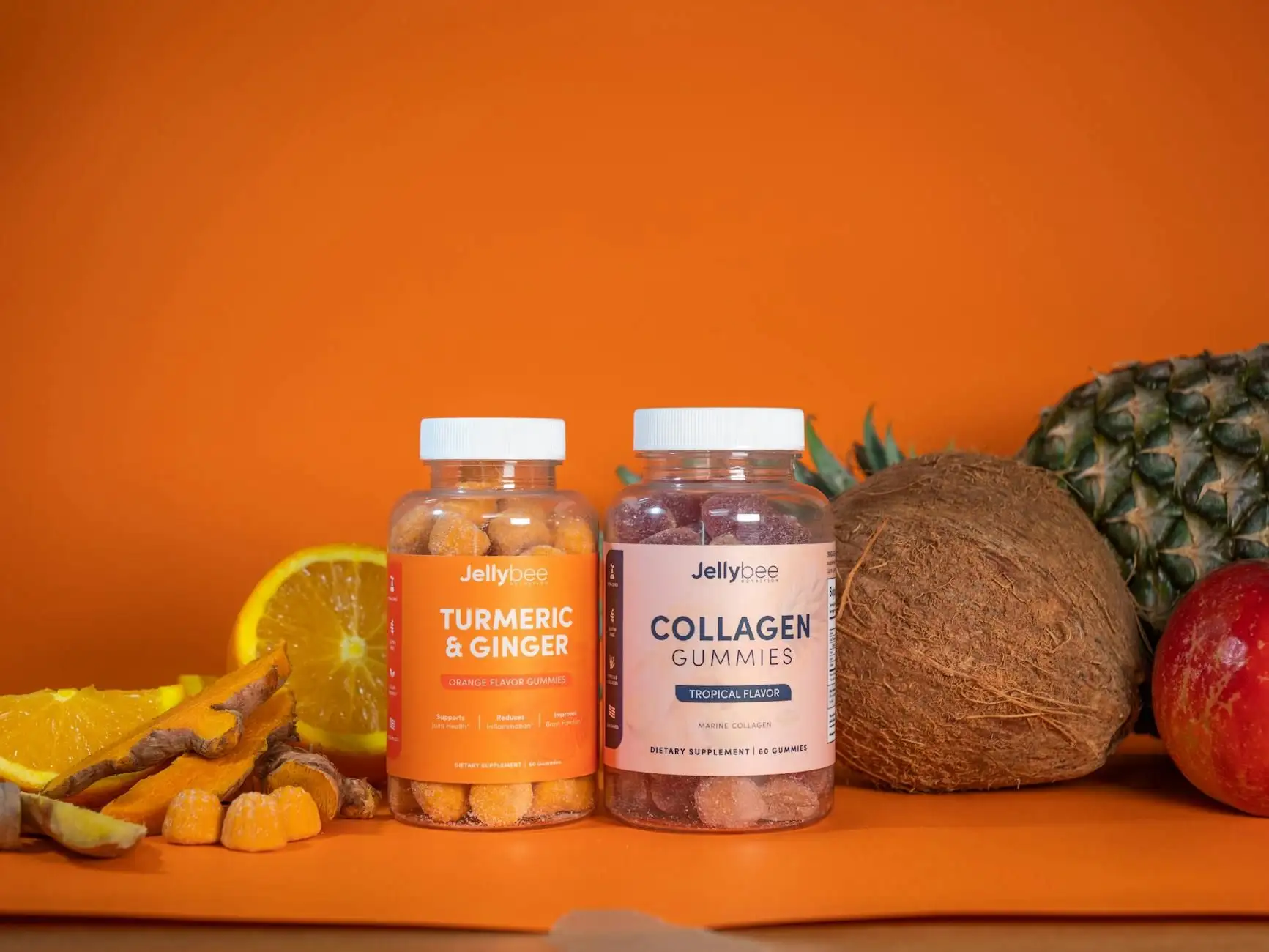
The slow action of conventional edibles
A gummy, a capsule or an infused chocolate follows the standard digestive route, with first-pass hepatic metabolism. Pharmacokinetic studies place the onset of effects between 30 minutes and 2 hours, with a peak at around 3-4 hours. Oral bioavailability remains low, between 6 and 19% without a lipid-rich meal according to the ANSM assessment of Kanavape: most of the CBD ingested never reaches the general circulation.
Fast-acting technologies
Several processes aim to get around these limits. Nanoemulsions disperse CBD in micelles a few tens of nanometres across in an aqueous phase, improving its passage through the intestinal mucosa. Lipid-matrix microparticles encapsulate CBD in liposomes or solid particles. Cyclodextrins, cyclic oligosaccharides, solubilise the lipophilic molecule in water. These approaches do not modify CBD itself, but its formulation: manufacturers claim an effect in 5 to 20 minutes, a figure that is hard to verify independently given how rare published studies remain.
The French regulatory filter
Three questions determine the status of a CBD edible in France. First, is it an ingested product: if so, it falls under the Novel Food regulation (EU 2015/2283). Next, does it have European authorisation: the EFSA has validated no purified hemp extract with an active CBD content, and since 15 May 2026 the DGAL has been withdrawing unauthorised products. Finally, does the technology change the classification: yes, the EFSA regards nanoemulsions as engineered nanomaterials, subject to a separate procedure. The provisionally safe daily dose published on 9 February 2026 explicitly excludes formulations containing nanoparticles.
Why this category never really took off in France
The French market has always favoured flower, sublingual oil and e-liquid. Edibles have accounted for only a secondary share of the sector's turnover, held back by Novel Food uncertainty from 2019 onwards and by increased exposure to DGCCRF checks on "sweet"-type formats. The DGAL control plan rolled out since 15 May 2026 has completed the withdrawal of operators outside the pharmaceutical channel.
Medical cannabis, a separate framework
Not to be confused with wellbeing CBD: medical cannabis, rolled out across France since March 2025, has a full pharmaceutical assessment framework with the ANSM, reserved for five specific indications on medical prescription. A fast-acting edible for the general public would therefore have to go through the Novel Food procedure, or fall under this separate medical framework.
Frequently asked questions
How long does a conventional CBD gummy take to act?
Between 30 minutes and 2 hours for an oral dose, with a peak at around 3-4 hours, depending on your dose, your metabolism and the presence of a fat-rich meal.
Is a CBD nanoemulsion legal in France?
No, not as a food product. Engineered nanomaterials fall under a separate assessment procedure, and no authorisation has been granted to date.
Why is the oral bioavailability of CBD so low?
CBD is lipophilic, stomach acid partially degrades it, and the liver metabolises it heavily on first pass: less than 20% generally reaches the general circulation.
What can a French consumer who was looking for a fast edible do?
Turn to vaporised flowers, which act more quickly, or to e-liquids compliant with the TPD directive. For supervised medical use, only a prescription gives access to formulations validated by the ANSM.
Written by the Phytogrammes team
Every article in this journal draws on primary sources (ANSM, EFSA, EUR-Lex, peer-reviewed publications) and on the lab's own practice: batch-by-batch HPLC analyses, measured cannabinoid profiles. Our approach.
Article published on . CBD is not a medicine.
Phytogrammes products that pair well
Further reading
mecanisme-cbd·18 May 2026
How does CBD oil work? Mechanisms and limits
CBD oil interacts indirectly with the body's endocannabinoid system. An explanation of the CB1 and CB2 receptors and of what the French authorities permit you to say.
cbd·18 May 2026
How is a CBD oil made? The process explained
From plant to bottle: CO₂ or ethanol extraction, winterisation, decarboxylation - the complete manufacturing process of a CBD oil.

utilisation-cbd·18 May 2026
How to take CBD: oils, gummies and cosmetics
Sublingual, oral or topical, CBD can be taken in several ways. Formats, usual amounts and the French legal framework in 2026.