← Journal/18 May 2026·4 min de lecture
The coating on CBD gummies: why this detail matters
Par The Phytogrammes team ·
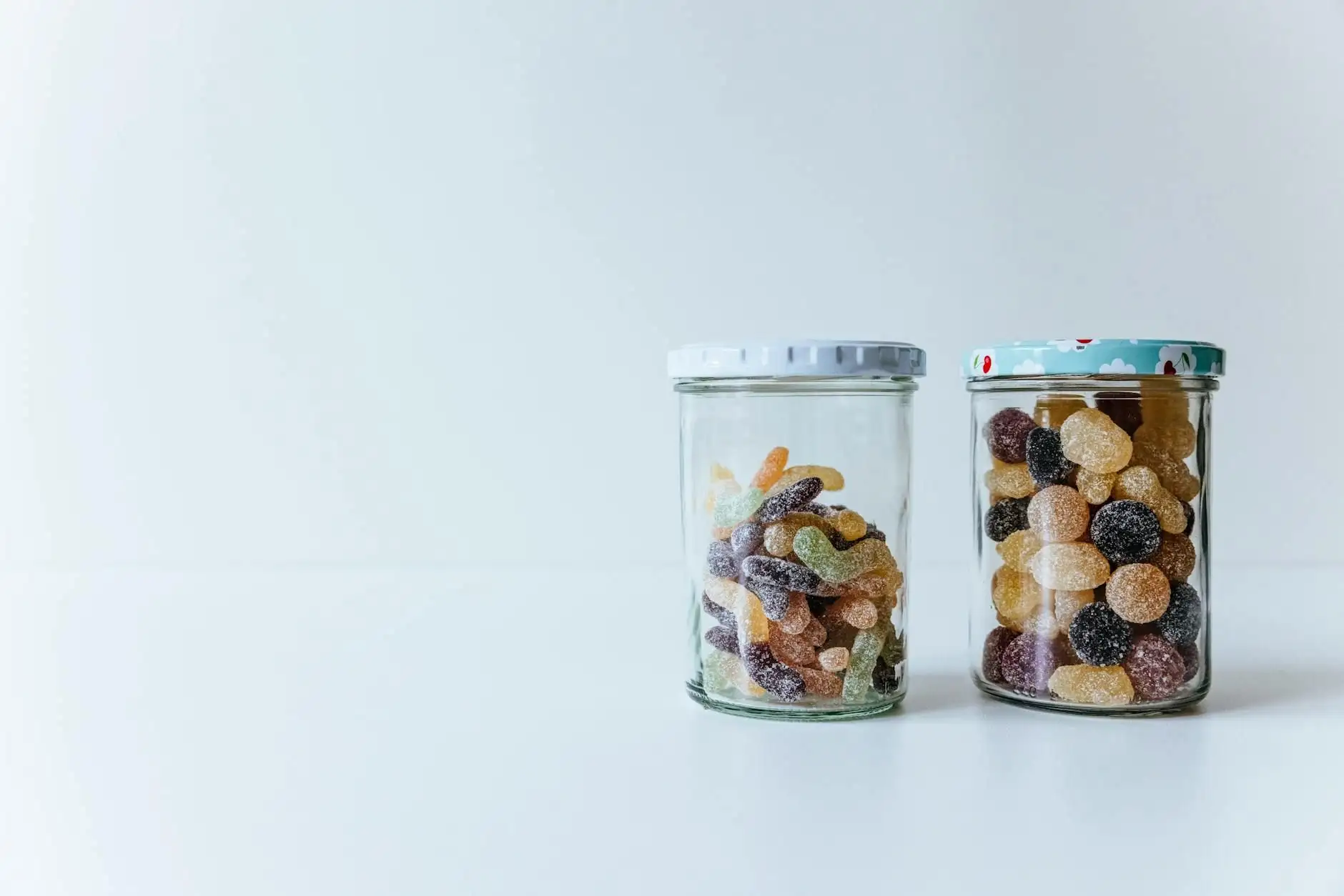
The outer coating of a gummy, whether sugar-sanded, gloss-varnished or matt-finished, is not merely a cosmetic detail. It influences stability, storage life and perceived dosage, and its composition must appear in labelling that complies with the European consumer information regulation.
The technical functions of the coating
On a conventional pectin- or gelatine-based gummy, the outer layer performs several concrete functions: it stops the gummies sticking together, limits the absorption of moisture that would alter the texture, slows the evaporation of volatile aromas, protects certain light-sensitive active ingredients, and determines the first sensation in the mouth. Three types coexist: sugar sanding, the most widespread, carnauba or beeswax varnish for a glossy finish, and a matt finish using a neutral powder.
Sugar sanding: a choice that entails precise labelling
A sanded gummy carries a layer of sugar, often 5 to 15% of total weight, which must appear in the ingredients list in descending order of weight, in accordance with Regulation (EU) No 1169/2011, and in the mandatory nutrition declaration. The WHO recommends limiting free sugars to a maximum of 10% of total energy intake, ideally 5%, a recommendation echoed by ANSES. For two or three gummies a day the intake stays moderate, but it can become significant when added to other sweetened supplements taken daily.
Sugar-free versions: sweeteners and precautions
Some brands opt for a sugar-free coating based on polyols (maltitol, sorbitol, xylitol), which can have a laxative effect beyond a few grams a day, or on stevia, a high-intensity sweetener used in small quantities. All must be stated plainly in the INCI list and, for polyols, be accompanied by the regulatory statement on possible laxative effects in the event of excessive consumption.
The coating and perceived dosage
A more heavily coated gummy can look bigger, and therefore more strongly dosed, whereas the CBD dose is calibrated on the gelled matrix inside. A serious manufacturer offsets variations in total mass by adjusting the matrix so as to keep the unit dose constant. For a consumer, the reference remains the dose stated on the label, confirmed by the certificate of analysis (CoA): appearance says nothing about the active content.
The coating and storage life
A well-coated gummy keeps its texture longer. A poorly protected gummy typically shows crystallisation of the sugar inside, softening through moisture absorption, gummies sticking to one another, or a gradual loss of aroma. Optimal storage remains airtight, opaque packaging, away from heat and light, between 15 and 25°C.
The French filter: Novel Food and claims
Beyond the technical choices, the legal status of a CBD gummy remains tied to its principal framework. Since 15 May 2026, the DGAL has been withdrawing ingestible CBD gummies from the French market where they lack European validation under Regulation (EU) 2015/2283, and no health claim for CBD is entered in the European register. To understand that framework in more detail, see our article on CBD gummies and the Novel Food withdrawal.
Frequently asked questions
Does the coating change the absorption of CBD?
Not significantly for conventional sugar or wax coatings. Their functions are essentially technical and sensory; the pharmacokinetic profile depends mainly on the gelled matrix and on liver metabolism.
Why do some gummies contain carnauba wax?
Carnauba wax (E903) is a glazing and anti-caking agent authorised in food, which gives the glossy finish typical of varnished gummies.
Is a sugar-free gummy preferable?
Not systematically. Polyols can have a laxative effect, and intense sweeteners remain debated for chronic consumption. The choice depends on individual sensitivity.
How should opened gummies be stored?
Close the jar tightly, keep it away from heat and direct light, between 15 and 25°C, and avoid the fridge, where condensation can spoil the texture.
Written by the Phytogrammes team
Every article in this journal draws on primary sources (ANSM, EFSA, EUR-Lex, peer-reviewed publications) and on the lab's own practice: batch-by-batch HPLC analyses, measured cannabinoid profiles. Our approach.
Article published on . CBD is not a medicine.
Phytogrammes products that pair well

Further reading

cbd-topique·18 May 2026
Epicondylitis (tennis elbow) — wellbeing rituals and topical CBD
Understanding epicondylitis, its causes and its management, and fitting a CBD cosmetic into a self-care and recovery routine.

automne·18 May 2026
Autumn equinox: rebuilding a balanced routine
The autumn equinox on 22 or 23 September marks the change of rhythm. Sleep, movement, food: how to adjust a routine to get through the season.

cbd-sport·18 May 2026
Exercise and inflammation — understanding the mechanisms of recovery
Which physical activities generate a useful inflammatory response, and how can muscle recovery be supported as part of a wellness approach?