← Journal/18 May 2026·4 min de lecture
Exercising in extreme heat: reference points and precautions
Par The Phytogrammes team ·
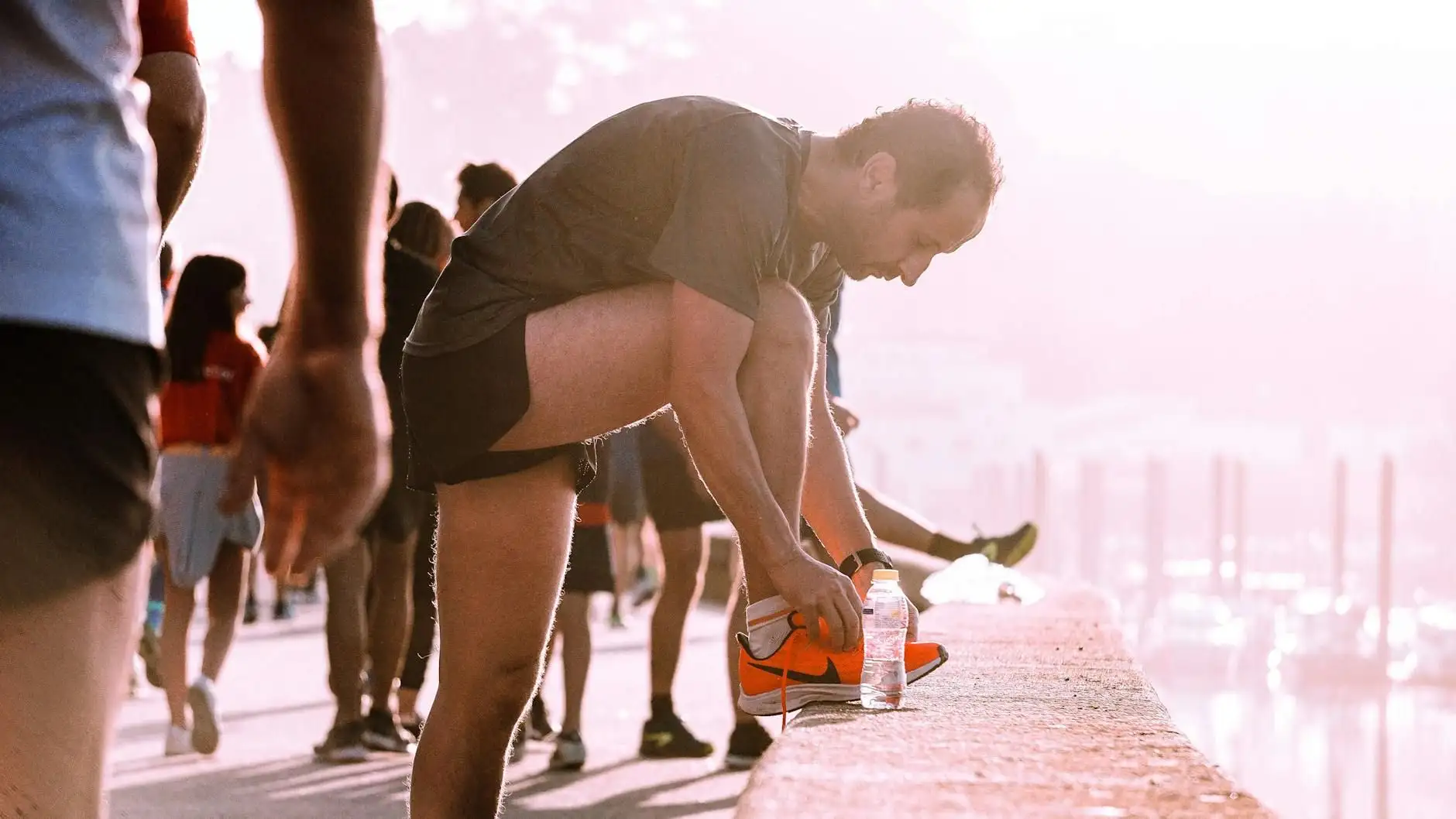
Exercising in extreme heat means adjusting the time of day, either early in the morning or late in the evening, increasing your water intake, reducing the intensity and recognising the first signs of poor heat tolerance. When a heatwave alert is in force, the French authorities recommend postponing any non-essential activity.
What happens in the body in extreme heat
When the outside temperature rises, the body triggers several mechanisms to keep its core temperature around 37 °C: sweating, skin vasodilation, a faster heart rate. During physical activity, metabolic heat production adds to the external heat stress. According to Santé publique France, beyond a certain intensity or a prolonged exposure the thermoregulatory system can be overwhelmed, leading to dehydration, heat exhaustion, and even heatstroke.
Adjusting your training slot
Choose the early morning, before 9 a.m., or the late evening, after 8 p.m., and avoid the 11 a.m. to 5 p.m. window between June and August. Check the Météo-France alert map before going out: under a yellow or orange alert, reduce the intensity and shorten the session; under a red alert, the Ministry of Sport recommends postponing any non-essential physical activity.
Hydration: practical reference points
Drink 400 to 600 mL of water in the one to two hours before exercise, then 150 to 250 mL every 15 to 20 minutes during it, depending on intensity. After the session, make up the fluid losses you have recorded. Beyond an hour of intense effort, a drink with electrolytes and a little carbohydrate becomes preferable to water alone.
Adjusting intensity, duration and kit
Reduce the intensity, aiming for a light aerobic zone, shorten the session to 30-45 minutes rather than 90, and lengthen the rests between sets. As for clothing, choose breathable, loose fabrics, a cap, sun protection and well-ventilated shoes.
Recognising the warning signs
Moderate dehydration shows up as intense thirst, unusual fatigue and dark urine: stop exercising, get into the shade and drink in small sips. Heat exhaustion adds heavy sweating, nausea, dizziness and cramps: stop immediately and cool down. Heatstroke, a life-threatening emergency marked by a body temperature above 40 °C, hot dry skin and possible confusion, means calling 15 or 112 immediately while actively cooling the person.
Recovery after exercising in the heat
Prolonged rehydration, a balanced meal with carbohydrates and protein, a cool to lukewarm shower rather than an ice-cold one, and enough sleep in a ventilated room complete the recovery. Our article on exercise and post-workout inflammation sets out the fundamentals of muscle recovery.
Topical care and the case of licensed athletes
After exercising in the heat, some athletes use massage balms as part of a comfort routine; CBD cosmetics have been permitted in France since their entry in the CosIng database in 2021, with no analgesic claim allowed. For competitors, CBD has been off the WADA list since 2018, but THC remains prohibited in competition; certified THC-free isolates remain the recommended choice, as set out in our article on CBD for athletes.
Frequently asked questions
At what temperature should you stop exercising?
There is no single threshold. Above 30 °C some adaptation becomes necessary, and under an orange or red heatwave alert the Ministry of Sport recommends postponing any non-essential activity.
Which drinks are best?
Still water is enough for moderate sessions. For long or intense efforts, a drink containing sodium, potassium and a little carbohydrate is more suitable.
How do I know whether I am properly hydrated?
Urine colour is a simple indicator: pale yellow means hydration is adequate, dark yellow means you need to drink more.
Should you acclimatise to heat gradually?
Yes, heat acclimatisation takes one to two weeks of gradual exposure and improves tolerance, sweating and performance.
Written by the Phytogrammes team
Every article in this journal draws on primary sources (ANSM, EFSA, EUR-Lex, peer-reviewed publications) and on the lab's own practice: batch-by-batch HPLC analyses, measured cannabinoid profiles. Our approach.
Article published on . CBD is not a medicine.
Phytogrammes products that pair well
Further reading
ganache·18 May 2026
Chocolate-mint CBD ganache: home recipe, personal use
Dark chocolate, full-fat cream, peppermint and CBD oil stirred in off the heat: a ganache reserved for strictly personal use.
gommes-cbd·18 May 2026
CBD gummies in France: why the 2026 Novel Food withdrawal changes everything
Sleep, relaxation, recovery: CBD gummies can no longer be freely sold in France since 15 May 2026. A breakdown of the framework.
gommes-cbd·18 May 2026
CBD gummies and immunity: what vitamins and the French framework really say
Vitamin C, vitamin D, astragalus and CBD: a close look at \"immunity\" formulations and the strict limits on claims in France.