← Journal/18 May 2026·4 min de lecture
Fear of flying: 9 strategies for getting through your flights
Par The Phytogrammes team ·
Aerophobia affects a significant share of the French population, and roughly one person in ten has a full-blown phobia that complicates air travel. Anticipation, factual information, breathing and cognitive reframing are the tools psychologists specialising in the field recommend first.
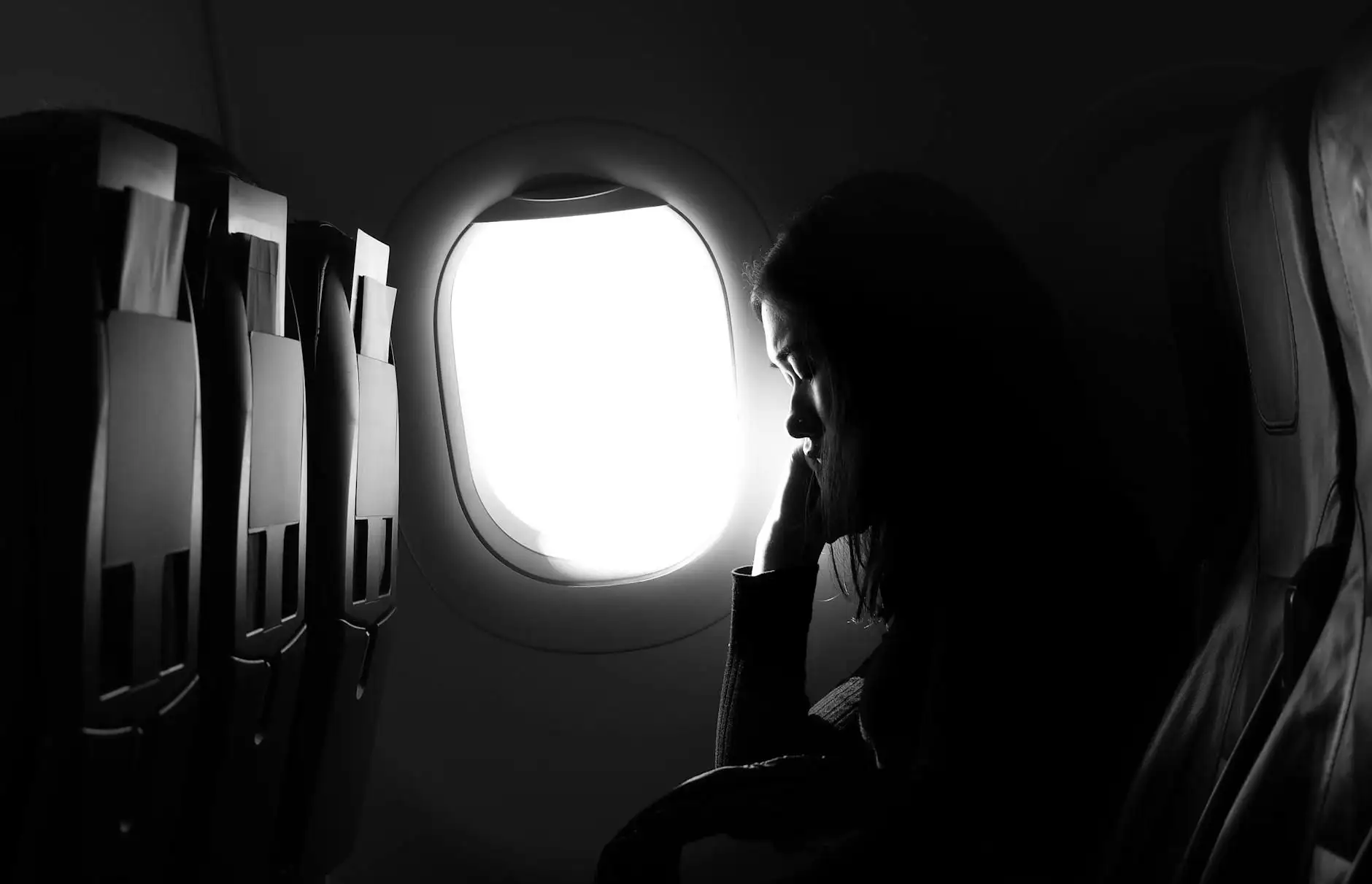
A common phobia, not a failure of reason
Flying remains statistically the safest mode of transport: the Direction générale de l'aviation civile (DGAC) publishes safety data every year confirming it. Fear of flying is not a flaw in reasoning but an emotional reaction that follows its own rules, independently of the actual level of risk.
Identifying your triggers and informing yourself
Fear of flying is not uniform: take-off, turbulence, confinement, loss of control. Pinpointing exactly what sets off your anxiety is the first step, and one often worked on in cognitive behavioural therapy (CBT), the reference treatment for specific phobias according to the HAS. Understanding how an aircraft flies, how airframes are designed to absorb turbulence and how pilots are trained narrows the room left for anxiety-inducing vagueness. Several airlines (Air France, Easyjet) run dedicated courses combining technical information with a practice flight.
Telling fear apart from real danger
The physiological sensations of fear (racing heart, short breath) are identical whether the danger is real or imagined, which keeps the confusion alive. One useful formulation from CBT: « I feel anxiety, I am not in danger ». The reframing technique then consists in turning catastrophic thoughts into hypotheses to be examined: how many flights without incident, what is the actual probability?
Turbulence: the leading cause of anxiety, the least well founded
A commercial aircraft is designed to withstand forces far greater than those met in severe turbulence. Pilots adjust altitude and speed to cross unstable zones, much as a car slows for a speed bump. Watching the crew's faces during those moments often gives a reliable indicator of how serious things really are.
Concrete tools for the day of the flight
Three simple techniques help interrupt a rising wave of anxiety in flight: sensory grounding (focusing attention on one precise detail, a texture, a light), heart-coherence breathing (five seconds in, six seconds out, for three to five minutes) and box breathing (four counts in, hold, out, hold). Talking quietly to the person next to you also lowers the emotional intensity, a mechanism documented in social psychology.
When to seek help, and the rules on CBD when travelling
When fear concretely prevents you from taking a plane, it is time to seek help: the HAS recommends CBT as the first-line approach for specific phobias, with 8 to 15 sessions generally needed. The Mon Soutien Psy scheme allows the cost to be covered by the health insurance system. Some adults also build hemp-based products into their wellness routine before a flight: no brand may claim that a CBD product « calms the fear of flying », as that would be a prohibited therapeutic claim. Transport rules vary widely depending on the destination and transit countries: for a full rundown, see our guide to CBD on a plane.
CBD is not a medicine. In the event of persistent anxiety or an anxiety disorder, consult a healthcare professional.
Frequently asked questions
Can CBD calm a fear of flying?
No, no brand may legally claim so. For a full-blown phobia, cognitive behavioural therapy remains the reference approach.
How many CBT sessions does it take to treat a fear of flying?
According to the HAS, between 8 and 15 sessions are generally needed for specific phobias, with an improvement often noticeable from the fifth onwards.
What should you do during a panic attack in flight?
Tell the cabin crew, who are trained for these situations, practise box breathing and focus your attention on one specific object. The episode peaks within about ten minutes and then subsides.
Are there dedicated courses in France?
Yes, Air France runs its « Apprivoiser l'avion » course and several private practices organise days combining theory, relaxation and a practice flight.
Written by the Phytogrammes team
Every article in this journal draws on primary sources (ANSM, EFSA, EUR-Lex, peer-reviewed publications) and on the lab's own practice: batch-by-batch HPLC analyses, measured cannabinoid profiles. Our approach.
Article published on . CBD is not a medicine.
Phytogrammes products that pair well
Further reading

cbd·18 May 2026
First time with CBD: what to know before you try
Route of administration, starting dose, a stable framework over several weeks: the practical benchmarks for approaching CBD with your eyes open.

bien-etre·18 May 2026
Taking care of yourself in winter: five dimensions to maintain
Falling light levels, seasonal fatigue, a slower social life: five concrete registers for getting through winter without exhausting yourself, and without lecturing.

recompenses-cbd·18 May 2026
Prizes and awards on CBD gummies: what are they worth?
Consumer awards, independent medals, press rankings: how to decode the distinctions displayed on CBD products.