← Journal/18 May 2026·4 min de lecture
Sleep and sports recovery: what you need to know
Par The Phytogrammes team ·
Slow-wave deep sleep and REM sleep are key phases of muscle recovery, documented by Inserm and the INSV for their effects on growth hormone secretion. CBD was removed from the WADA list in 2018, but licensed athletes must remain vigilant about residual THC in full-spectrum products.
Why sleep weighs on physical performance
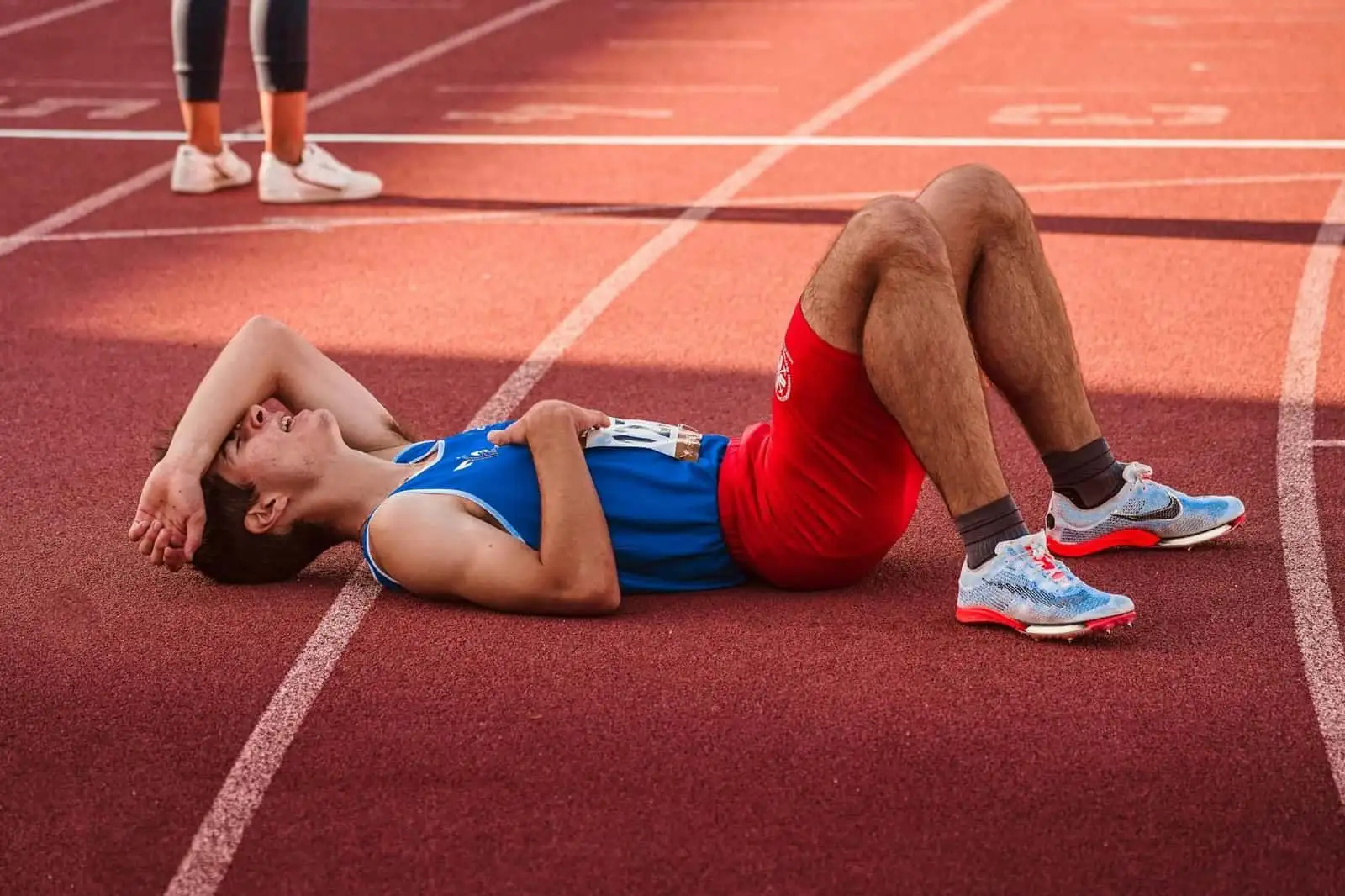
During sleep, the endocrine system regulates the production of several hormones involved in muscle repair. It is during slow-wave deep sleep that the secretion peaks of growth hormone occur, which stimulates protein synthesis. The INSV points out that the average sleep duration of French people has fallen below the recommended seven-hour threshold, which for an athlete translates into poorer recovery and an increased risk of injury.
The sleep phases that matter for athletes
A sleep cycle lasts around 90 minutes and moves through light sleep, slow-wave deep sleep (physical repair) and REM sleep (consolidation of procedural memory). Over a night of seven to nine hours, an adult goes through four to six cycles. A shortened night mainly sacrifices REM sleep, which impairs mental sharpness the following day.
Sleep deprivation and muscle catabolism
Several studies published in peer-reviewed journals (Sleep, Journal of Strength and Conditioning Research) show that acute sleep deprivation shifts metabolism towards protein catabolism rather than lipolysis. In the long term, chronic deprivation is associated with reduced strength and endurance performance, slower recovery and a rise in inflammatory markers.
Sleep hygiene: what works for an athlete
The INSV and the HAS agree on regular bedtimes and waking times, exposure to daylight on waking, no bright screens in the hour before bed, caffeine avoided after 2 pm and a cool bedroom at around 18-19 °C. For an athlete, training timing matters: intensive late sessions can delay sleep onset by 30 to 60 minutes, hence the value of a wind-down ritual (gentle stretching, a lukewarm shower).
The CBD and THC framework for athletes
Since 1 January 2018, CBD has been removed from WADA's list of prohibited substances, and the AFLD applies the same rule to licensed French athletes. All other cannabinoids, including THC, remain prohibited in competition, with a urinary threshold of 150 ng/mL. The concrete risk for an athlete using CBD is contamination by the residual THC in full-spectrum products, which can trigger a positive test. The AFLD recommends certified « THC-free » CBD isolates or ranges bearing the NSF Certified for Sport label.
Where CBD can fit into a sporting routine
For non-licensed practitioners, CBD is sometimes used in topical form (a post-training balm, with no notable systemic absorption) or as a sublingual oil within a wind-down ritual. No muscle recovery claim is authorised. The Cour de cassation ruling of 21 June 2023 confirmed that a legal CBD product can lead to a positive saliva test for THC: do not drive after taking a full-spectrum product.
Frequently asked questions
How many hours of sleep does an athlete need?
The INSV recommends 7 to 9 hours for a healthy adult. Elite athletes frequently need 8 to 10 hours, supplemented by short naps.
Can topical CBD make an anti-doping test positive?
Balms for external use have low systemic absorption, so the risk is lower. Only products certified « THC-free » by analysis offer a reasonable safety margin.
Which CBD format for a licensed athlete?
A CBD isolate certified « THC-free », or a product carrying the NSF Certified for Sport / Informed Sport label, to limit the risk of THC contamination.
Does CBD improve recovery?
No French or European health authority has validated any sports recovery claim for CBD. Athletes who use it describe it as an addition to a wind-down ritual.
To explore the context of para-sport and winter recovery, see our article on [para-skiing and recovery](/blog/ski-handisport-recuperation-saison-hivernale). For dosage reference points, see [how much CBD to take](/blog/quelle-quantite-de-cbd-prendre-reperes-usage).
Written by the Phytogrammes team
Every article in this journal draws on primary sources (ANSM, EFSA, EUR-Lex, peer-reviewed publications) and on the lab's own practice: batch-by-batch HPLC analyses, measured cannabinoid profiles. Our approach.
Article published on . CBD is not a medicine.
Phytogrammes products that pair well
Further reading
dos·18 May 2026
Back spasms: what to do about a muscle strain?
What to do about a back muscle spasm: relative rest, gentle mobility, when to seek advice and the place of topical care in a comfort routine.
spectre-complet·18 May 2026
What does « full spectrum » mean in a CBD oil?
Beyond CBD, a full-spectrum extract contains more than 100 cannabinoids and many hemp terpenes. Here is what the term actually means.
spectre-complet·18 May 2026
Full spectrum or CBD isolate: which to choose, and why
Should you prefer a complete hemp extract or a single purified molecule? A comparison of the uses, advantages and limits of each format.