← Journal/18 May 2026·4 min de lecture
Resolutions that hold: the 3 pillars of sleep, nutrition and movement
Par The Phytogrammes team ·
Resolutions that hold beyond January rest on three pillars validated by the French health authorities: regular sleep, a diet close to the PNNS guidelines, and moderate but frequent physical activity. No product replaces these fundamentals; wellbeing CBD can, at most, be added to an evening routine alongside them.

Why most resolutions fail before February
Behavioural psychology, relayed by Inserm, points to two recurring causes of failure: an ambition that is too broad — "being healthier" describes no precise action — and the absence of a daily trigger to anchor the habit in a routine. Resolutions that last rest instead on a small gesture repeated at a fixed time, which accumulates week after week, rather than on a spectacular goal set on 1 January.
First pillar: regular sleep
The INSV recommends 7 to 9 hours of sleep a night for most adults, with regular timings considered more important than the exact duration. In practice: go to bed and get up at fixed times, weekends included, get daylight on waking, avoid screens in the hour before bed, and keep the bedroom cool, around 18-19 °C. The HAS recommends cognitive behavioural therapy as the first-line approach if the problems persist beyond a few weeks.
Second pillar: a diet close to the PNNS guidelines
The national nutrition and health programme sums up a balanced diet in a few simple guidelines: at least five fruit and vegetables a day, pulses twice a week, wholegrain starchy foods, two portions of fish a week, and limited consumption of ultra-processed products, salt and added sugar. A sustainable dietary resolution is not a restrictive diet: it consists in gradually adjusting your habits towards these guidelines, one portion at a time. To go further into the links between diet and sleep, see our dedicated article.
Third pillar: movement every day
ANSES recommends at least 30 minutes of moderate to vigorous physical activity, five days a week, supplemented by two strength-training sessions. For a resolution that holds, it is better to aim for a simple hook — walking to work, taking the stairs, doing a 30-minute loop after dinner — than a performance target that is hard to sustain over time. Regularity counts for more than intensity.
These three pillars reinforce one another
Good sleep improves dietary choices and the motivation to move; regular physical activity makes falling asleep easier; a balanced diet supports the energy available for movement. Conversely, neglecting one pillar weakens the other two, which is why public health campaigns always target these three levers together rather than in isolation.
Where wellbeing CBD can fit in, without replacing the fundamentals
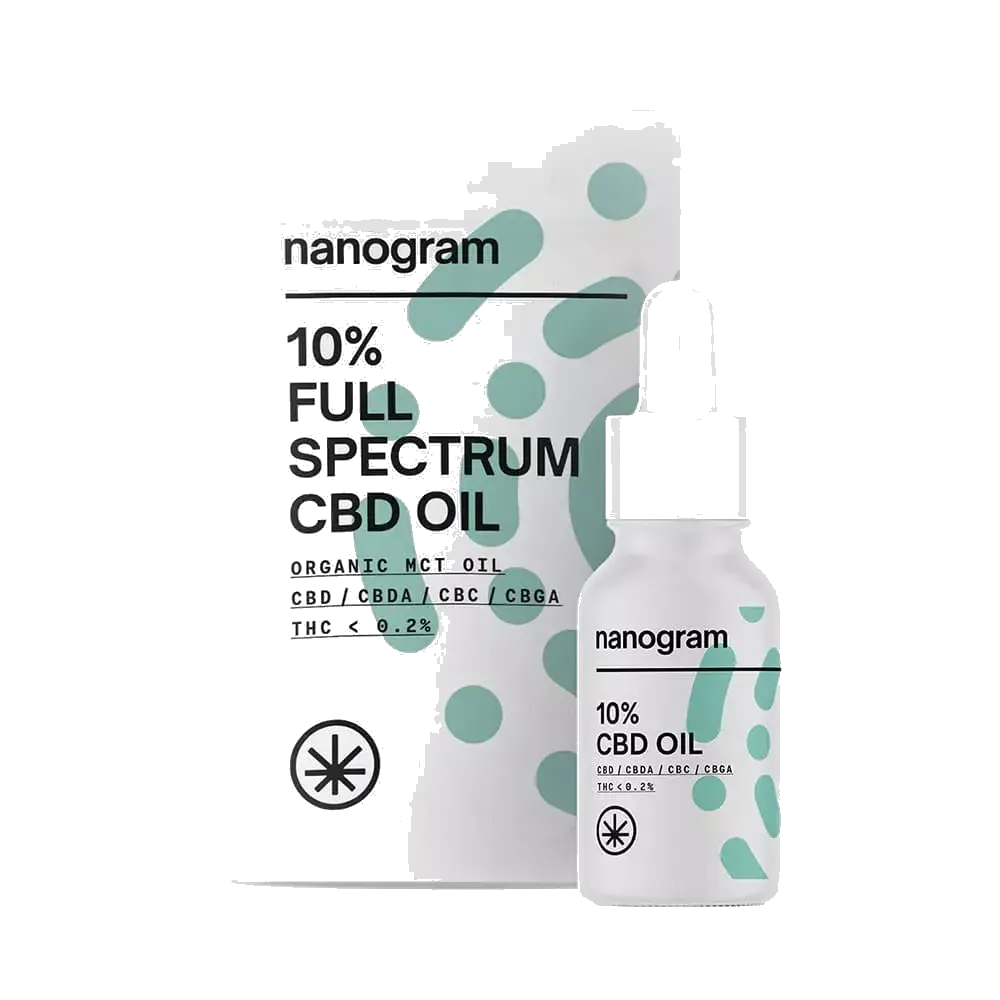
Some people build a few drops of CBD oil or an infusion of flowers into a moment of relaxation at the end of the day, as part of an evening ritual. MILDECA points out that no therapeutic claim is validated for wellbeing CBD in France: it does not "make you sleep" and does not "treat" any disorder. In 2026 EFSA set a provisionally safe daily dose of about 2 mg a day for a 70 kg adult, far below the dosages often sold commercially. CBD remains not advised for pregnant or breastfeeding women or for minors, and is no substitute for medical advice.
Frequently asked questions
How long does it take to anchor a new habit?
Between 21 and 66 days depending on the nature of the habit, with daily regularity the most decisive factor.
Should all three pillars be worked on at once?
Not necessarily. Many people start with sleep, which then shapes the motivation to adjust diet and physical activity.
Does CBD really help you stick to a resolution?
No French authority has validated that claim. Wellbeing CBD has no documented effect on motivation or willpower.
Is a medical consultation worthwhile before starting?
It is recommended if you are on a current treatment, have a cardiovascular history, or before resuming intense physical activity after a long break.
Written by the Phytogrammes team
Every article in this journal draws on primary sources (ANSM, EFSA, EUR-Lex, peer-reviewed publications) and on the lab's own practice: batch-by-batch HPLC analyses, measured cannabinoid profiles. Our approach.
Article published on . CBD is not a medicine.
Phytogrammes products that pair well


Further reading

bien-etre·18 May 2026
7 pillars of a wellness routine that lasts in 2026
Sleep, food, movement, calming rituals: seven concrete pillars that fit the guidance issued by the French health authorities.

alimentation-sommeil·18 May 2026
Diet and sleep: what to eat (or avoid) in the evening
Tryptophan, magnesium, alcohol, coffee, late meals: what the PNNS recommendations and Inserm actually say about the impact of diet on sleep.

concentration·18 May 2026
Everyday distractions: 5 levers for better concentration
Constant notifications, information overload, multitasking: five concrete levers for protecting your concentration, based on French guidance.