← Journal/18 May 2026·10 min de lecture
Resetting your sleep-wake rhythm: the step-by-step method
Par The Phytogrammes team ·
Resetting a shifted body clock takes 10 to 14 days and rests on three priority levers: morning light exposure, a consistent wake-up time, and cutting out screens in the evening. All of it without medication, in line with the strategy validated by the HAS.
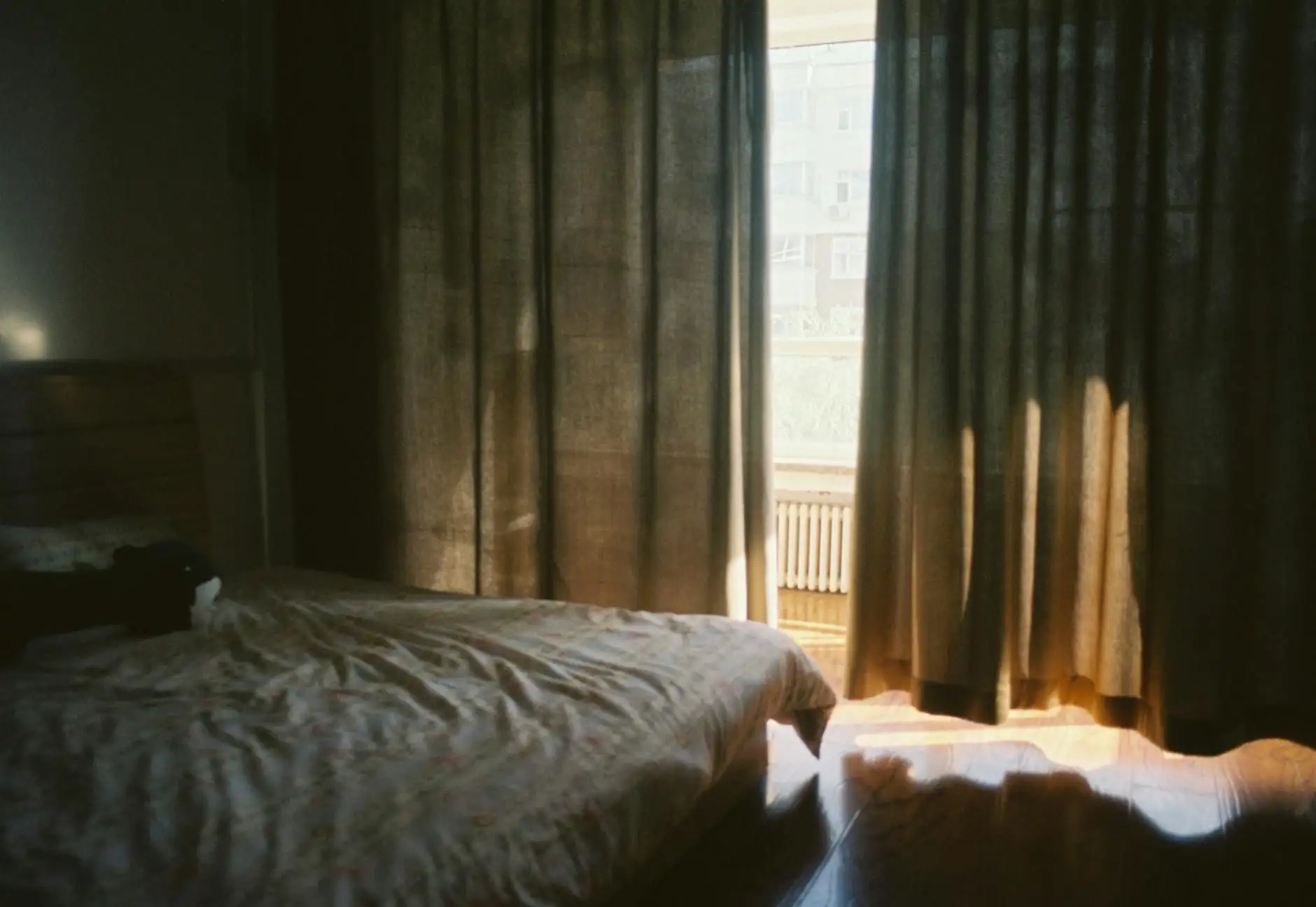
You go to bed too late every night. You push back the alarm, you build up sleep debt during the week, then you sleep twelve hours on Saturday to catch up. This pattern — called social jet lag in the scientific literature — gradually shifts your body clock. The INSV 2024 survey measured that French people sleep an average of 6 hr 42 min on weekdays and 7 hr 25 min at the weekend, a gap of more than 40 minutes. Here is how to take back control.
What is the circadian rhythm?
The circadian rhythm is the internal body clock, located in the suprachiasmatic nuclei of the hypothalamus, which regulates hormone secretion, body temperature, appetite and alertness over a cycle of roughly 24 hours. Its stability depends on time signals called zeitgebers ("time givers" in German): natural light, meals, physical activity, social interaction.
The most powerful of these signals is light. When morning light reaches the retina, the brain suppresses melatonin secretion and triggers the hormonal cascade of waking. Conversely, evening darkness reactivates melatonin and lowers body temperature, preparing the body for sleep. Screens, indoor LED lighting and shifted schedules undermine this mechanism.
When is a rhythm considered disrupted?
Several converging signals point to a misaligned sleep-wake rhythm:
- Taking more than 30 minutes to fall asleep on several nights a week.
- Repeated night-time awakenings (73% of French people report them, according to the INSV 2025).
- Waking very early in the morning without being able to get back to sleep.
- Daytime sleepiness despite a theoretically sufficient number of hours.
- A gap of more than two hours between weekday and weekend schedules.
If three or more of these signals are present for more than three months, you meet the HAS definition of chronic insomnia, which calls for a medical assessment. For a more recent or milder disruption, the method below is enough in most cases.
The method, over 10 to 14 days
Resetting is not instant. The circadian system moves by roughly 30 to 60 minutes per 24 hours in the advancing direction (going to bed and getting up earlier), and slightly faster in the delaying direction. In practical terms:
- To bring a bedtime forward by two hours (for example, from 1 am to 11 pm), allow about ten days.
- To bring it forward by four hours (for example, from 3 am to 11 pm), allow 14 days.
The shift is made in steps of 15 to 30 minutes. Any attempt at an abrupt reset ("I'm going to bed at 10 pm from tonight") fails in the majority of cases, because falling asleep is not under voluntary control.
Step 1: lock in the wake-up time
This is the most powerful and the most counter-intuitive lever. The body clock sets itself mainly on the wake-up time, not on bedtime. Choosing a single wake-up time (weekday and weekend mornings alike) and not straying from it by more than 60 minutes is the foundation of any reset.
Practical tip: set your alarm for the same time every day for 10 days, including on the days when you have slept badly. That may mean accepting a tired Monday in order to gain stability for the rest of the week. The INSV 2024 survey shows that a gap of less than one hour between weekdays and the weekend significantly reduces reported sleep problems.
Step 2: morning light exposure
Within 30 to 60 minutes of waking, expose yourself to natural light for 15 to 30 minutes. Even in overcast weather, outdoor light intensity (5,000 to 20,000 lux) is 10 to 50 times higher than the best-designed indoor lighting (300 to 500 lux). A walk, breakfast on the terrace, throwing the shutters wide open: the format matters little, it is the dose of light that counts.
In winter, or with shifted working hours, a light therapy lamp delivering 10,000 lux at 30 cm for 20 to 30 minutes in the morning produces an equivalent effect. This is notably validated for seasonal affective disorder and delayed sleep phase syndrome.
Step 3: cut out evening light
The reverse is just as important. Bright evening light, especially the blue light of screens and "cool" LED lighting (> 4000 K), suppresses melatonin secretion and delays sleep onset. Three concrete adjustments:
- Dim the lighting in the final hour: low lamps, warm bulbs (< 3000 K), candles if you like them.
- Cut out screens 30 to 60 minutes before bed. The "warm tint" mode on smartphones helps but does not remove the effect.
- Avoid light sources in the bedroom: charger LEDs, digital alarm clocks with over-bright red displays, appliance standby lights.
If outdoor light pollutes your bedroom (street lamps, neighbours), blackout curtains or a sleep mask can complete the set-up.
Step 4: manage the secondary levers
Once the three pillars are in place, several fine-tuning levers reinforce the reset:
Bedroom temperature: 17 to 19 °C is the recommended range. Above 22 °C, sleep onset and deep sleep both deteriorate.
Physical activity: 30 minutes a day of moderate activity strengthens sleep pressure in the evening. Avoid intense exercise in the two hours before bed (raised heart rate and body temperature).
Meals: a light dinner, 2 to 3 hours before bed. Heavy digestion fragments sleep. Limit fluids in the preceding hour to reduce trips to the toilet.
Caffeine and alcohol: no caffeine after 2 pm; no alcohol in the 3 hours before bed (alcohol degrades the second half of the night).
Naps: 10 to 20 minutes maximum, before 3 pm. Longer or later naps sabotage the reset by reducing sleep pressure.
Step 5: build an evening ritual (and possibly CBD)
A wind-down window of 30 to 60 minutes prepares the body physiologically for sleep: reading, gentle stretching, meditation, slow breathing (cardiac coherence, 5 seconds in / 5 seconds out). Some adults add a herbal tea, melatonin or a CBD product to that window.
CBD is not a medical sleep aid. No French or European authority (HAS, ANSM, EFSA) has validated any claim on this subject. The HAS decision of 11 July 2024 does not mention it in its recommendations. If you choose to add one to your evening ritual, bear in mind:
- CBD is legal in France if the finished product contains ≤ 0.30% THC, under the Conseil d'État decision of 29 December 2022.
- Favour a product with an independent certificate of analysis (CBD content, THC, absence of HHC/H4CBD/THCP, banned since 2024).
- A full-spectrum or broad-spectrum product can lead to a positive saliva test for THC (Cour de cassation, 21 June 2023).
- The EFSA published, on 9 February 2026, a provisionally safe daily dose that is very low, at 0.0275 mg/kg/day, well below the doses usually sold. Moderation is recommended.
When to seek medical advice
If after two to three weeks of rigorous application your rhythm remains disorganised, or if your sleep comes with overwhelming daytime sleepiness, loud snoring with reported apnoeas, or a depressive syndrome, consult your GP. Several medical causes can sabotage a reset: sleep apnoea syndrome, restless legs syndrome, thyroid disorders, depression. The HAS recommends cognitive behavioural therapy for insomnia (CBT-I) as the reference treatment for chronic insomnia, now available in France through the digital solution HelloBetter Insomnie, assessed by the HAS in 2024.
Key points
- The circadian rhythm sets itself first on the wake-up time and on morning light.
- Resetting a shifted clock takes 10 to 14 days, in steps of 15 to 30 minutes.
- A single wake-up time, with a gap of < 60 minutes between weekdays and the weekend.
- 15-30 minutes of natural light within the hour after waking.
- Screens off 30-60 minutes before bed, warm lighting in the evening.
- Bedroom at 17-19 °C, light dinner 2-3 hours before bed, no caffeine after 2 pm.
- CBD is not a medicine and does not replace the strategy above.
Frequently asked questions
How long does it take to reset your rhythm?
The circadian system moves by roughly 30 to 60 minutes per 24 hours. To bring a bedtime forward by two hours, allow 10 days. For four hours, allow about two weeks. Any attempt at an abrupt reset usually fails.
Should you catch up on sleep at the weekend?
No. Sleeping three or four hours longer on Saturday morning amplifies the shift and destabilises the following Monday — this is what chronobiologists call "social jet lag". A short nap (20 minutes) in the early afternoon is preferable.
Are light therapy lamps really effective?
Yes, for sleep-wake rhythm disorders and seasonal depression. Favour a CE medically certified lamp delivering 10,000 lux at 30 cm, used for 20 to 30 minutes in the morning, within the two hours after waking. Ask a doctor for advice if you have a pre-existing eye condition.
Does CBD help reset the rhythm?
No study has demonstrated an effect of CBD on the circadian rhythm. CBD replaces neither morning light, nor consistent timings, nor cutting out screens. It may possibly form part of a wider evening ritual, with no recognised therapeutic value.
What about shift work or jet lag?
Shift work and long journeys durably destabilise the circadian system. Several validated strategies exist: a prophylactic nap before starting a shift, wearing blue-filtering glasses at the end of a night shift, controlled light exposure on return. Low-dose melatonin (0.5 to 2 mg) is useful for jet lag. If difficulties persist, specialist advice (occupational physician or sleep centre) is recommended.
To discover our selection of CBD oils and herbal teas intended for an evening ritual, [see our sleep catalogue](/categorie-produit). CBD is not a medicine. If sleep problems persist, consult a healthcare professional.
Sources
Written by the Phytogrammes team
Every article in this journal draws on primary sources (ANSM, EFSA, EUR-Lex, peer-reviewed publications) and on the lab's own practice: batch-by-batch HPLC analyses, measured cannabinoid profiles. Our approach.
Article published on . CBD is not a medicine.
Phytogrammes products that pair well



Further reading

microbiote·18 May 2026
Gut health and mental well-being: the gut-brain axis
Microbiota, vagus nerve, neurotransmitters: what French research says about the gut-brain axis and its role in everyday stress.

chien·18 May 2026
12 signs of stress in dogs: recognising them and acting
A dog cannot speak, but bodily and behavioural signals give away its stress. Here is how to recognise them and when to seek advice.

handisport·18 May 2026
Para-skiing and recovery: what adaptive camps teach us
Adaptive ski camps rebuild a routine of effort after an accident. In France, the FFH structures the offering — here is what you need to know.