← Journal/18 May 2026·4 min de lecture
CBD or THC? The most persistent myths, untangled
Par The Phytogrammes team ·
CBD (cannabidiol) and THC (delta-9-tetrahydrocannabinol) are two hemp cannabinoids with very different effects. THC is psychoactive and classified as a narcotic in France; CBD is not, provided the finished product contains a maximum of 0.30% THC. The confusion between the two is fuelled by their similar names and shared origin - here are the most common myths, set straight.
A shared origin, two very different molecules
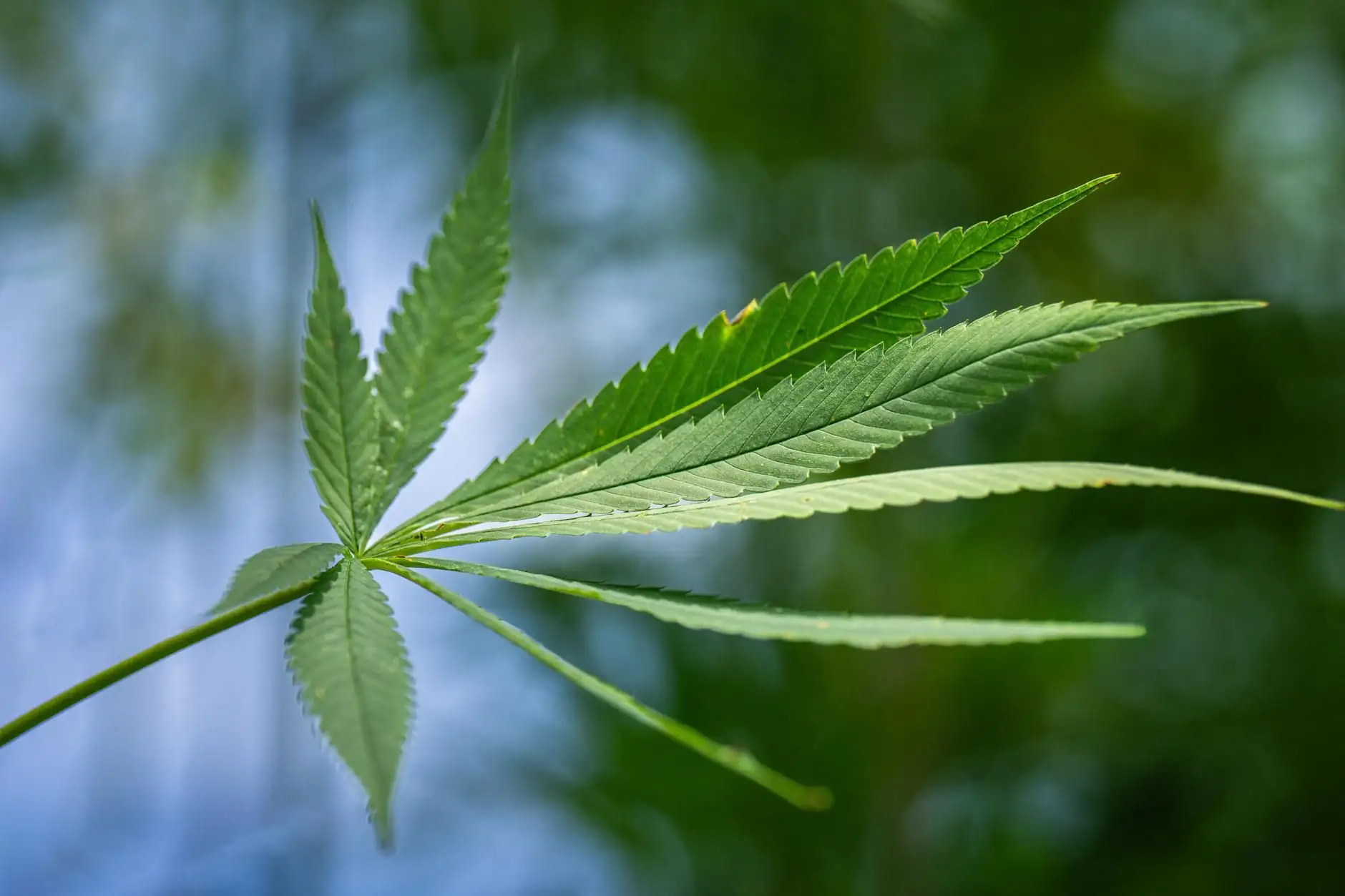
CBD and THC are produced by the same plant, Cannabis sativa L. They share a similar chemical structure but act differently on the receptors of the endocannabinoid system: THC binds strongly to the CB1 receptor, which explains its psychoactive effect; CBD has only a weak affinity for that same receptor.
| Criterion | CBD | THC |
|---|---|---|
| Psychoactive effect | No | Yes |
| Status in France | Legal if ≤ 0.30% in the finished product | Narcotic |
| Saliva test | Not detected | Detected |
Myth no. 1: "CBD gets you high like THC"
False. CBD has no psychoactive effect comparable to THC at usual dosages: no state of intoxication, no hallucination, no major alteration of perception. MILDECA confirms this on its official page. This absence of a "high" is one of the reasons for the French commercial authorisation of CBD.
Myth no. 2: "THC is banned, so every cannabinoid is banned"
False. Legal status is molecular, not generic. The Public Health Code lists narcotic substances precisely; CBD does not appear on it. The operational threshold for a CBD product sold in shops is 0.30% THC in the finished product, confirmed by the ruling of the Conseil d'État of 29 December 2022.
Myth no. 3: "France bans CBD"
False since the end of 2022. The order of 30 December 2021 had attempted to ban the sale of raw flowers and leaves; the Conseil d'État suspended it in interim proceedings as early as 24 January 2022, then annulled it definitively at the end of 2022. This decision follows the line of the Kanavape ruling of the CJEU (19 November 2020), which held that a Member State cannot ban CBD lawfully produced elsewhere in Europe without demonstrating a proportionate health necessity.
Myth no. 4: "A full-spectrum CBD product contains enough THC to get you high"
False, with nuance. A full-spectrum product contains the full range of minor cannabinoids, including traces of THC within the legal limit of 0.30%. This quantity is not enough to produce a psychoactive effect at usual dosages - but it is enough to trigger a positive saliva test at the wheel. The Cour de cassation, in its ruling of 21 June 2023, confirmed that the commercial lawfulness of the product does not exempt the driver.
Myth no. 5: "CBD and medical cannabis are the same"
False. Medical cannabis is a medicine often containing THC at active concentrations, prescribed by a hospital doctor for specific indications, whose general rollout is overseen by the ANSM. Wellness CBD is an everyday consumer product, sold without prescription, based on low-THC industrial hemp. No equivalence can be drawn between the two.
Myth no. 6: "CBD offsets the effect of THC"
Preliminary data, not clinical certainty. Some in vitro studies suggest that CBD might modulate certain effects of THC, but these data remain difficult to transpose to everyday use and underpin no French recommendation. It would be unwise to use CBD as an "antidote" to THC. For a detailed comparison of legal thresholds, see our article on finding the right CBD oil concentration.
Frequently asked questions
Can I take CBD if my job involves anti-doping tests?
CBD is not prohibited by the World Anti-Doping Agency. But full-spectrum products can trigger a positive result for THC: athletes in competition favour certified THC-free isolates.
Is CBD detected by a blood test?
A specific blood test exists in research settings but is not used in routine roadside checks in France. Those checks look for THC, not CBD.
Can THC be extracted from a CBD flower?
Technically yes, but doing so would be an offence. The possession, production and distribution of THC are punishable under the Public Health Code.
Why do you sometimes see "0.2%" instead of "0.3%" THC?
The 0.20% threshold applied before 2021. Since the Conseil d'État ruling of 29 December 2022, the harmonised operational threshold is 0.30% THC in the finished product.
Written by the Phytogrammes team
Every article in this journal draws on primary sources (ANSM, EFSA, EUR-Lex, peer-reviewed publications) and on the lab's own practice: batch-by-batch HPLC analyses, measured cannabinoid profiles. Our approach.
Article published on . CBD is not a medicine.
Phytogrammes products that pair well
Further reading
cbg·18 May 2026
CBG (cannabigerol): an introduction to the \"mother molecule\"
Why CBG is called the \"mother molecule\": the complete biosynthesis pathway, from olivetolic acid to CBD, THC and CBC.
cbg·18 May 2026
CBG (cannabigerol): a simple definition of a minor cannabinoid
CBG in a few simple markers: basic chemistry, a comparison table with CBD/CBN/THC and the French legal framework, without needless jargon.
cbn·18 May 2026
CBN (cannabinol): legal status and the state of research in France
The legal status of CBN in France remains unclear, between tolerance and the Novel Food regime. Here is what the law says and what research does (or does not) say.