← Journal/18 May 2026·4 min de lecture
CBG (cannabigerol): an introduction to the \"mother molecule\"
Par The Phytogrammes team ·
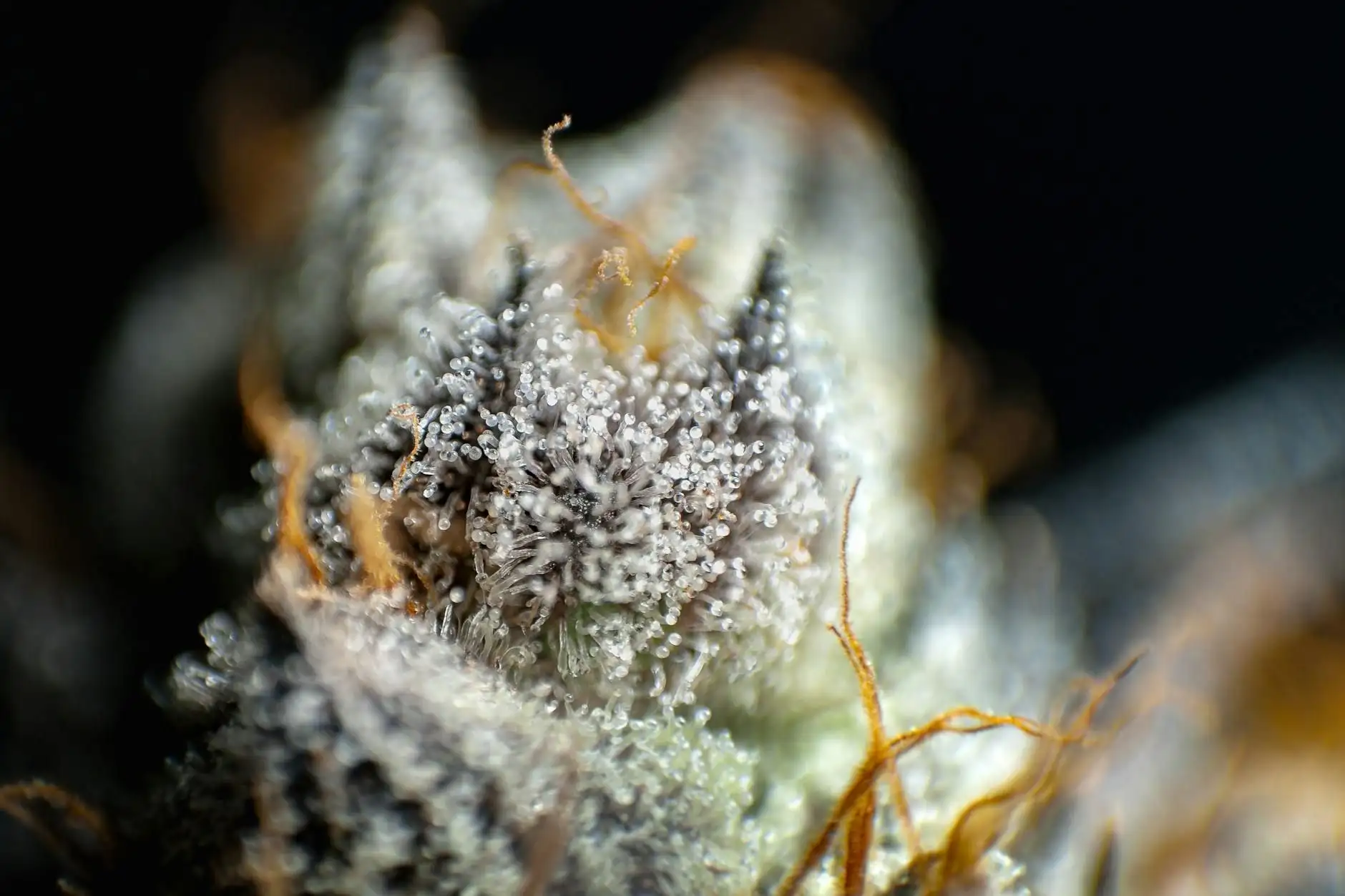
CBG (cannabigerol) is called the "mother molecule" of hemp because its acid form, CBGA, serves as the common enzymatic starting point for CBD, THC and CBC. By maturity, the plant converts almost all of its CBGA into these three cannabinoids, which explains why CBG generally accounts for only around 1% of the cannabinoid profile of a conventional flower.
The biosynthesis pathway, step by step
It all begins with the combination of two plant precursors: olivetolic acid and geranyl pyrophosphate (GPP). Under the action of the enzyme CBGA synthase, this reaction produces cannabigerolic acid (CBGA) - the mother molecule in the strict sense. CBGA is then taken up by three distinct enzymes, competing for the same substrate: CBDA synthase, which produces CBDA, the precursor of CBD; THCA synthase, which produces THCA, the precursor of THC; and CBCA synthase, which produces CBCA, the precursor of CBC. Each variety's genetic profile determines the proportion of active enzymes, and hence the final distribution between these three families.
Why the CBG concentration falls at the end of the cycle
In a conventional variety, the conversion enzymes (CBDA or THCA synthase) remain active throughout flowering. The CBGA produced is therefore converted almost as fast as it is synthesised, leaving at maturity only a residue of unconverted CBG - generally around 1%. This is a kinetic phenomenon: the longer the plant stays in flower with active enzymes, the more complete the conversion. For a shorter definition of CBG, see our cannabinoid fact sheet.
How growers obtain CBG-rich varieties
Two approaches make it possible to increase the share of CBG in a harvest. The first consists in harvesting the plant earlier in its cycle, before the enzymatic conversion of CBGA is complete, at the cost of a lower overall yield. The second rests on horticultural selection of varieties with a genetic deficit in CBDA or THCA synthase enzymes (so-called "CBG-dominant" chemotypes), which naturally accumulate CBGA rather than converting it. These varieties remain rarer and more expensive to grow than conventional CBD-dominant varieties.
CBG's pharmacological profile compared with CBD
CBG differs from CBD in the way it interacts with the endocannabinoid system. Where CBD acts mainly through indirect modulation (serotonergic receptors, enzymes that break down endocannabinoids), CBG binds directly, albeit weakly, to the CB1 and CB2 receptors. Some preclinical data even suggest a partial blocking effect: CBG could temporarily occupy a receptor without fully activating it, thereby limiting the binding of other cannabinoids. It is also being studied for its interactions with alpha-2 adrenergic receptors and with the 5-HT1A serotonergic and PPAR-gamma receptors.
What early research is exploring, and its limits
The scientific literature on CBG remains overwhelmingly preclinical: cell cultures and animal models. Extrapolations to humans should be treated with caution, as Inserm's summary dossiers on cannabinoids regularly point out. No health claim has been validated by EFSA for CBG to date, and no adequately powered clinical trial has established an effect in humans. For the available formats and precautions for use, see our CBG product guide.
Frequently asked questions
Why does CBG cost more than CBD?
Because it is present in very small quantities in conventional varieties, around 1% at maturity. Obtaining a CBG-rich extract requires selected varieties or early harvests, which increases production costs.
What is the difference between CBGA and CBG?
CBGA is the native acid form produced directly by the plant. Decarboxylation - drying, heating - converts CBGA into CBG, the active form found in most commercial products.
Does CBG block the effect of other cannabinoids?
Preclinical data suggest an interaction of this type at the CB1/CB2 receptors, but this mechanism remains studied essentially in the laboratory. No clinical consequence has been established in humans to date.
Are CBG-dominant varieties legal in France?
Yes, under the same conditions as any hemp variety: listing in the European catalogue of authorised varieties, and THC in the finished product at or below 0.30%.
Written by the Phytogrammes team
Every article in this journal draws on primary sources (ANSM, EFSA, EUR-Lex, peer-reviewed publications) and on the lab's own practice: batch-by-batch HPLC analyses, measured cannabinoid profiles. Our approach.
Article published on . CBD is not a medicine.
Phytogrammes products that pair well
Further reading
cbg·18 May 2026
CBG (cannabigerol): a simple definition of a minor cannabinoid
CBG in a few simple markers: basic chemistry, a comparison table with CBD/CBN/THC and the French legal framework, without needless jargon.

cbn·18 May 2026
CBN (cannabinol): legal status and the state of research in France
The legal status of CBN in France remains unclear, between tolerance and the Novel Food regime. Here is what the law says and what research does (or does not) say.

cbn·18 May 2026
CBN and sleep: a practical guide to an evening ritual
A 2024 clinical trial, a comparison with melatonin and sleeping pills, practical steps: how to approach CBN in an evening ritual without overpromising.