← Journal/16 May 2026·4 min de lecture
How to recognise the best CBD flower
Par The Phytogrammes team ·
Quality CBD flower can be recognised by three verifiable elements: a THC level below 0.30% attested by an independent certificate of analysis, a rich terpene profile identifiable by smell, and an origin traceable back to the variety grown. The advertised price, or appearance alone, is never enough to judge a flower.
The THC threshold, the first legal filter
In France, hemp flower is legal only if the finished product contains no more than 0.30% THC, a threshold confirmed by the Conseil d'État in its decision of 29 December 2022 (no. 444887), which annulled the ban on selling flowers and leaves. Any serious flower must therefore come with an independent certificate of analysis stating that level.
This document, also called a CoA (certificate of analysis), is the only reliable way to check the compliance of a batch. A shop that cannot produce it on request should put the buyer on alert, whatever the reputation of the variety being sold. Synthetic cannabinoids such as HHC or H4CBD have been classified as narcotics by the ANSM orders of 2023 and 2024 and do not belong to the legal CBD flower market.
The terpene profile, an indicator of authenticity
Terpenes are the aromatic compounds responsible for the characteristic smell of each variety: myrcene, limonene, pinene, linalool. Fresh, well-stored flower gives off a clear, recognisable smell; bland or dull flower often signals storage that has gone on too long or poor conservation. The terpene profile generally appears on the most complete certificates of analysis, alongside the cannabinoid content.
This level of detail makes it possible to compare two similar varieties objectively, rather than relying on marketing descriptions. To understand why these molecules count for so much in the overall experience, see our article on the importance of terpenes.
The origin and traceability of the variety
Only varieties listed in the official French catalogue or the common European catalogue may be grown for CBD production, under the supervision of FranceAgriMer. Serious flower states the variety grown (Futura 75, Fedora 17, Santhica 27, or a specific genetic imported within the legal framework), the country of cultivation, and where possible the farming method. The full path, from field to bottle or pouch, is set out in our article on the origin of CBD.
Displayed traceability is not an incidental marketing argument: it is what makes it possible, in the event of a DGCCRF inspection, to demonstrate the compliance of the product sold.
Appearance, texture and freshness
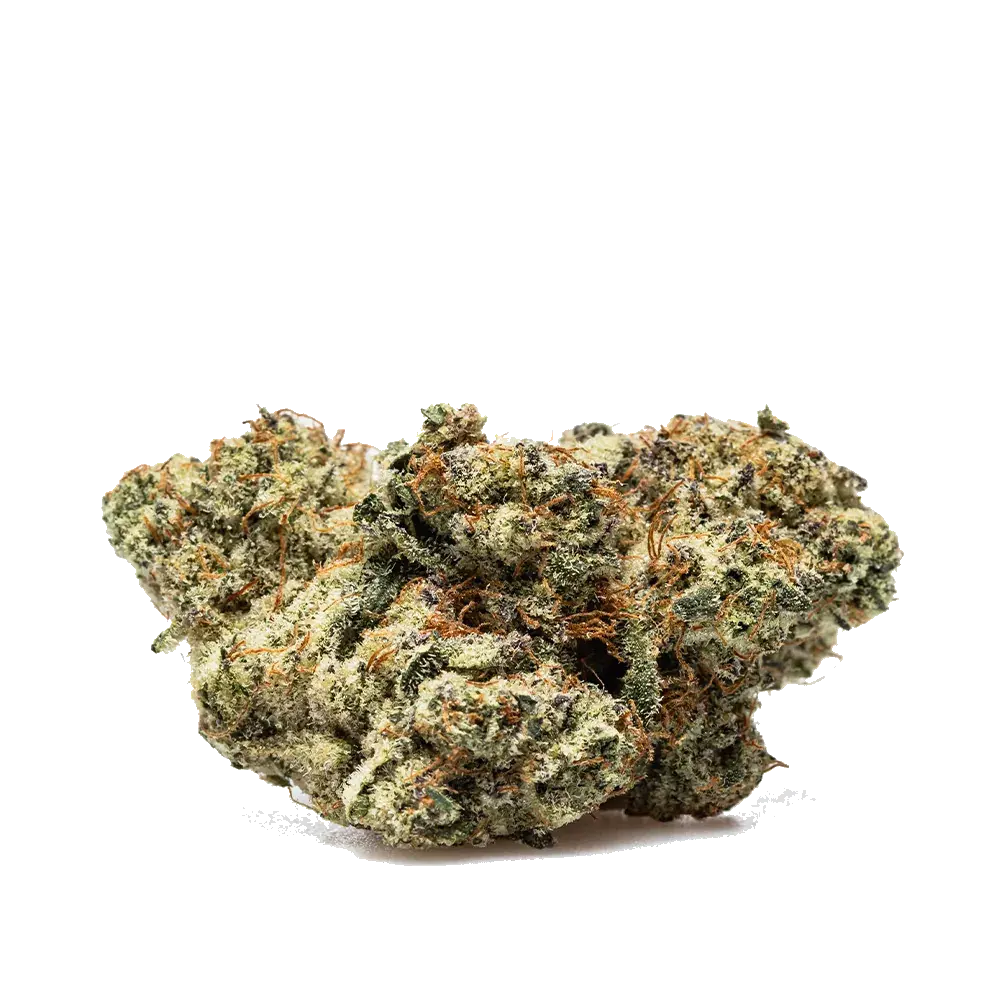
Quality flower shows visible trichomes, that fine crystalline down covering the flowering tops and holding most of the cannabinoids and terpenes. The texture should be firm without being brittle, neither too dry nor damp to the touch. Mouldy flower, with greyish patches or a musty smell, should never be consumed.
Packaging counts too: an opaque, airtight container protects volatile terpenes from light and air better than a simple transparent pouch.
Frequently asked questions
Does a high CBD level guarantee better flower?
No. A high CBD level says nothing about freshness, terpene profile or growing quality. That figure has to be cross-checked with the full certificate of analysis and the origin of the variety.
How can I check that a flower respects the legal THC threshold?
By asking for the certificate of analysis for the exact batch purchased, produced by an independent laboratory. That document must state a THC level less than or equal to 0.30% in the finished product.
Why do two flowers with the same CBD level smell different?
Because the CBD level says nothing about the terpene profile. Two varieties can show a similar CBD percentage while having completely distinct aromatic profiles, depending on their genetics and growing method.
Should you favour flower grown in France?
French cultivation makes traceability and FranceAgriMer supervision easier, but quality depends above all on the variety, the growing method and quality control, not solely on the country of origin.
Written by the Phytogrammes team
Every article in this journal draws on primary sources (ANSM, EFSA, EUR-Lex, peer-reviewed publications) and on the lab's own practice: batch-by-batch HPLC analyses, measured cannabinoid profiles. Our approach.
Article published on . CBD is not a medicine.
Phytogrammes products that pair well
Further reading

terpenes·16 May 2026
Why terpenes matter as much as CBD
Terpenes shape the smell, the taste and part of the experience felt with CBD hemp. Here is how these molecules work.
regulation·16 May 2026
French cannabis law: beyond the clichés
Cannabis and CBD do not fall under the same legal framework in France. Here are the thresholds and decisions that really separate the legal from the illegal.
fleurs-cbd·16 May 2026
Mango Kush: choosing and storing this CBD flower
A practical guide to buying, storing and consuming the Mango Kush variety within the French legal framework.