← Journal/18 May 2026·4 min de lecture
The dog's endocannabinoid system: what science has observed
Par The Phytogrammes team ·
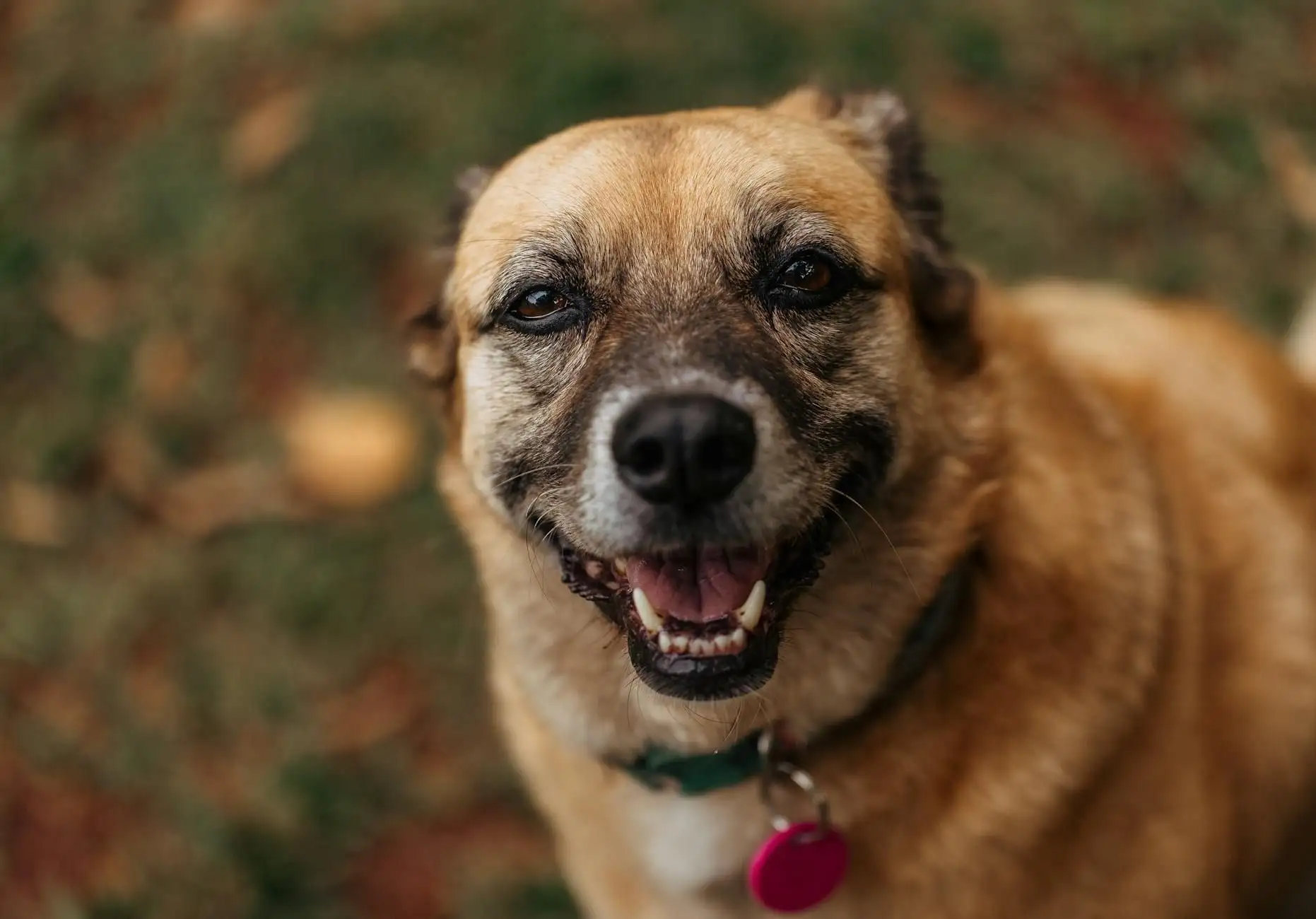
Like humans, dogs have an endocannabinoid system involved in regulating many physiological functions. This biological presence is not enough to validate the use of CBD in dogs: no veterinary medicinal product based on CBD holds a marketing authorisation in France, THC remains toxic to the canine species, and any use is a matter for veterinary advice.
What is the endocannabinoid system?
The endocannabinoid system, or ECS, is a cell-signalling system made up of three elements: endocannabinoids produced by the body, such as anandamide and 2-AG; receptors present on the surface of cells, mainly CB1 and CB2; and enzymes that synthesise and break down these molecules. Its role is to contribute to homeostasis, that is, to the balance of the body's major functions: sleep, appetite, mood, pain, immunity. It is a modulating system, not a commanding one.
CB1 and CB2 receptors in dogs
As in humans, two families of receptors have been described in dogs. CB1 receptors, concentrated in the central nervous system, are involved in regulating mood, sleep and pain perception. Anatomical studies (notably Freundt-Revilla, 2017, Cell and Tissue Research) show a particularly high density of CB1 receptors in the cerebellum and brainstem of dogs, more marked than in humans, which could explain their heightened sensitivity to THC. CB2 receptors, for their part, are mainly present in the immune system and the joints. THC binds directly to both families of receptors, whereas CBD acts in a more indirect way, modulating the system's activity without binding to it as clearly.
Why this canine specificity matters
The particular density of CB1 receptors in the canine cerebellum has major clinical consequences: dogs are exceptionally sensitive to THC. Poisoning presents as an unsteady gait, hypothermia, excessive salivation, dilated pupils, or in severe cases a coma. In 2024 the ANSES published an alert on the rise in poisonings caused by contaminated CBD products. The practical consequence: a so-called full-spectrum CBD product contains traces of THC that are legal for humans, up to 0.30%, which may still be problematic for a dog. The veterinary precautionary rule is clear: avoid full spectrum and choose a CBD isolate certified free of THC.
What veterinary research says
The scientific literature on CBD in dogs is growing but remains preliminary. Gamble et al. (2018, Frontiers in Veterinary Science) observed good tolerance of CBD at 2 mg/kg twice a day in sixteen osteoarthritic dogs. Brioschi et al. (2020, Animals) conclude that the tolerance profile is fairly favourable, while stressing the scarcity of large-scale randomised trials. McGrath et al. (2019, JAVMA) observed a reduction in seizures in some epileptic dogs, without reaching statistical significance. No French or European authority has, to date, validated these data so as to authorise a therapeutic indication for CBD in dogs.
The French veterinary framework
As of May 2026, no veterinary medicinal product based on CBD appears in the SmPC index of the ANMV, the French agency for veterinary medicinal products. CBD products sold for animals fall under hemp-based supplements, in a grey area that European Regulation 2019/6 does not explicitly settle. A vet may prescribe CBD off-label under the therapeutic cascade, on their own responsibility, where no authorised medicine exists for the indication in question.
If a trial is being considered
After a veterinary consultation, several precautions apply: a CBD isolate certified free of THC, ideally below 0.01%, accompanied by an independent certificate of analysis; the absence of prohibited cannabinoids such as HHC or THCP, classified as narcotics by the ANSM since June 2024; a lipid base suited to the animal; and a dosage adjusted by the vet, always starting with the lowest possible dose. For a broader overview of canine wellbeing, see our guide on the dog that is restless at night.
Frequently asked questions
Do cats also have an endocannabinoid system?
Yes, as do all vertebrates studied. Cats are also sensitive to THC, with a CBD metabolism potentially slower than that of dogs, which warrants heightened vigilance.
Why are dogs more sensitive to THC than humans?
Anatomical studies show a higher density of CB1 receptors in the cerebellum and brainstem of dogs, where THC binds directly and disrupts motor coordination.
Can my dog take the CBD oil I use?
No, not without veterinary advice. Full-spectrum human oils contain traces of THC that are potentially toxic to dogs, and their concentration is calibrated for humans.
When should you seek emergency care if poisoning is suspected?
An unsteady gait, excessive drowsiness, excessive salivation or dilated pupils are warning signs. Contact your vet or a veterinary poison centre immediately.
Written by the Phytogrammes team
Every article in this journal draws on primary sources (ANSM, EFSA, EUR-Lex, peer-reviewed publications) and on the lab's own practice: batch-by-batch HPLC analyses, measured cannabinoid profiles. Our approach.
Article published on . CBD is not a medicine.
Phytogrammes products that pair well
Further reading
systeme-endocannabinoide·18 May 2026
What is the endocannabinoid system?
A network of receptors present in all mammals. Here is its physiological role and its link with hemp cannabinoids, without shortcuts.

terpenes·18 May 2026
Hemp terpenes: role, chemistry and presence in CBD
Myrcene, limonene, linalool: terpenes give hemp its scent and contribute to the chemical profile of full-spectrum extracts. Here is what we actually know.

terpenes·18 May 2026
What are terpenes? A simple guide for consumers
Terpenes are the molecules that give hemp, lemon and lavender their smell. Here is how to recognise them on the label of a CBD product.