Hemp clothing: 5 checks for fibre composition labels
To check hemp clothing, look for the fibre name, its percentage and the part of the garment concerned. EU rules reserve “100 %”, “pure” or “all” for products made from the same fibre, subject to conditions. A commercial name doesn't replace the composition declaration (European Union, Regulation 1007/2011, 2011).
Contents
- 011. Which fibre does hemp actually mean?
- 022. How should hemp clothing percentages be read?
- 033. Does the percentage apply to the whole garment?
- 044. Separate composition, origin and claims
- 055. Which care instructions should be checked before buying?
- 06Frequently asked questions
- 07Compare garments before buying
A shirt described as “hemp” may contain a blend. A jacket may combine a different outer fabric and lining. The checks below help you read that information before buying in a shop or online. They cover European composition rules and French labelling requirements. For broader material context, our guide to hemp from a French perspective complements the practical checks below.
> Key takeaways > > - “100 % hemp” describes composition regulated by EU rules (2011), not an environmental guarantee. > - Read percentages and identify the garment component concerned, particularly the lining. > - Keep composition, origin, certification and care information separate when comparing garments. > - Ask for a readable label photograph if essential details are missing from the product page.
1. Which fibre does hemp actually mean?
Under European textile composition rules, hemp means fibre from the bast of Cannabis sativa, the fibrous part of its stem. This name appears at entry 8 in the regulation's annex. A plant-based marketing description therefore isn't enough to identify the fibre declared on the garment's composition label (European Union, 2011).
Find the label attached to the garment and read the complete line. For France, the DGCCRF explains that composition must be readable, expressed in French and accompanied by percentages. A description that says only “natural fabric” doesn't allow that check. Before ordering, request the exact label wording rather than a paraphrase of the sales description (DGCCRF, clothing labelling, 2024).
Don't replace a fibre name with how the fabric feels. A rough weave doesn't prove hemp content. A soft material doesn't rule it out. If the sales description and label use different terms, ask the seller to explain how they match. Rely on documents, not on a sensory test that claims to identify the fibres.
2. How should hemp clothing percentages be read?
Read fibres in descending order by weight. Article 9 requires fibre names and percentages, with certain defined exceptions. “100 % hemp” doesn't mean the same thing as a blend containing cotton. Keep the full composition in view when comparing garments rather than relying on the fibre mentioned in the product name (European Union, 2011).
The examples below are for illustration and don't refer to tested products. A label stating “55 % hemp, 45 % cotton” describes a majority of hemp among the declared fibres. “30 % hemp, 70 % cotton” describes a majority of cotton and should list cotton first. The name of a collection doesn't change that relationship or the proportions being declared.
| Fictional composition example | Useful interpretation | What it doesn't prove |
|---|---|---|
| 100 % hemp | A single declared fibre in the component described | Agricultural origin or certification |
| 55 % hemp, 45 % cotton | A blend with more hemp than cotton | A particular lifespan |
| 70 % cotton, 30 % hemp | Cotton dominates the blend | Lower overall environmental impact |
The regulation provides specific technical tolerances, including for some unavoidable extraneous fibres. These don't permit deliberately adding another fibre while claiming the fabric is pure. For an everyday purchase comparison, use the displayed percentages as your starting point. Ask the seller to document any compliance uncertainty rather than trying to correct the figures yourself.
3. Does the percentage apply to the whole garment?
Check whether the composition describes the outer fabric or each garment component. Article 11 distinguishes parts with different fibre compositions. Its exemption for certain components below 30 % of total product weight doesn't apply to main linings. Those linings therefore deserve particular attention when you read a jacket's label (European Union, 2011).
A jacket can have hemp on the outside and another fibre in its lining. Copy each composition line with its component heading. Without knowing the relative weights, you can't calculate an overall hemp percentage for the jacket. Averaging the listed percentages would mislead because the components don't necessarily weigh the same, even if each has a separate label line.
Also ask what a product-page term refers to: “main material”, “outer”, “lining” or “composition”. The answer should match the garment you receive. Photograph the label before cutting it off so you retain useful information for an exchange or later question. A clear image is more reliable than remembering that the label mentioned hemp.
Check on a jacket: outer fabric, main lining and any other explicitly declared components. Compare the same parts across different garments.
4. Separate composition, origin and claims
Hemp composition doesn't certify French origin or the garment's overall environmental impact. The DGCCRF found irregularities in 46 % of the 808 establishments checked in its 2022-2023 textiles and footwear investigation. That result concerns the inspected businesses, not the proportion of hemp garments with problems (DGCCRF, textile investigation, investigation 2022-2023).
Separate the questions before asking for evidence. Where was the plant grown? Where was the yarn produced, the fabric made and the garment assembled? A statement about garment assembly doesn't necessarily answer the earlier questions. The DGCCRF also distinguishes mandatory composition information from the geographical manufacturing indication, which is optional within the labelling framework described.
A certification label needs its own checks: standard name, certifying body, verifiable reference and scope. Certification of a material doesn't automatically certify the finished garment. Likewise, hemp content doesn't provide a measurement of water consumption or emissions. Ask for the method and comparison product before accepting a numerical claim about environmental reductions.
Our history of hemp in France and Europe places the sector in context, but it cannot establish the origin of a particular shirt. General knowledge about the plant is not evidence specific to the product being examined. Reliable labelling keeps the two apart and does not let a regional history stand in for traceability.
5. Which care instructions should be checked before buying?
Read the garment's own care instructions rather than inferring them from hemp alone. The DGCCRF presents 5 symbol categories: washing, bleaching, drying, ironing and professional cleaning. In France, care labelling is optional but strongly recommended, unlike composition, which is compulsory within the framework described. These statements concern French requirements (DGCCRF, 2024).
A blend, dye and lining may require the instructions to be considered together. Don't choose a washing temperature merely because another hemp garment can tolerate it. Check drying and ironing restrictions before paying as well. They may make an item unsuitable for your routine even when you are happy with its fibre composition.
If care information is missing, request written instructions for the specific model. Keep them with your composition photograph. Written instructions help you use the garment under the conditions intended for it. They don't prove a lifespan, but they stop you turning an assumption about one fibre into a care method for the entire garment.
Frequently asked questions
Does “hemp” mean “100 % hemp”?
No. Only the composition declaration establishes the stated share. The European regulation of 2011 sets conditions for “100 %”, “pure” and “all”. A fictional example containing 55 % hemp and 45 % cotton remains a blend even if hemp is the only fibre mentioned in the commercial name of the model.
Does a lining change how the label should be read?
Yes, if its composition differs from the outer fabric. Article 11 distinguishes textile components and excludes main linings from the exemption linked to the 30 % threshold. Read the lining entry separately. Don't calculate an overall proportion by averaging the percentages without knowing the weight of each component in the garment.
Does hemp guarantee organic or French-made clothing?
No. A composition of 100 % hemp describes the fibre, not the growing method or origin. The DGCCRF distinguishes these types of information in its 2024 guidance. Ask for the corresponding evidence. Our guide to common misconceptions about hemp covers this distinction between the plant itself and claims made about it.
Compare garments before buying
Compare the same component: outer fabric with outer fabric, lining with lining. A “100 % hemp” statement remains a composition declaration governed by the European regulation (2011). If its scope is unclear, request a label photograph for the specific model before choosing, rather than extending that statement to the whole garment.
Sources and dates
Links to these three references appear beside the relevant passages. All were accessed on 12 September 2026.
- European Union, Regulation 1007/2011 on fibre names and textile composition: dated 27 September 2011, published in the Official Journal on 18 October 2011.
- DGCCRF, “L’étiquetage des vêtements” (clothing labelling): guidance dated 28 October 2024; composition, origin and care in France.
- DGCCRF, “Derrière l’étiquette : la sécurité et la loyauté des textiles et chaussures” (textile and footwear investigation): investigation conducted in 2022-2023; no publication date displayed on the page accessed. The 46 % concerns the 808 inspected establishments, not hemp garments.
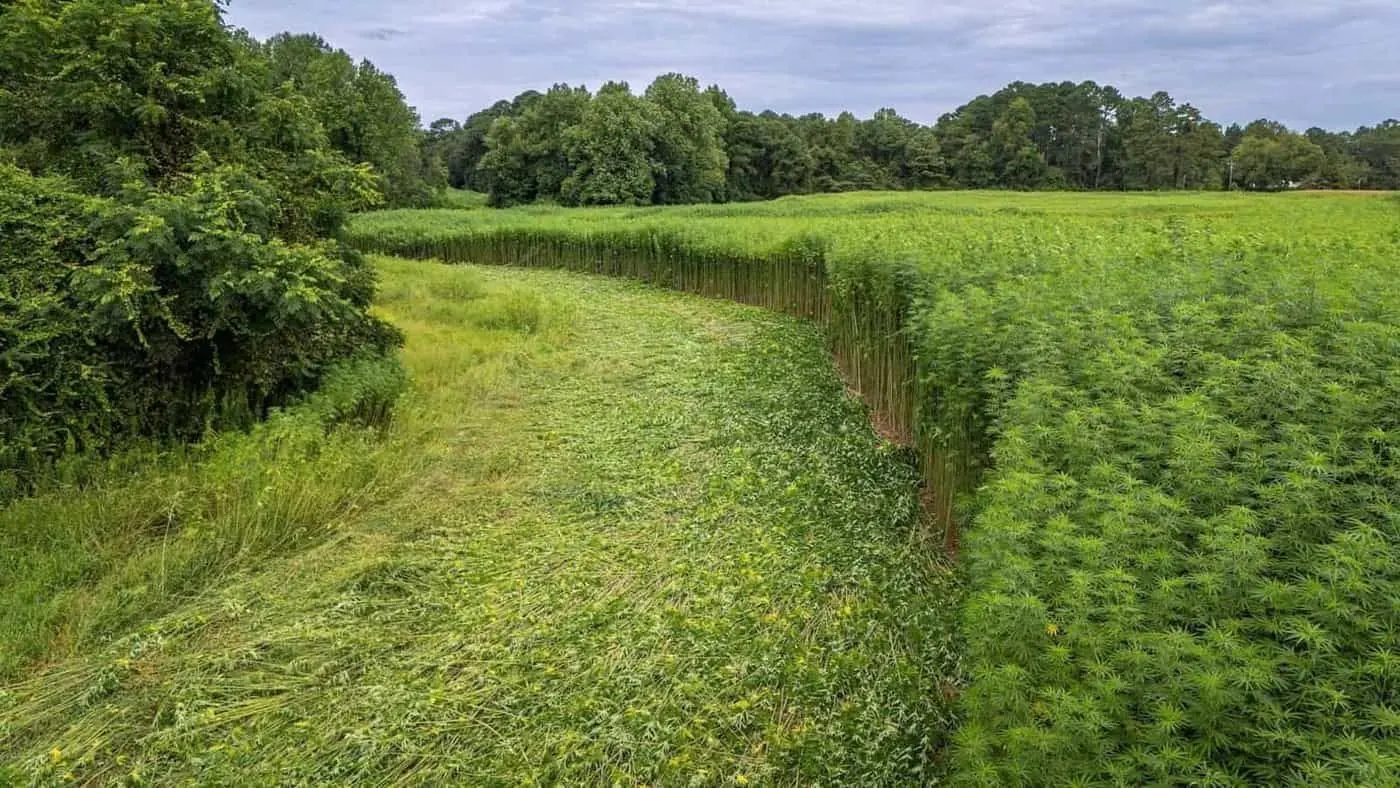
Illustration: a hemp field, not a garment or evidence of its composition.
Written by the Phytogrammes team
Every article in this journal draws on primary sources (ANSM, EFSA, EUR-Lex, peer-reviewed publications) and on the lab's own practice: batch-by-batch HPLC analyses, measured cannabinoid profiles. Our approach.
Article published on . CBD is not a medicine.