History of hemp in France: from 176,000 hectares to 632
*Hemp (Cannabis sativa L.) was long a major French crop: about 176,000 hectares in 1840, grown for sails, ropes and cloth. Motor ships, cotton and then synthetic fibres brought it down to 632 hectares in 1960. The sector has climbed back to 22,930 hectares in 2025, making France the leading producer in the European Union, mainly for fibre, seed and building materials.*
Contents
- 01A plant domesticated in Asia, adopted in Europe for its fibre
- 021666: Rochefort, a ropeworks for the royal fleet
- 031840-1960: the collapse in hemp area, in figures
- 041961: industrial hemp set apart from narcotics law
- 051990-2022: from fibre and seed to the whole plant
- 06Hemp growing in France today
- 07Timeline
- 08Frequently asked questions
> Key takeaways > > - Hemp was domesticated in the early Neolithic in East Asia, according to a 2021 genomic study. > - In 1666 the royal ropeworks at Rochefort was the first building of the naval arsenal; it spun hemp for the fleet for two centuries. > - French hemp area fell from 176,000 ha in 1840 to 632 ha in 1960. > - The 1961 Single Convention exempts hemp grown for fibre and seed from narcotics control. > - In 2025 France grows 22,930 ha of hemp, 61% of the EU total.
A plant domesticated in Asia, adopted in Europe for its fibre
A genomic study published in 2021 in Science Advances compared 110 plants from around the world. Its authors conclude that Cannabis sativa was domesticated in the early Neolithic in East Asia, and that all current varieties, fibre and drug types alike, descend from a single gene pool still found in feral plants and local landraces in China.
In Europe, hemp became above all a fibre and seed crop. FranceAgriMer, the French agricultural products agency, notes that it was grown for textile fibre, used by the sailing navy (ropes, sails) and for clothing, and for its seeds. Today the word "hemp" refers to industrial varieties low in THC; our article on the differences between hemp and recreational cannabis explains the distinction.
1666: Rochefort, a ropeworks for the royal fleet
In 1661 Louis XIV's fleet was down to about thirty ships in poor condition. Colbert was put in charge of rebuilding it. At Rochefort, the naval intendant Colbert de Terron decided on 25 March 1666 to build the ropeworks, the first building of the new arsenal.
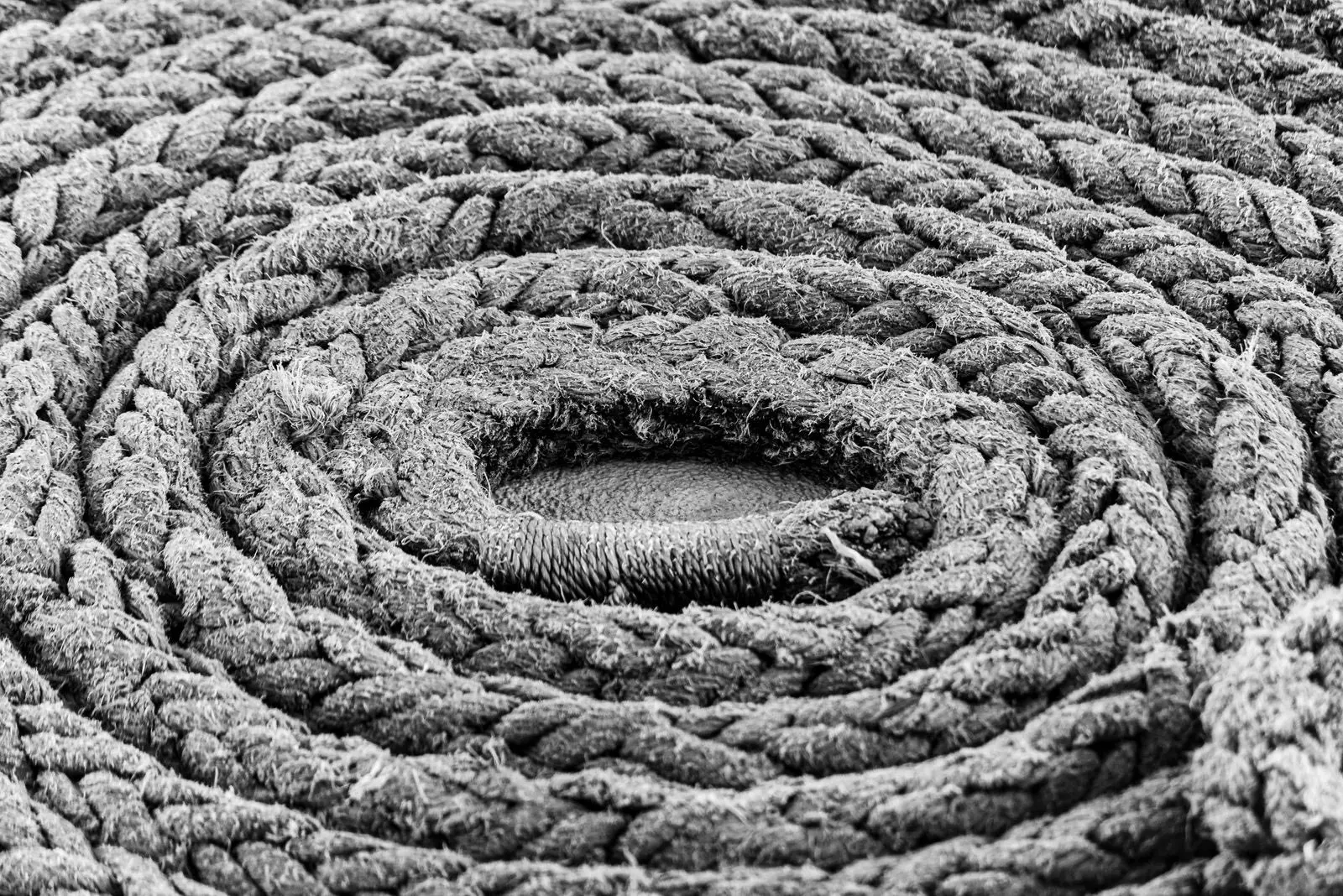
The building is 378 metres long, according to the educational file of the Corderie Royale: it needed room to lay, that is, twist together, very long hemp cables. Bales of hemp arrived by sea or by river, then were combed, spun and laid into ropes. The ropeworks closed in 1862, when steel cables replaced hemp on ships.
1840-1960: the collapse in hemp area, in figures
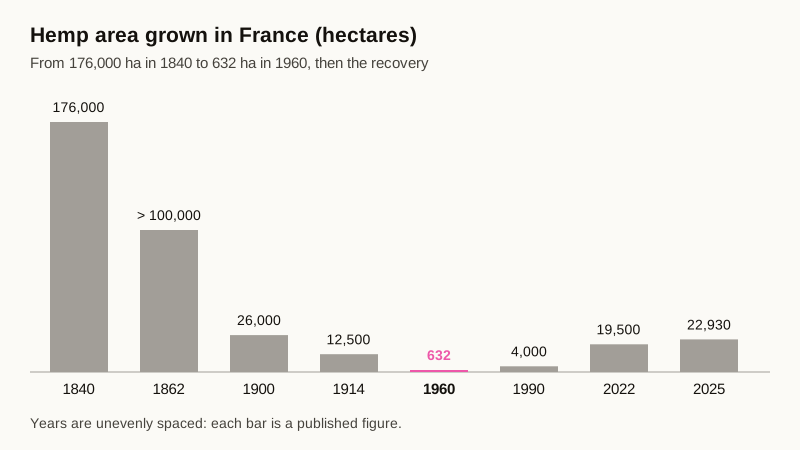
The geographer Jeanne Dufour traced this decline in 1961 in L'Information géographique, under an unambiguous title: "A dying crop: French hemp". Hemp covered roughly 176,000 ha in 1840 and still more than 100,000 in 1862. The area fell to 26,000 ha in 1900, 12,500 in 1914, between 2,000 and 3,000 ha until 1953, then 935 ha in 1959 and 632 ha in 1960.
By the late 1950s the crop survived only in a few pockets. Sarthe, long the leading hemp department, accounted for 47% in 1960, and the Loire between Les Ponts-de-Cé and Ancenis for 42%. Le Mans had been chosen, on the eve of the 1939 war, as the seat of the national interprofessional hemp committee. On the island of Béhuard, near Angers, hemp still covered 38.7% of the arable land.
The causes are well known. The FranceAgriMer sector sheet cites the arrival of motor ships, then cotton and synthetic fibres in textiles. The two main outlets for the fibre, the sailing navy and textiles, thus disappeared at almost the same time.
1961: industrial hemp set apart from narcotics law
International cannabis prohibition could have swept away farm hemp. The 1961 Single Convention on Narcotic Drugs exempted it explicitly: its article 28 states that it "shall not apply to the cultivation of the cannabis plant exclusively for industrial purposes (fibre and seed) or horticultural purposes".
That split between fibre plant and drug plant is what allowed a small sector to survive. In France, breeding moved towards varieties rich in fibre and low in THC, according to FranceAgriMer. Our article on the European variety catalogue explains how these varieties are registered and checked.
1990-2022: from fibre and seed to the whole plant
For thirty years, French law allowed only fibre and seeds. The order of 22 August 1990 restricted the growing, import and industrial use of hemp to those two parts of the plant. The Court of Justice of the European Union challenged that framework on 19 November 2020 in the Kanavape ruling: a member state may not ban CBD lawfully produced in another member state from the whole plant. Our article on the Kanavape ruling walks through its reasoning.
The order of 30 December 2021 repealed the 1990 text and set the ceiling at 0.30% Δ⁹-THC. It still banned the sale of raw flowers, a ban the Conseil d'État struck down on 29 December 2022. The current threshold is explained in our article on the legal THC level in France.
Hemp growing in France today
The area is growing again. FranceAgriMer counts 4,000 ha in 1990 and 19,500 ha in 2022, farmed by more than 1,500 growers; the same sheet ranks France third in the world after China and Canada. The Eurostat database, updated on 10 September 2026, gives 22,930 ha in France for 2025, out of 37,830 ha in the EU, or 61%.
French hemp remains first and foremost an industrial crop. According to the FranceAgriMer sheet, which uses InterChanvre figures, the fibres go into paper (50%), insulation (29%), plastics and textiles (10% each); the hurds, the woody core of the stem, are used for animal bedding (51%), mulch (28%) and building materials (20%). The flower accounts for only 5% of the uses listed, going to the pharmaceutical industry. Our report on hemp area in Europe breaks these series down country by country.
CBD sold in shops, as flowers or resins, is only a recent outlet for this sector, and the most tightly regulated.
Timeline
| Date | Event |
|---|---|
| Early Neolithic | Domestication of Cannabis sativa in East Asia |
| 25 March 1666 | Decision to build the royal ropeworks at Rochefort |
| 1840 | About 176,000 ha of hemp in France |
| 1862 | Rochefort ropeworks closes; still over 100,000 ha |
| 1960 | 632 ha of hemp in France |
| 1961 | Single Convention: fibre and seed hemp outside control |
| 22 August 1990 | French order: fibre and seed only |
| 19 November 2020 | Kanavape ruling of the EU Court of Justice |
| 30 December 2021 | Order setting the 0.30% THC threshold |
| 29 December 2022 | Conseil d'État strikes down the flower ban |
| 13 June 2023 | ANSM classifies HHC as a narcotic |
| 3 June 2024 | ANSM classifies H4CBD, THCP and other derivatives |
| 2025 | 22,930 ha of hemp in France (Eurostat) |
The two classifications by ANSM, in 2023 for HHC and in 2024 for other derivatives, target semi-synthetic molecules: they affect neither hemp growing nor CBD. Our article on the HHC timeline covers them in detail.
Frequently asked questions
Are hemp and cannabis the same plant?
Botanically, yes: both belong to the species Cannabis sativa L. Under French law, hemp means varieties listed in the official catalogues whose Δ⁹-THC content does not exceed 0.30%.
How many hectares of hemp did France grow in the 19th century?
About 176,000 ha in 1840 and still more than 100,000 in 1862, according to Jeanne Dufour's study published in 1961. By 1960 only 632 were left.
Why did hemp growing almost disappear?
Motor ships removed the first outlet, sails and ropes, and steel replaced hemp in cables. Cotton, then synthetic fibres, replaced it in textiles.
Where is hemp grown in France today?
The FranceAgriMer sheet places the hemp processing plants, where the stems are first processed, in the northern half of the country: 7 in 2023. Historically, Sarthe and the Loire valley were the last growing areas before the recovery.
Written by the Phytogrammes team
Every article in this journal draws on primary sources (ANSM, EFSA, EUR-Lex, peer-reviewed publications) and on the lab's own practice: batch-by-batch HPLC analyses, measured cannabinoid profiles. Our approach.
Article published on . CBD is not a medicine.