Moroccan hash: from Rif sifting to CBD versions
Moroccan hash denotes a resin obtained by dry-sifting dried hemp, historically the beldia variety of the Rif, then pressed into a slab. Morocco opened a lawful sector in 2021 with law 13-21 and its regulatory agency, across three provinces and with a ceiling of 1% THC. In France, only a hemp resin analysed below 0.30% THC is lawful.
Contents
This article is documentary: it describes a technical tradition, its geography and its legal framework, with no buying advice and no working method. A resin from THC-rich cannabis remains a narcotic under French law, whatever its origin and whatever it is called. Every figure quoted comes from a dated public source.
> Key points > > - The Moroccan technique is dry sifting: dried plants, beaten over a sieve, powder pressed. > - Beldia is a farmers' population of the Rif, not a variety listed in any catalogue. > - The last public measurements of area date from 2005: 72 500 hectares, 89 900 households. > - In France the limit is 0.30% on the finished product, and it is read on the batch certificate.
What the phrase "Moroccan hash" denotes
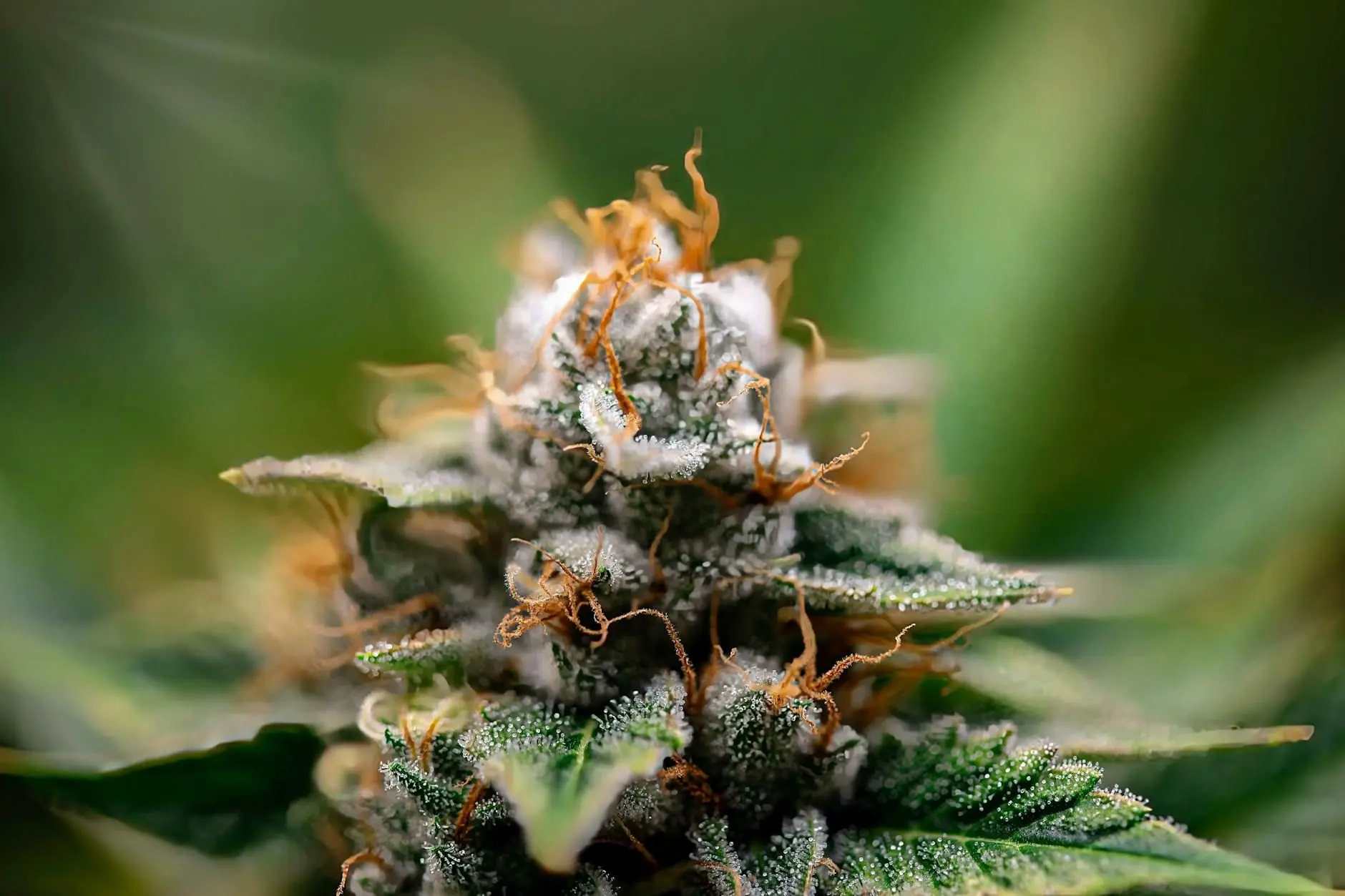
Haschich is the resin of cannabis: the trichome glands detached from the flower, then agglomerated. Traditions differ by the separating agent: ice water for washed resins, the rubbing of fresh flowers for Himalayan charas, the sieve for Morocco and Afghanistan.
Two words recur in the Moroccan literature. Kif denotes the traditional preparation of chopped tops and, by extension, the trichome powder collected on the sieve. Beldia, "of the country" in Moroccan Arabic, is the hemp population adapted to the mountainous terroir of the Rif. A population is not a commercial variety: flowering is spread out, resin yield stays low, and nothing about it has been standardised.
The administrative vocabulary still carries the trace. The text that prohibited this crop for close to seventy years is the dahir (royal decree) of 24 April 1954 "portant prohibition du chanvre à kif", banning kif hemp. It is that text by name that the 2021 law set aside.
The Rif, geography of an old crop
The Rif is the northern region of Morocco, bounded by the Mediterranean to the north and by Algeria to the east. It runs for about 350 kilometres and is spread over three administrative regions: Tanger-Tétouan-Al Hoceïma, the Oriental and Fès-Meknès. Cannabis growing is concentrated in the central part, between Chefchaouen and Temsaman.
Around Ketama it is documented over more than five centuries. The technical break is more recent: in the early 1970s, Western travellers brought into the Rif drying and pressing methods from Afghanistan and Lebanon, which turned a production destined for local kif into a production of slabs for export.
The only public measurements of those areas come from the joint surveys by the Moroccan government and the United Nations Office on Drugs and Crime, using satellite imagery.
| Year | Area under cultivation in the Rif |
|---|---|
| 2003 | 134 000 hectares |
| 2004 | 120 500 hectares |
| 2005 | 72 500 hectares |
In 2005 the survey counts 89 900 growing households and splits the area across four provinces: Chefchaouen 40 529 hectares, or 56% of the total, Taounate 12 362 hectares, Al Hoceima 11 671 hectares and Tétouan 7 916 hectares. These data describe an illicit crop and are twenty years old: no survey of equivalent method has been consulted for the years since.
Dry sifting, a technique and its yield
The Moroccan method is that of dry sift. The plants are dried, then beaten over a sieve. The trichomes, made brittle by cold and desiccation, come away and pass through the mesh; the powder collected is then pressed into a slab, by hand or with heat. The contemporary version of the process has changed nothing about the technique: it has calibrated the sieves, from 220u to 45u, and controlled the temperature.
Yield explains a great deal about the trade. The 2005 survey uses an extraction rate of 2.0%: for 53 300 tonnes of raw cannabis, it estimates potential resin production of 1 066 tonnes. The resin is marginal, which pushes growers to multiply the sieve passes.
That is where quality is decided. The first pass gives the grade called "special"; the second, the "00" or double zero; the third, a product far more loaded with plant debris. It is those last passes, destined for export, that concentrated the adulterants, paraffin and henna chief among them. On the illicit market no analysis settles anything: that is the fundamental difference from a product sold with its certificate.
Moroccan, Lebanese, Nepalese: three techniques
| Tradition | Starting material | Separation | What open sources document |
|---|---|---|---|
| Morocco, the Rif | Dried hemp, historically beldia | Beating over a sieve, powder pressed into a slab | Successive passes, grades "special" then "00"; pressing imported in the 1970s |
| Lebanon, the Bekaa | Dried hemp | Dry sifting; the process remains thinly documented by the sources consulted | Hashish prohibited in 1926 under the French mandate; law of 21 April 2020 opening cultivation for health and industrial purposes |
| India and Nepal | Fresh flowers, on the plant | Rubbing the tops between the palms | The only tradition worked on the living plant; sticks or balls |
Charas is the technical exception in the family: where Morocco sifts dry material, the Indian and Nepalese valleys rub ripe flowers with bare hands, several hours for a few grams. The resin there also carries whatever the hands and the air of the plot carry, and its surface oxidises as it dries.
A note of honesty: the sources consulted document Morocco and charas, but remain thin on the Lebanese method. That row is therefore limited to what can be verified.
2021: law 13-21 and its regulatory agency
The founding text is law no. 13-21 on the lawful uses of cannabis, promulgated by dahir no. 1-21-59 of 14 July 2021 and published in Bulletin officiel no. 7010 of 5 August 2021, page 1172.
Its first article sets aside older texts by name, among them the dahir of 2 December 1922 on poisonous substances and that of 24 April 1954 on kif hemp, so as to allow cultivation, production, processing, marketing, transport and export to be authorised. Its article 2 defines the industrial purpose as any industrial activity, notably food and cosmetic, excluding the pharmaceutical and health sectors. Article 27 sets each authorisation at ten renewable years, and article 31 creates the regulatory agency, a public body with its seat in Rabat.
The law itself sets no percentage: its articles 6 and 17 refer to a THC level set by regulation, above which only health sectors can be authorised. The agency's frequently asked questions give the figure and the perimeter: 1% for industrial activities outside health, three authorised provinces, Al Hoceima, Chefchaouen and Taounate, and compulsory membership of a cooperative. The detail of the sector is covered in our article on lawful cannabis in Morocco.
What a lawful CBD resin is in France
The French framework rests on two decisions. The arrêté du 30 décembre 2021 (French order of 30 December 2021) authorises only varieties of Cannabis sativa L. listed in the common catalogue or the French catalogue, whose "delta-9-tetrahydrocannabinol content is not above 0.30%", and at III applies the same limit to extracts and to the products incorporating them. On 29 December 2022 the Conseil d'État annulled paragraph II of that article, which banned the sale of raw flowers; the 0.30% limit stays in force.
Three gaps explain why a lawful Moroccan batch does not feed the French CBD market. The first is arithmetical: 1% in Morocco against 0.30% in France, so a product compliant there may fall here under the narcotics regime. The second concerns variety: France requires a variety listed in a catalogue, while beldia is a farmers' population never standardised as such. The third concerns proof: compliance is checked batch by batch on the finished product, never on a name.
What France allows is resin from compliant hemp, analysed and sold with its certificate. Our CBD resin and hash products gather fifteen references from the three families of separation, all solvent-free, including hand-pressed ones inherited from dry sifting; the comparison of resin formats goes into their textures. The MILDECA, the French inter-ministerial drugs body, recalls two limits: CBD foodstuffs placed on the market are placed there unlawfully, and no health claim may be put forward. These products are for adults only and are not intended to be eaten.
Frequently asked questions
Is Moroccan hash legal in France?
No, if it is the traditional resin of the Rif, from THC-rich cannabis: that is a narcotic under French law. A resin is lawful only if it comes from a variety listed in the catalogue and if its measured delta-9-THC stays below 0.30%, with a batch certificate to show for it.
What is beldia?
It is the traditional hemp population of the Moroccan Rif, whose name means "of the country". Adapted to poor soils and a dry climate, it gives flowers light in resin but with a soft aromatic profile. It is not a variety listed in any catalogue, and the word also serves as a selling point on batches that contain none of it.
Can Morocco export CBD to France?
The Moroccan framework caps THC at 1% for industrial uses outside health, against 0.30% in France for extracts and the products incorporating them. To that are added the requirement of a variety listed in a catalogue and the customs regime of a third country. No lawful Moroccan batch on the French CBD market has been identified in the sources consulted.
What is the difference between Moroccan hash and charas?
The material and the technique. Moroccan hash starts from dried plants, beaten over a sieve, whose powder is pressed. Charas starts from fresh flowers on the plant, rubbed between the palms, the resin then rolled into sticks. The first is a compacted powder, the second a waxy material from the outset.
Sources
- United Nations Office on Drugs and Crime and Government of Morocco, Morocco Cannabis Survey 2005, executive summary
- Law no. 13-21 on the lawful uses of cannabis, official text, Moroccan Ministry of Justice
- National agency for the regulation of cannabis-related activities, frequently asked questions
- Légifrance, arrêté du 30 décembre 2021 (French order of 30 December 2021), article 1
- Conseil d'État, decision of 29 December 2022, no. 444887
- MILDECA, page on CBD
- Wikipedia, "Haschich"
- Wikipedia, "Rif"
- Wikipedia, "Cannabis in Lebanon"
- Wikipedia, "Hashish", mechanical separation and charas
Written by the Phytogrammes team
Every article in this journal draws on primary sources (ANSM, EFSA, EUR-Lex, peer-reviewed publications) and on the lab's own practice: batch-by-batch HPLC analyses, measured cannabinoid profiles. Our approach.
Article published on . CBD is not a medicine.