Cannabis in Thailand: the rules that apply in October 2026
Thailand took cannabis off its narcotics list on 9 June 2022, then restricted it to buyers holding a prescription in June 2025. A bill approved on 22 September 2026 aims to rule out all recreational use, but it is not yet in force. Exporting cannabis from Thailand is banned, and bringing it into France remains a criminal offence.
Contents
- 01What did Thailand's June 2022 decision change?
- 02How did the shop market grow and then shrink?
- 03What does the June 2025 order provide?
- 04Where does Thailand stand on 6 October 2026?
- 05What does a French tourist risk in Thailand?
- 06Can you bring cannabis or CBD back from Thailand to France?
- 07Frequently asked questions
On 9 June 2022, Thailand became the first country in Southeast Asia to remove cannabis from its narcotics list (France 24, 2022). This guide describes the framework as it stood on 6 October 2026. Thai texts are published in Thai in the kingdom's official gazette. The points cited here come from the press, from legal analyses and from the French Ministry of Foreign Affairs.
Key takeaways
- Since June 2022, the plant is no longer a narcotic, but extracts with more than 0.2% THC still are.
- Since 26 June 2025, buying flowers requires a prescription from a recognised practitioner, covering 30 days at most.
- The bill of 22 September 2026, which rules out recreational use, still has to go before parliament.
- Exporting is banned and checked at departure; in France, importing narcotics is a criminal offence.
What did Thailand's June 2022 decision change?
Decriminalisation took effect on 9 June 2022. The plant left category 5 of the narcotics list, except for extracts containing more than 0.2% THC by weight. The day before, on 8 June 2022, members of parliament had passed a bill to regulate it at first reading, by 373 votes to 7 (Thai PBS World, 2022).
The health minister at the time, Anutin Charnvirakul, presented the bill as aimed first at medical and health uses. In his words, it was not meant to encourage public use that bothers other people. Decriminalisation therefore came into force before the law meant to regulate it, which had only passed its first reading.
According to France 24, use legally remained reserved for medical purposes. Smoking in public could bring a fine of 25,000 baht, or 673 euros, and up to three months in prison. Our article on the four legal models for cannabis around the world places this choice of decriminalisation among the others.
How did the shop market grow and then shrink?
Shops multiplied after 2022. The country counted up to 18,433 of them, according to Ministry of Public Health figures (The Nation, via Asia News Network, February 2026). The 0.2% THC ceiling only applies to extracts, not to the flower, unlike the threshold applied to hemp sold in France.
The decline followed the tightening. By 28 December 2025, 8,636 licences had expired and only 1,339 had been renewed, or 15.5%. The ministry then counted 7,297 closures and 11,136 shops still open. To operate, a shop must now have a licensed or registered traditional medicine practitioner on site.
On 22 September 2026, the Minister of Public Health, Pattana Promphat, put figures on the monitoring of businesses. More than 10,000 shops and growing sites, over 95% of the total, are in a government system. Those outside it should be presumed illegal (The Star, Bloomberg report, 22 September 2026).
What does the June 2025 order provide?
The text is a Ministry of Public Health notification on controlled herbs, in force since 26 June 2025. It ends recreational sales: the buyer must show a medical prescription (franceinfo, 25 June 2025). According to franceinfo, breaches of the retail rules that predate this order (a licence to sell, no promotions, no sales to under-20s) are punished by fines of 500 to 1,300 euros.
The law firm Tilleke & Gibbins sets out the conditions. The prescription must come from one of seven recognised practitioners. The list covers doctors, dentists, pharmacists, and practitioners of Thai traditional medicine, applied Thai traditional medicine, folk medicine or Chinese medicine. Written on an official form, the prescription covers 30 days at most and can only be used once (Tilleke & Gibbins, 3 September 2025).
A cursory consultation with a prescription sent by email or over social media would not comply, according to the same analysis. Shops must keep prescriptions for at least one year. The firm notes no provision specific to foreigners: the rule applies to every buyer, tourists included.
According to franceinfo, 800 travellers, including more than 50 Britons, had already been arrested in one year at Thai airports with cannabis in their suitcases.
Where does Thailand stand on 6 October 2026?
Two further steps followed in 2026. A ministerial regulation on extracts came into force on 26 April 2026. Extracts with more than 0.2% THC remain category 5 narcotics under it (The Nation, via Asia News Network, 29 April 2026). They are only allowed under licence, for four purposes, including medicine and research.
On 22 September 2026, the cabinet approved a cannabis control bill. It would restrict the plant to medical, health and scientific uses, and rule out recreational use (Gavroche Thaïlande, 23 September 2026). Sales would be banned to people under 20 and to pregnant or breastfeeding women.
According to Gavroche, the bill provides for three-year licences to grow, produce, import, export or sell. It bans sales in several sensitive places, including temples, schools and public parks, as well as advertising for flowers and resin. According to The Nation, shops would have to become medical establishments with a doctor on site to renew their licence (The Nation, 23 September 2026).
The bill is not in force. It still has to be examined by the House of Representatives, and its content may change from one reading to the next. Until then, the June 2025 rules apply: according to Bloomberg, they already require a prescription and limit sales to licensed medical establishments.
The bill comes from the government of Prime Minister Anutin Charnvirakul, whose party had championed the 2022 decriminalisation. No date for a vote appears in the sources consulted. On 6 October 2026, the French Ministry of Foreign Affairs was still writing that cannabis use is "decriminalised" in Thailand.
What does a French tourist risk in Thailand?
Buying legally requires a prescription, on the conditions described above. For smoking in public, the known rule dates from 2022: a fine of up to 25,000 baht and three months in prison. The sources consulted report no more recent text that would have lifted it.
The main risk comes when you leave the country. The French Ministry of Foreign Affairs points this out in its travel advice for Thailand, updated on 6 October 2026. It states that while cannabis use is decriminalised in Thailand, exporting it is strictly prohibited.
The same advice reports tighter checks at departure points since 18 June 2026. It mentions a customs fine of 30,000 baht, about 790 euros, per kilo seized, and detention if it is not paid. The penalties range from two to ten years in prison, and several young French nationals have been arrested in recent weeks.
The ministry advises never to carry cannabis, even in small amounts or under pressure from someone else. It also advises never to carry luggage for another person without knowing what is inside. Stopovers count too: our guide to flying with CBD points out that the law of transit countries applies.
Worked example A traveller buys a few grams of flowers from a Bangkok shop, on prescription. The purchase can comply with Thai law as it stands. Slipping what is left into her suitcase before the flight home would still make it a banned export at departure, then an importation of narcotics on arrival in France.
Can you bring cannabis or CBD back from Thailand to France?
Not cannabis. Bringing narcotics into France, like possessing or transporting them, is illegal (Service-Public, page checked on 24 November 2025). Illegally importing narcotics is punishable by up to ten years in prison and a fine of 7,500,000 euros (Criminal Code, article 222-36, Légifrance).
The French public service website mentions an exception for medicines in the narcotics family, such as methadone or morphine, carried for personal use. The sources consulted do not link flowers sold in shops to this exception, even with a Thai prescription.
In Thailand, the plant escapes narcotics classification whatever its THC content; only extracts above 0.2% remain subject to it. Nothing therefore requires a Thai flower to meet the French rule. That rule requires a variety listed in the European or French catalogue and at most 0.30% Δ⁹-THC (order of 30 December 2021, Légifrance).
Our feature on the legal THC threshold explains what that ceiling applies to. A "CBD" label bought abroad guarantees nothing without an analysis of the batch.
Products to swallow raise a further difficulty. In France, CBD foods are unauthorised novel foods, which the Ministry of Agriculture asks to be withdrawn from the market (Ministry of Agriculture, 20 May 2026). THC gummies or drinks fall under narcotics law, as our article on THC products to swallow explains.
Sending it by post does not get around anything, because a parcel is judged on its contents: see our article on CBD parcels sent from abroad. Use in France remains a criminal offence. Since 20 August 2026, a fixed fine of 500 euros can end the prosecution (article L3421-1 of the Public Health Code, Légifrance).
Frequently asked questions
Is cannabis legal in Thailand in 2026?
It is decriminalised, not legalised for recreational use. Since 26 June 2025, flower is only sold on prescription, and extracts with more than 0.2% THC remain narcotics. A stricter bill is waiting to be examined by parliament.
Can a tourist buy cannabis in Thailand?
Only with a prescription from one of the seven recognised practitioners, for 30 days at most. The analyses consulted report no rule specific to tourists. A shop that sells without a prescription breaches the June 2025 notification.
Can you smoke cannabis in the street in Thailand?
No. A 2022 rule punishes smoking in public with a fine of up to 25,000 baht and three months in prison. The 2026 bill would also ban sales in several sensitive places, including temples and public parks.
Can you bring cannabis back from Thailand to France?
No. Exporting is banned at departure, with penalties of two to ten years in prison according to the Ministry of Foreign Affairs. On arrival, France punishes the importation of narcotics with up to ten years in prison and a fine of 7,500,000 euros.
Is the September 2026 bill already in force?
No, as of 6 October 2026. Approved by the cabinet on 22 September, it still has to be examined by the House of Representatives. The June 2025 rules therefore remain the reference.
Is CBD bought in Thailand legal in France?
Only if it meets French law: at most 0.30% Δ⁹-THC, a variety listed in the catalogue and no form meant to be swallowed. Thai law sets no THC ceiling for the plant, so a label proves nothing without an analysis.
Sources and dates
Sources consulted on 6 October 2026. The dates below are the publication or update dates given by each source:
- France 24: 2022-07-29; Thai PBS World: 2022-06-09.
- franceinfo: 2025-06-25; Tilleke & Gibbins: 2025-09-03.
- The Nation, via Asia News Network: 2026-02-02 (data as of 2025-12-28) and 2026-04-29.
- The Star, Bloomberg report: 2026-09-22; The Nation and Gavroche Thaïlande: 2026-09-23.
- French Ministry of Foreign Affairs, travel advice: updated 2026-10-06.
- Service-Public: 2025-11-24; Ministry of Agriculture: 2026-05-20.
- Légifrance: article 222-36 of the Criminal Code, version in force since 2009-11-26; order of 30 December 2021, published 2021-12-31; article L3421-1 of the Public Health Code, version in force since 2026-08-20.
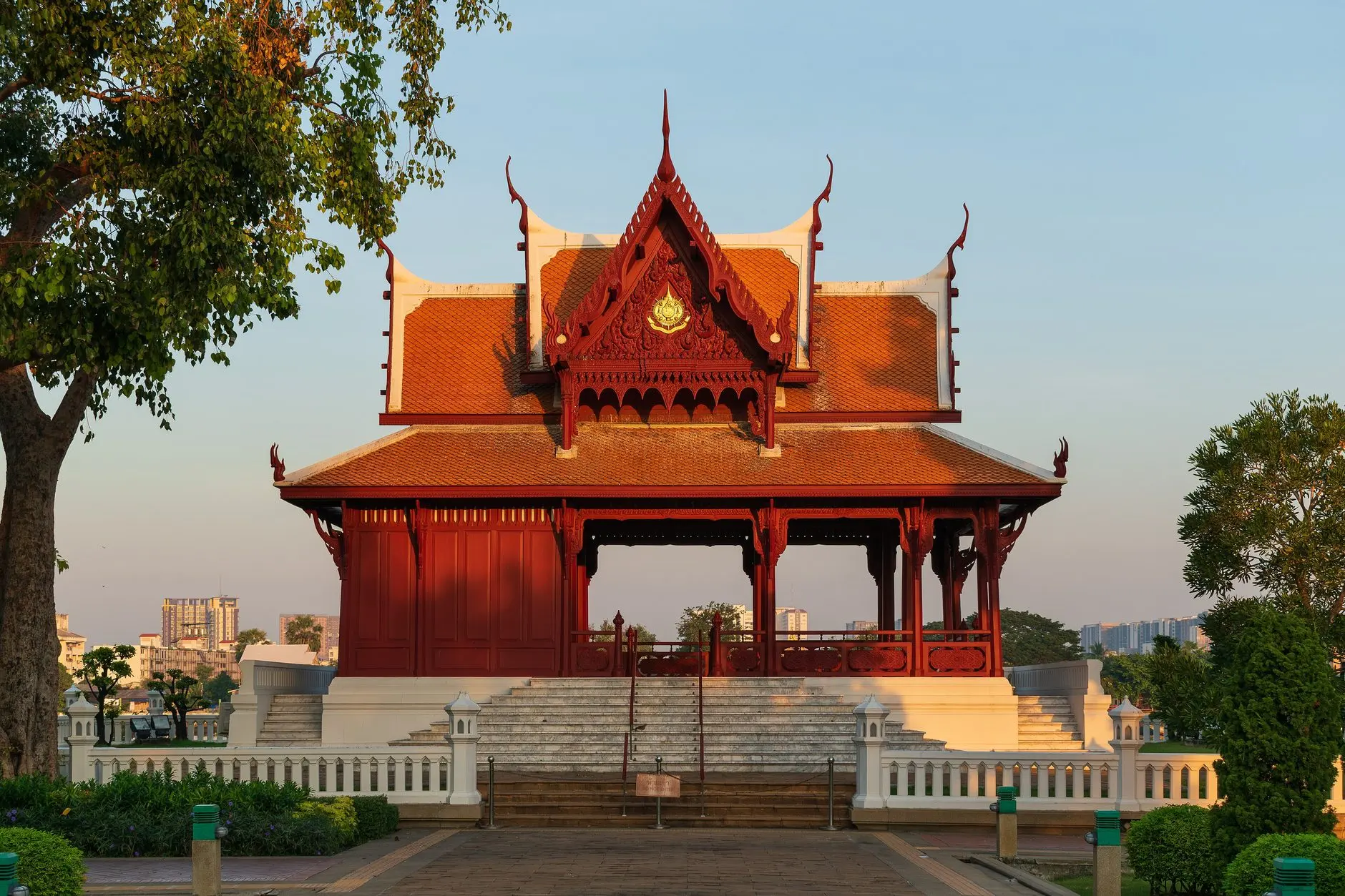
- Opening photo: Dominic Nelson, CC BY-SA 4.0, via Wikimedia Commons, cropped.
Written by the Phytogrammes team
Each journal article draws on cited primary sources: ANSM, EFSA, EUR-Lex and peer-reviewed publications. Product profiles are distinguished from documented laboratory results. Our approach.
Article published on . CBD is not a medicine.