Gelato #33, #41: the story of a cult cannabis strain
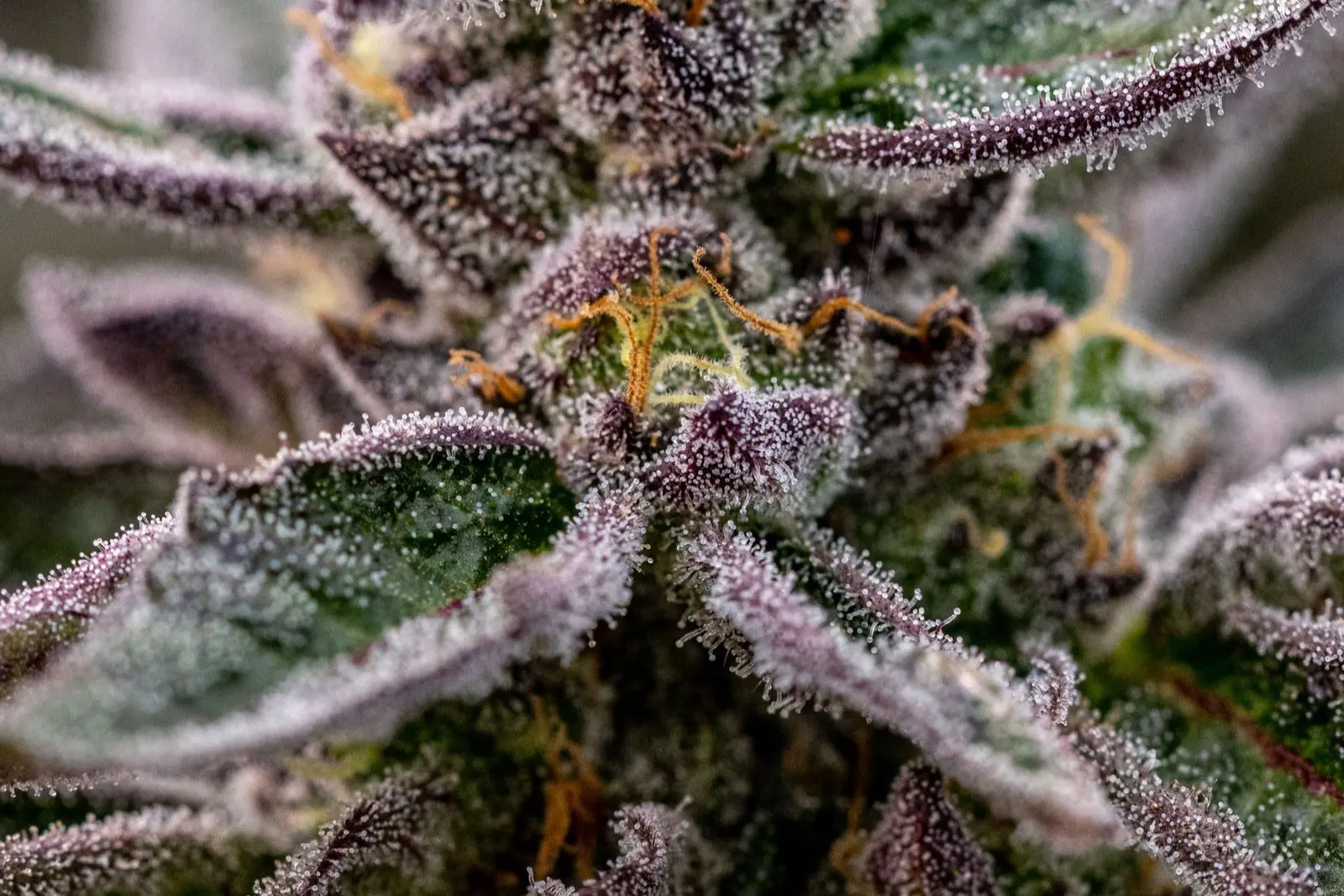
Gelato is a cannabis strain bred around 2014 in California, from a cross between Sunset Sherbet and Thin Mint Cookies. Its numbers, #25, #33 or #41, are the numbers of the pots the selected plants grew in. The original Gelato is high-THC cannabis, so it is a controlled drug in France; a "Gelato CBD" flower is legal only if the product contains no more than 0.30% Δ⁹-THC.
Contents
> Key takeaways > > - Gelato comes from a Sunset Sherbet × Thin Mint Cookies cross made around 2014 by Mario Guzman, known as "Sherbinski", with Jigga, one of the founders of Cookies. > - About 200 seeds were sown: 25, 33 and 41 were pot numbers, not strain names. > - A 2019 study of 30 strains bought in 3 US states found genetic differences between samples sold under the same name. > - In the Phytogrammes catalogue, three hemp flowers named after Runtz, a Gelato offspring, list three different aroma profiles. > - In France, only the batch analysis settles it: no more than 0.30% Δ⁹-THC.
Gelato: a strain name, not a product
"Gelato" is the name of a cannabis strain. It is not street slang for a particular drug: the word names a line of plants, like Lemon Haze or OG Kush. The original plant is a drug-type cannabis, selected for its THC content, the psychoactive molecule in cannabis. In France it therefore falls under the narcotics rules, like any high-THC cannabis.
The name, Italian for ice cream, refers to the aroma its fans describe: sweet, creamy, sometimes fruity. It extends a family of dessert names, the "Cookies" and the "Sherbets", that was everywhere in Californian breeding in the 2010s.
Sunset Sherbet × Thin Mint Cookies: a dated origin
Gelato's breeder is Mario Guzman, known as Sherbinski. In an interview with Cannabis Now in May 2017, he explains that he crossed his Sunset Sherbet with a Thin Mint Cookies, working with Jigga of the Cookies collective. The cross was then three years old, which puts it around 2014. A 2022 profile in LA Weekly confirms that the selection was a joint effort.
The most misunderstood detail is the numbers. According to Sherbinski, about 200 seeds were sown, and each plant had a number on its pot. The best ones, 25, 33 and 41, kept that number as they travelled from garden to garden as cuttings. "Gelato #41" therefore means one specific plant and its clones, not a separate strain. Plants from the same sowing share their parents but not all their genes, which is why they differ in structure and aroma.
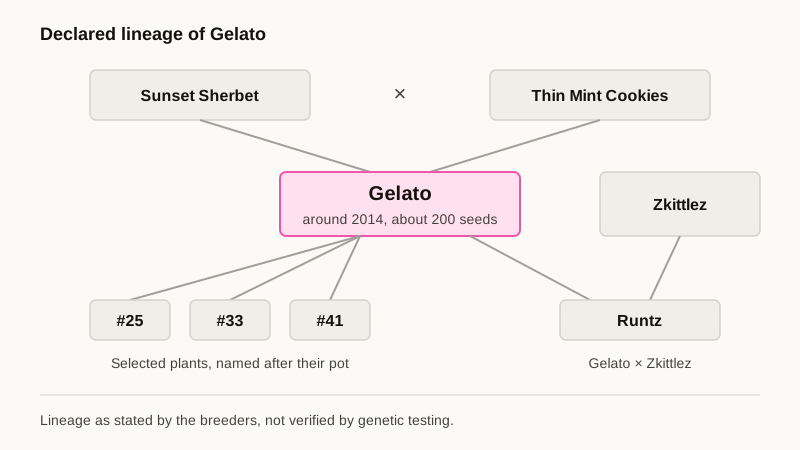
Gelato then became a parent of other lines. The best known is Runtz, described as a cross of Zkittlez and Gelato. These pedigrees are declared by the breeders: no institution registers or checks them, unlike the hemp varieties listed in the EU catalogue.
The "gelato" aroma: a matter of terpenes
A cannabis flower's smell comes mostly from its terpenes, volatile compounds made in the trichomes, the glands that also make cannabinoids. In a 2011 article in the British Journal of Pharmacology, researcher Ethan Russo lists limonene, linalool and β-caryophyllene among the major terpenoids in cannabis. Limonene smells of citrus, linalool of lavender, β-caryophyllene of pepper.
No public data defines a "standard" Gelato. A 2022 study in PLOS ONE analysed 89,923 cannabis samples sold in six US states. The authors found three main terpene profiles, one of them dominated by β-caryophyllene and limonene. Above all, they concluded that commercial labels do not consistently match the measured chemistry. Our article on hemp terpenes introduces these families of molecules.
What a strain name does not guarantee
A cannabis strain name is neither registered nor controlled. Researchers at the University of Northern Colorado compared the DNA of 30 strains bought from dispensaries in three US states, using ten genetic markers. Their results, published in the Journal of Cannabis Research in 2019, show that most strains included at least one sample genetically distant from the others sold under the same name. Two products sold as "Gelato" may therefore not come from the same plants.
The Phytogrammes catalogue offers an example with the Runtz line. Three hemp flowers carry that name; their product pages, checked on 23 September 2026, describe three different profiles.
| Flower | Measured CBD (batch) | Stated aroma profile | Listed price, 2 g tier |
|---|---|---|---|
| Runtz USA | 12.2% (PG-26-B1E8) | Fresh and minty, α-pinene | €7.95/g |
| Runtz hydro | 10.8% (PG-26-DA5E) | Earthy and spicy, myrcene | €7.95/g |
| Purple Runtz | 6.9% (PG-26-2873) | Tropical and sweet, limonene and myrcene | €4.95/g |
Sold as hemp flowers under 0.30% Δ⁹-THC, they borrow the name of a Californian line to signal a taste. The name points the way; the batch analysis says what the flower contains. A new batch may show a different profile. The full range sits in the CBD flowers category.
Is "Gelato CBD" legal in France?
Yes, if the product stays within the hemp rules. The French order of 30 December 2021 authorises Cannabis sativa L. varieties whose Δ⁹-THC content does not exceed 0.30%, and applies the same cap to extracts and to products that contain them. On 29 December 2022 the Conseil d'État struck down the ban on selling raw flowers and leaves that the order contained. The word "Gelato" on a label changes nothing: a flower above the threshold is still a controlled drug, whatever its name.
The label is not enough either. In a press release of 19 June 2025, the French agencies Anses and ANSM report that a 2023 study by the addiction-monitoring centres of Lyon, Paris and Montpellier found a CBD content different from the one announced in 8 CBD products out of 10. Three lines of an analysis settle the matter: the batch number, the dominant cannabinoid and Δ⁹-THC at 0.30% or less. Our guide to the certificate of analysis goes through them one by one.
Frequently asked questions
Is Gelato a drug?
The original Gelato is a high-THC cannabis strain: in France it is a controlled drug, and using it is an offence. A hemp flower sold as "Gelato CBD" is not, provided it comes from an authorised variety and contains no more than 0.30% Δ⁹-THC.
What is the difference between Gelato #33 and Gelato #41?
They are two plants from the same sowing, numbered after their pots. They share the same parents and differ in structure and aroma. No public analysis assigns a fixed chemical profile to either of them.
Does a Gelato CBD flower get you high?
No, if it is compliant. At 0.30% Δ⁹-THC or less, a hemp flower does not produce the psychoactive effect of recreational cannabis. Our article does CBD get you high explains why, from the receptor to the courtroom.
What is Runtz?
A Californian line described as a cross of Zkittlez and Gelato, known for its sweet aroma. In our catalogue, three hemp flowers carry that name with three different profiles, which shows the limits of a strain name.
Written by the Phytogrammes team
Every article in this journal draws on primary sources (ANSM, EFSA, EUR-Lex, peer-reviewed publications) and on the lab's own practice: batch-by-batch HPLC analyses, measured cannabinoid profiles. Our approach.
Article published on . CBD is not a medicine.