CBD and osteoarthritis: two placebo trials, no difference
CBD did no better than a placebo in the two controlled trials run in people with osteoarthritis: 136 patients in Denmark, taking 20 to 30 mg a day for 12 weeks, and 86 patients in Austria, taking 600 mg a day for 8 weeks. A CBD balm remains a cosmetic, which may not claim any effect on pain. According to France's national health authority (HAS), the core of care is adapted physical activity.
Contents
> Key takeaways > > - Osteoarthritis affects 10 million people in France, including 65% of those over 65, according to Inserm. > - In both randomised placebo-controlled trials, pain fell almost as much on placebo as on CBD. > - At 600 mg a day, liver enzymes rose in 15 patients on CBD, against 5 on placebo. > - The EU scientific committee SCCS considers CBD safe up to 0.19% in a cosmetic: a 50 ml jar then holds about 95 mg. > - The HAS puts an adapted physical activity programme first, ahead of medicines.
Osteoarthritis in numbers: 10 million people in France
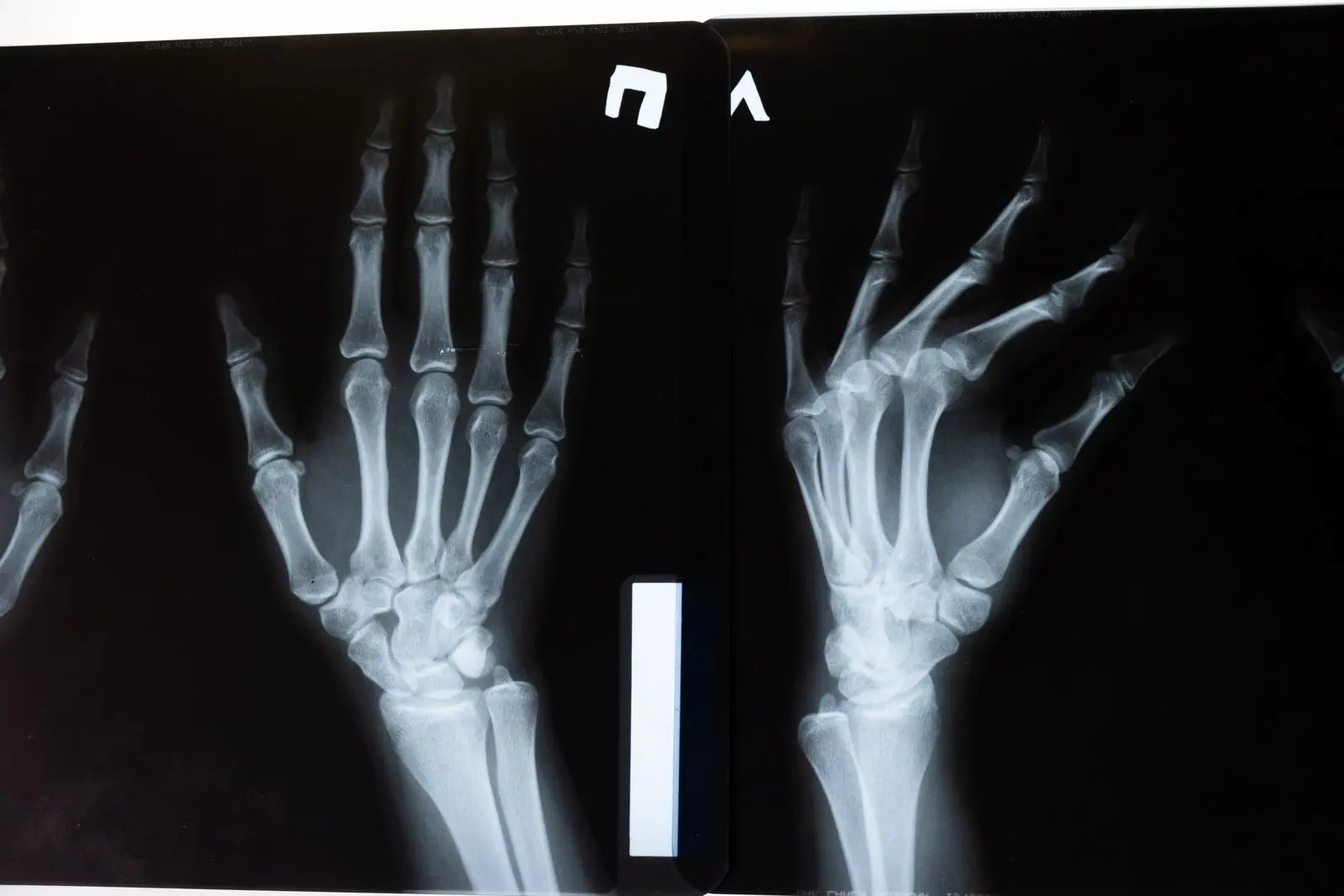
Osteoarthritis is wear of the cartilage and of the bone just beneath it, causing pain, stiffness and loss of mobility. According to the Inserm file, it affects 3% of people under 45, 65% of those over 65 and 80% of those over 80. The spine is involved in 45 to 50% of cases, the hands in 35 to 45%, the knees in 30% and the hips in 10%. Inserm adds that there is not yet any treatment able to halt its progression.
The knee deserves a separate mention. France's national health insurance states that knee osteoarthritis affects 30% of people aged 65 to 75. Age, excess weight, a sedentary lifestyle, family history and menopause are among the factors that favour it.
With a common disease and no treatment that changes its course, the urge to try CBD is understandable. The useful question is simple: what was measured when it was compared with a placebo?
What the clinical trials measured
Three published trials look at CBD in people with osteoarthritis. Two are randomised, double-blind and placebo-controlled: neither patient nor doctor knows who receives what. The third has no control group.
| Trial | Participants | Product and dose | Duration | Main result |
|---|---|---|---|---|
| Vela et al., Pain, 2022 (Denmark) | 136 patients, hand osteoarthritis or psoriatic arthritis | Synthetic oral CBD, 20 to 30 mg a day | 12 weeks | Difference of 0.23 mm on a 100 mm pain scale, not significant |
| Pramhas et al., Lancet Regional Health Europe, 2023 (Austria) | 86 patients, knee osteoarthritis | Oral CBD, 600 mg a day, on top of 3 g of paracetamol | 8 weeks | Pain down 2.5 points on CBD and 2.4 on placebo |
| Bawa et al., Scientific Reports, 2024 (Australia) | 18 enrolled, 15 completed, hand osteoarthritis | 4% CBD gel, three times a day on one hand | 4 weeks | Lower pain, gone once the gel stopped, no placebo group |
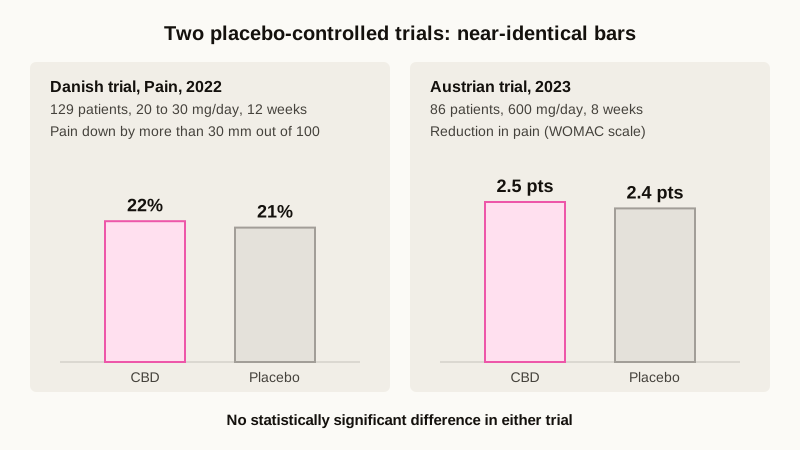
The Danish trial analysed 129 of the 136 patients enrolled. After 12 weeks, 22% of patients on CBD and 21% on placebo had seen their pain fall by more than 30 mm out of 100. The authors found no effect on sleep, anxiety or depression.
The Austrian trial tested a very high dose: 600 mg a day, 300 times the provisional reference of 2 mg a day published by EFSA in 2026 (see our article on EFSA's reference dose). Knee pain, stiffness and function did not differ between the two groups. However, liver enzymes rose in 15 patients on CBD against 5 on placebo, returning to normal after the trial ended. Our article on CBD and the liver explains what these enzymes measure.
Why the placebo group changes the reading
In the Austrian trial, pain fell by 2.4 points in patients who were only given a placebo. That improvement comes from follow-up, the natural ups and downs of the disease and the expectation of an effect. Without a placebo group, it would have been credited to the product.
This is the limit of the Australian trial of a CBD gel. Pain fell by about 1.9 points on a 0 to 10 scale, then rose again during the period without gel. With no control group, the authors themselves write that proof of efficacy requires a randomised placebo-controlled trial.
The same rule applies to any testimonial: ask what the improvement was compared with. Our review of what clinical studies really say covers these biases. The only authorised CBD-based medicine, Epidyolex, is prescribed for rare epilepsies, not for osteoarthritis.
CBD balm: what cosmetics law says
A CBD balm or cream falls under Regulation (EC) No 1223/2009 on cosmetics. A cosmetic is meant to clean, perfume, protect or maintain the skin. It cannot claim to treat a disease, and Regulation (EU) No 655/2013 requires its claims to be truthful and supported by evidence. A label promising action on osteoarthritis is therefore outside the rules. Our article on permitted claims gives examples.
On 26 March 2026, the EU Scientific Committee on Consumer Safety (SCCS) adopted its final opinion on CBD in cosmetics. It considers CBD safe up to 0.19% in products applied to the skin, and THC present as an impurity up to 0.00025%. The committee acknowledges that its data were limited. An SCCS opinion is not law: it is the basis the European Commission uses when it amends the annexes of the cosmetics regulation.
That level allows a simple calculation. A 50 ml jar, about 50 g, dosed at 0.19% holds about 95 mg of CBD. A 50 ml balm labelled 500 mg of CBD is dosed at 1%, five times the level judged safe.
Before buying a balm, check five points on the pack and the certificate:
- the amount of CBD in milligrams and the jar volume, to work out the percentage;
- the INCI list, where CBD appears as CANNABIDIOL;
- the batch number, identical on the jar and on the certificate of analysis;
- the measured Δ⁹-THC content and the absence of HHC or H4CBD;
- warming or cooling ingredients such as menthol or camphor, to test first on a small patch of skin.
Our guide to assessing a cream or balm covers these criteria, and the one on the certificate of analysis explains each line.
What the HAS recommends: move first
In July 2022 the HAS published a summary on physical activity in osteoarthritis. It writes that the disease "requires a global approach", built on regular physical activity and weight loss combined with a balanced diet. An adapted physical activity programme, combining muscle strengthening, mobility and endurance, is presented as the first-line treatment. Its benefit/risk ratio is judged better than that of medicines.
The practical advice is specific:
- spend less than 7 hours a day sitting, and stand up to move for at least one minute every hour;
- favour sports such as swimming or cycling, and start running on soft ground;
- learn a small number of simple exercises, with heat or cold before and after exercise if needed;
- give the joint relative rest during a flare, when it is swollen and warm.
A massage with a balm can fit into this routine, like any comfort gesture. It replaces neither exercise nor the physiotherapist's advice.
Getting support, and the precautions to know
The GP makes the diagnosis and refers to a rheumatologist or a physiotherapist. When pain becomes chronic, the GP can refer the patient to a specialised chronic pain unit, certified by the regional health agency and accessible on medical referral. AFLAR, the French association against rheumatic diseases, informs patients and their families.
Swallowed CBD interacts with several medicines, because the liver clears it with the same enzymes. Our article on the grapefruit effect lists the drug families involved. Since 15 May 2026, CBD products meant to be swallowed have in any case been withdrawn from sale in France, for lack of authorisation under the Novel Food regulation. For older readers, our page on CBD and older people gathers the precautions, and the one on CBD and pain describes what the legal framework allows sellers to say.
Frequently asked questions
Does CBD act on osteoarthritis pain?
The two available placebo-controlled trials found no difference. At 20 or 30 mg a day for 12 weeks, as at 600 mg a day for 8 weeks, pain fell as much on placebo as on CBD.
Is a CBD balm better than an oil?
Neither has shown any effect on osteoarthritis. The balm falls under cosmetics law and is applied to the skin. Oils meant to be swallowed have been withdrawn from sale since 15 May 2026.
What CBD content should a balm have?
The SCCS considers CBD safe up to 0.19% in a cosmetic, about 95 mg in a 50 ml jar. Above that, the manufacturer goes beyond the level assessed by the EU committee.
Can CBD be taken with paracetamol or an anti-inflammatory?
Ask your doctor or pharmacist. In the Austrian trial, high-dose CBD combined with paracetamol raised liver enzymes in more patients than the placebo did.
Is a CBD balm reimbursed?
No. French national health insurance does not cover cosmetics. Our article on CBD reimbursement sets out the possible cases.
Written by the Phytogrammes team
Every article in this journal draws on primary sources (ANSM, EFSA, EUR-Lex, peer-reviewed publications) and on the lab's own practice: batch-by-batch HPLC analyses, measured cannabinoid profiles. Our approach.
Article published on . CBD is not a medicine.