Hash maker: the craft behind a batch of CBD resin
A hash maker is the craftsman who turns hemp flowers into resin: choosing the material, separating the trichomes in ice water or dry, curing the result and making it up into numbered batches. In France they work varieties from the catalogue grown by active farmers, and every finished batch can be checked on a certificate of analysis: Δ⁹-THC below 0.30%.
Contents
This guide describes the craft without giving any working method, its framework in France and the way a batch is documented all the way to the certificate, drawing on the Phytogrammes lexicon and listings, official texts and public sources.
> Key points > > - The hash maker transforms flowers that a farmer has produced; as a rule, they do not grow. > - Four steps: select, separate, finish, make up the batch. Cold is the constraint common to all of them. > - No qualification guarantees a batch: only the certificate of analysis does.
1. What a hash maker does
1.1 Selecting the material
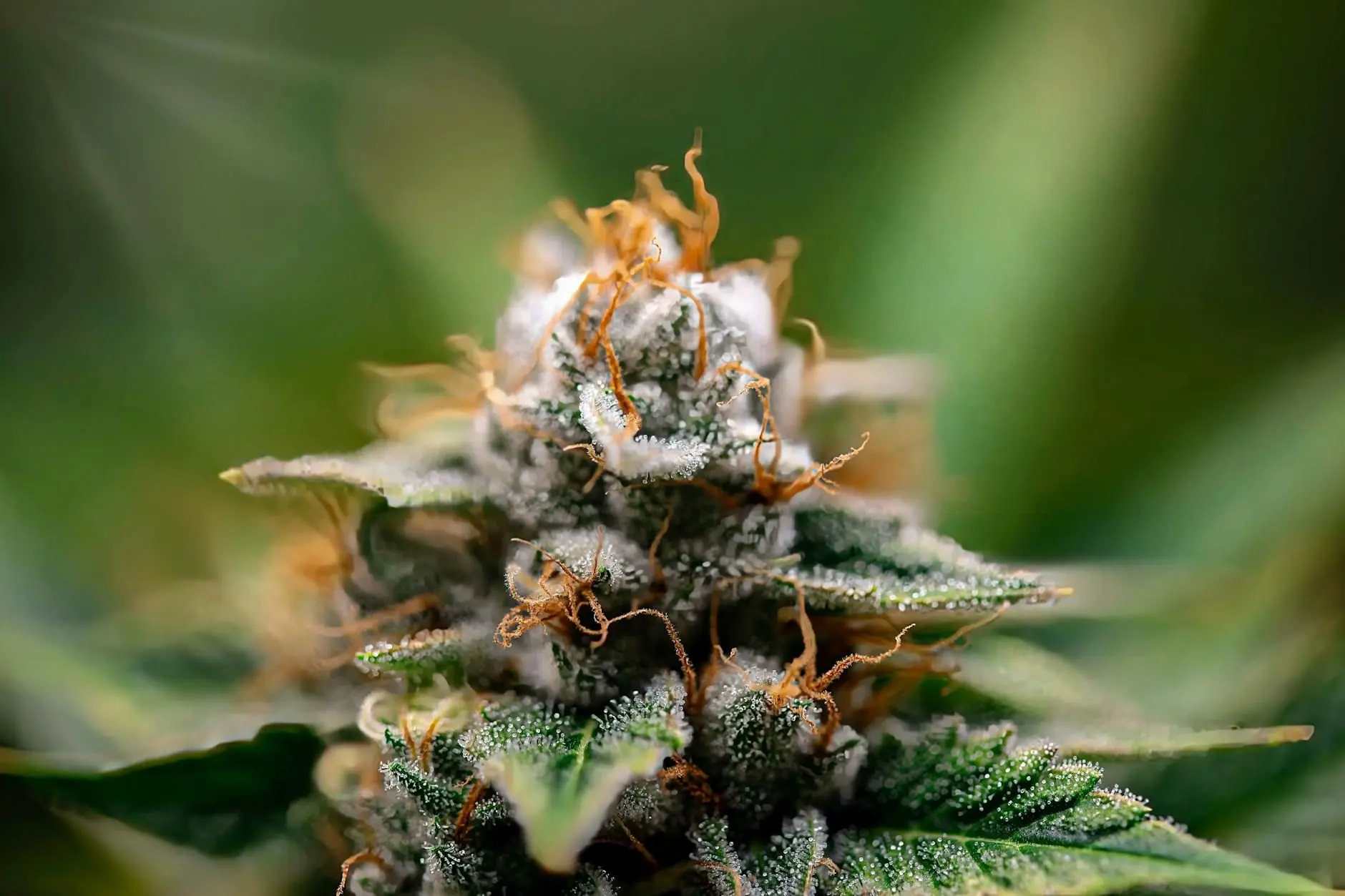
A hash concentrates the trichomes of a flower, the glands whose mature heads measure roughly 70 to 120 microns; a flower poor in trichomes gives a poor hash. So the hash maker chooses a variety, a batch of flowers and a state of the material: dried for dry sifting, or frozen whole within hours of the cut for a WPFF, whole plant fresh frozen, which preserves the monoterpenes that drying loses. That is the raw material of the so-called frozen hashes, and a logistical constraint: material that has been thawed and refrozen loses its structure and its fine fraction fills up with debris.
1.2 Separating
Separation is the heart of the craft, and it is done without solvent. The encyclopaedia describes three families of technique: dry sifting, historically Moroccan, hand rubbing in the Himalayas, and ice-water separation, codified in Amsterdam in the late 1990s. A catalogue of CBD resins comes mostly under the first and the third: dry sift on tiered sieves from 220u to 45u, and the ice-o-lator, where the cold stiffens the trichomes, the agitation detaches them and micron bags sort them by size.
The hash maker sets parameters, not a recipe: a bath held close to 0 °C, the length and vigour of the stirring, the number of passes. A prolonged wash tears off leaf fragments; the first passes are therefore collected separately.
1.3 Curing and making up the batch
A resin fresh off the sieve is waterlogged; cold drying, in open air or in a freeze dryer, decides how well it will keep. Curing then gives the product its presentation: hand-pressed, the resin becomes a supple slab; vacuum-sealed and cured cold for weeks, a full melt grade fraction fuses into piattella, the creamy slab codified in Barcelona workshops in the early 2020s.
The batch is the last stage and the least visible. A single wash fills several bags; only one or two reach full melt. The hash maker groups what was worked together, same material, same mesh, same date, under a number that follows the product to the laboratory and to the label.
2. Equipment and constraints: cold, water, bags, time
| Stage | Equipment | Main constraint |
|---|---|---|
| Selection | Dried flowers or frozen plant (WPFF) | Unbroken cold chain |
| Dry separation | Tiered sieves 220u to 45u, dry air | Pushing too hard lets plant dust through |
| Water separation | Stainless steel tanks, ice, micron bags | Bath close to 0 °C, measured stirring |
| Drying | Fine sieve, cold air or freeze dryer | Residual moisture, moulds |
| Curing | Hand press, vacuum sealing, fridge | Neither heat nor strong pressure for a piattella |
A French extractor based in Spain, interviewed by Soft Secrets in 2021, describes his workshop: food-grade stainless steel tanks, filtration meshes from 220 to 25 microns, a freeze dryer for the drying, and a manual inspection he calls tedious.
Cold makes the trichomes brittle and protects the aromatic fraction that freezing saved; the catalogue listings recommend 10 to 20 °C for pressed resins, with humidity of 55 to 65% for the 120u. Time counts just as much: the wash is measured in passes, the drying in hours or days, the curing of a piattella in weeks, electrostatic sifting in grams per hour.
3. In France: status, subcontracting, traceability
The hash maker has no status of their own in French law; what is regulated is the material they work and the product they deliver. The arrêté du 30 décembre 2021 (French order of 30 December 2021) authorises only varieties of Cannabis sativa L. listed in the common catalogue or the French catalogue, whose Δ⁹-THC content "is not above 0.30%", and reserves the growing of flowers and leaves to active farmers within the meaning of European and national rules (article 1, I). The same limit applies to hemp extracts and to the products incorporating them (article 1, III). Paragraph II, which banned the sale of raw flowers and leaves, was annulled by the Conseil d'État on 29 December 2022 (decision no. 444887).
Two consequences. A hash maker who is not an active farmer does not grow: they buy or receive flowers produced by a holding, and subcontracting is the ordinary shape of the trade, whether a brand entrusts the separation to a workshop or buys a finished batch. And the 0.30% limit is measured on the finished product, not on the variety: the catalogue guarantees a genetic, the batch certificate guarantees a content.
The MILDECA, the French inter-ministerial drugs body, recalls the rest of the framework: no claim of a health benefit on a product containing CBD, under threat of criminal penalties; no presentation that blurs the line with recreational cannabis use; no CBD foodstuff authorised, as things stand, for want of a novel food assessment. A hemp resin is sold as a non-food product, for adults only, described by its method and its analysis.
4. Two names that shaped the craft
Mila Jansen, born in Liverpool in 1944 and settled in Amsterdam, designed the Pollinator in 1994, the first machine to separate trichomes mechanically from dry material, then the Ice-O-Lator bags in 1998 and the Bubbleator in 2005. The name of her bags became the name of a method.
Frenchy Cannoli, the working name of Didier Camilleri, born in Nice in 1956 and died in San Francisco in 2021, learned the craft in the field, including eight seasons in the Parvati valley in India. From 2005 he produced hash for licensed dispensaries in California; after legalisation in 2016 he became a teacher, with an assessment grid inspired by French wine standards.
These names, frozen, piattella, full melt, describe methods and grades, never a composition; the frozen, piatella, 120u, static comparison goes into what each family changes about texture and keeping.
5. How Phytogrammes documents the batch
Phytogrammes, a hemp products laboratory founded in 2026, does not publish the names of its workshops; it publishes what can be checked. The about page states it: European products, varieties from the European catalogue, extraction method given on each listing, every batch analysed by an independent laboratory accredited to ISO 17025 before going on sale. That standard, 2017 edition, sets the competence requirements for testing laboratories; in France, accreditation is granted by the Cofrac.
Three batches from the CBD resin and hash page, which runs to 15 references, show what the documentation contains.
Cannabinoids are quantified by HPLC, terpenes by GC-MS, heavy metals by ICP-MS and pesticides by LC-MS/MS; the 0.30% limit is stated next to the measured value. The batch number makes the link: entered after phytogrammes.com/lot/, it opens the batch register, with the date of analysis, the cannabinoids measured, the certificate and the link to the listing. For batch PG-26-AA10, the analysis is dated 3 June 2026.
Frequently asked questions
Does a hash maker grow the hemp themselves?
Rarely. In France, growing hemp flowers and leaves is reserved to active farmers (arrêté du 30 décembre 2021, French order of 30 December 2021, article 1, I). The hash maker is a processor: they receive dried or frozen flowers and separate the trichomes from them. The batch number ties the finished product back to that material.
Do you need training or a diploma to be a hash maker?
No diploma governs this craft in France. The know-how passes on through practice and through teachers, as Frenchy Cannoli was in California after 2016. What can be checked is the certificate of analysis for each batch, Δ⁹-THC below 0.30% included.
How long does a batch of resin take?
It depends on the method: an ice-water wash is counted in passes and the drying in hours or days, the cold curing of a piattella in weeks, electrostatic sifting in grams per hour. The date on the certificate comes after all those stages.
How can I check a hash maker's work on a product I have bought?
Through the batch. Ask for the batch number, the separation method and a dated certificate of analysis from an independent laboratory. On Phytogrammes, the method appears on every listing and the batch number opens the batch register, with its measured cannabinoids.
Sources
- Phytogrammes, lexicon "Ice-o-lator"
- Phytogrammes, lexicon "Dry sift" (sieves 220u to 45u)
- Phytogrammes, lexicon "120u" (size of trichome heads)
- Phytogrammes, lexicon "Piattella"
- Phytogrammes, Frozen Hash listing, batch PG-26-AA10
- Phytogrammes, Hash 120u listing, batch PG-26-A7E3
- Phytogrammes, Piatella listing, batch PG-26-F1E2
- Phytogrammes, batch register PG-26-AA10 (analysis of 3 June 2026)
- Phytogrammes, about
- Légifrance, arrêté du 30 décembre 2021 (French order of 30 December 2021, article 1, I, II annulled, III)
- Conseil d'État, decision of 29 December 2022, no. 444887
- MILDECA, "Le CBD"
- Wikipedia, "ISO/CEI 17025"
- Wikipedia, "Haschich"
- Wikipedia, "Frenchy Cannoli"
- World of Cannabis Museum, "Hail to the Queen" (Mila Jansen)
- Soft Secrets, "Profession: extracteur" (2021)
Written by the Phytogrammes team
Every article in this journal draws on primary sources (ANSM, EFSA, EUR-Lex, peer-reviewed publications) and on the lab's own practice: batch-by-batch HPLC analyses, measured cannabinoid profiles. Our approach.
Article published on . CBD is not a medicine.