The 4 types of CBD grinder: 2, 3, 4-piece or electric
A grinder breaks up a CBD flower evenly, for a vaporiser, an infusion or a recipe. There are four types: 2-piece, with no sorting; 3-piece, with a reservoir; 4-piece, with a screen that collects kief; and electric, faster but it heats up. For regular use, a 3 or 4-piece model is enough, the fourth compartment only mattering if you want to keep the kief.
Contents
> Key takeaways > > - The number of pieces describes the compartments: teeth, reservoir, screen, kief catcher. > - Kief is made of trichome heads, 40 to 110 microns across, that come off during grinding. > - Kief concentrates cannabinoids, THC included: it is not used like the flower. > - Grinding too long with an electric grinder heats the material, and the most volatile terpenes go first. > - Isopropyl alcohol cleans a grinder well, but it ignites from 12 °C: keep it away from any flame.
How a grinder works
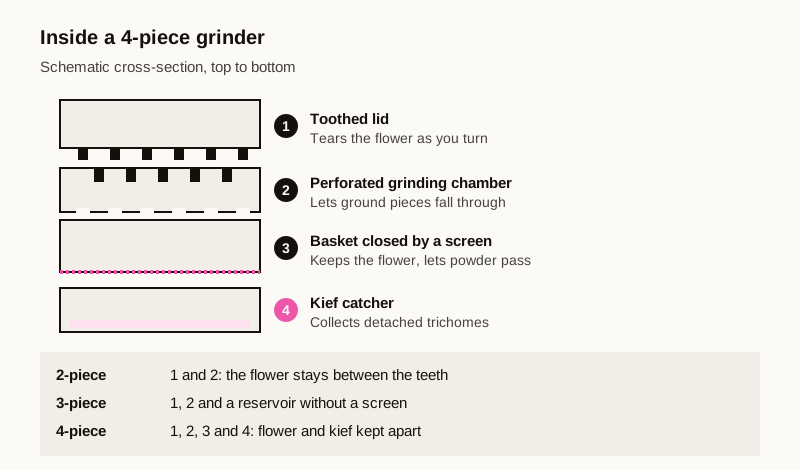
A grinder is a round box with several tiers that screw or slot together. The lid and the chamber below carry offset teeth: as you turn, they tear the flower. Depending on the model, the ground material stays between the teeth, falls through holes into a reservoir, or also passes through a screen.
The four types compared
| Type | What it contains | Best for | Limit |
|---|---|---|---|
| 2-piece | Lid and toothed chamber | Occasional use, small amounts | Ground flower stays stuck between the teeth |
| 3-piece | Teeth, holes, reservoir | Regular use, even grind | Kief mixes in with the flower |
| 4-piece | Teeth, holes, screened basket, catcher | Keeping flower and kief apart | Screen needs brushing or it clogs |
| Electric | Blade or burr driven by a motor | Large amounts | Heats up if grinding runs on, harder to clean |
The 2-piece model does the job for a small amount. You then have to scrape the flower out from between the teeth, which quickly gets tedious. The 3-piece fixes that: the ground flower drops into a reservoir. The 4-piece adds one more tier, closed by a fine screen, and that screen changes the nature of what you collect.
The kief in the bottom compartment
During grinding, the trichomes, the tiny glands that cover the flower, break off. A Canadian study published in 2023 measured their heads at 40 to 110 microns across, and observed that at maturity many come off their stalk during drying and handling. Small enough to pass through the screen, they fall into the catcher: that is kief.
Kief is not worthless dust. A study published in 2020 in Scientific Reports notes that cannabinoids and terpenes are produced and stored in these glands. Kief is therefore more concentrated than the flower, in CBD and in THC alike. A flower compliant at 0.30% Δ⁹-THC can yield kief above that limit: our article on homemade CBD hash does the maths. Sifting by hand, dry sift, rests on the same principle, with screens of chosen mesh. What the trade calls CBD "pollen" is in fact this kind of trichome powder, as our guide to CBD pollen explains.
Choosing the grind for the use
How fine to grind depends on what you do with the flower.
- Vaporiser. An even grind, neither powder nor large pieces, heats evenly. Our guide to vaporisation temperatures details the settings.
- Recipe or butter. The ground flower is first decarboxylated in the oven, a step described in our article on decarboxylation.
- Storage. Only grind what you are about to use. Broken-up flower exposes more surface to air and light, as our article on storing CBD flowers points out.
To choose the flower itself, the CBD flower category states the CBD content of each product.
Heat, materials and cleaning
The main drawback of an electric grinder is heat. A 2020 study on drying hemp flowers showed that monoterpenes such as myrcene and limonene break down faster under heat than sesquiterpenes such as β-caryophyllene. Short pulses limit the heating.
On materials, a metal grinder should shed no shavings or metal dust: inspect a new one before first use and discard it if it does. Wood and acrylic scratch more easily than metal.
For cleaning, isopropyl alcohol dissolves resin well on metal parts. The INRS toxicology data sheet gives a flash point of 12 °C for the pure product: its vapours ignite at room temperature. Clean away from any flame, rinse in hot water, and let everything dry completely before reassembling the grinder.
And the law?
A grinder has no legal status of its own: what matters is what you put in it. The French order of 30 December 2021 caps the Δ⁹-THC content of authorised hemp and its extracts at 0.30%, and the Conseil d'État decision of 29 December 2022 struck down the ban on selling raw flowers and leaves. Our selection of useful accessories completes this guide.
Frequently asked questions
Do you need a kief grinder for CBD flower?
No. A 3-piece model is enough for a vaporiser, an infusion or a recipe. The fourth compartment only matters if you want to collect the kief separately.
Does an electric grinder damage the flower?
Long grinding heats the material, and the most volatile terpenes go first. Short, repeated pulses limit the heating.
How do you clean a grinder?
Take it apart, brush the teeth and screen with a small dry brush, then wipe the metal parts with isopropyl alcohol, away from any flame. Rinse and let it dry completely before reassembling.
Is grinder kief the same as hash?
It is the raw material of hash: trichome heads mixed with fine plant dust. Pressed, it forms a resin. Because it also concentrates THC, its content can exceed that of the original flower.
Written by the Phytogrammes team
Every article in this journal draws on primary sources (ANSM, EFSA, EUR-Lex, peer-reviewed publications) and on the lab's own practice: batch-by-batch HPLC analyses, measured cannabinoid profiles. Our approach.
Article published on . CBD is not a medicine.