CBD shortbread: why the oil goes on after baking
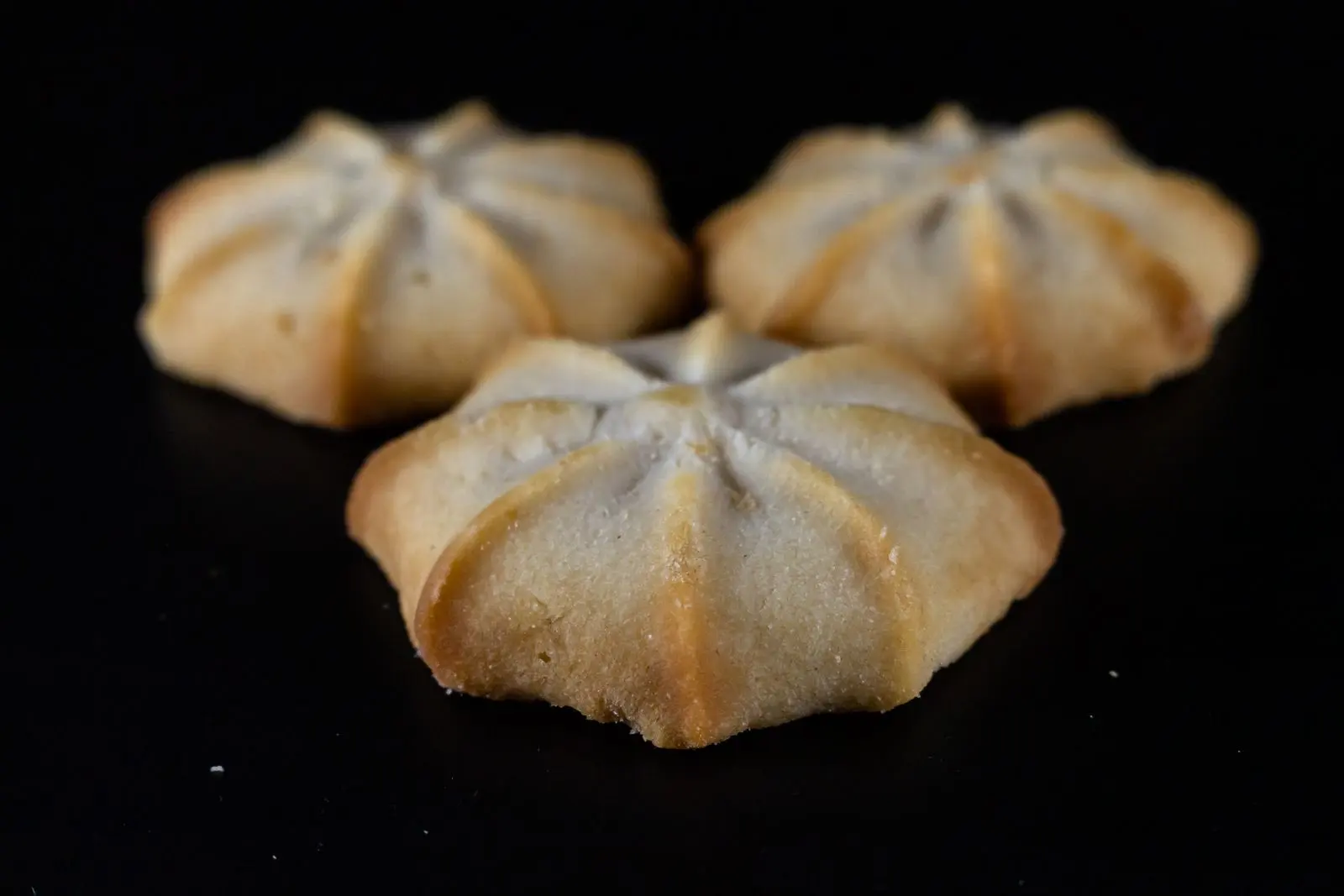
For CBD shortbread, bake a batch of plain sablés, then put the oil on a cooled biscuit with a graduated syringe: 0.02 ml of a 10% oil gives 2 mg of CBD, EFSA's provisional reference for a 70 kg adult. Mixed into the dough, the oil goes through the oven and spreads unevenly from one biscuit to the next. And a CBD food cannot be sold in France: this recipe is made at home, for yourself.
Contents
> Key takeaways > > - The dough: 200 g of flour, 100 g of butter, 80 g of icing sugar and one egg yolk, for about twenty biscuits. > - The CBD goes on the baked, cooled biscuit, never into the dough. > - EFSA has set a provisional safe level of about 2 mg of CBD per day for a 70 kg adult. > - Only dose the biscuit you will eat today: the rest stay plain in the tin. > - On 20 May 2026, the French Ministry of Agriculture restated that foods containing CBD must be withdrawn from the market.
What the law says before you get the butter out
A CBD biscuit is a food. CBD added to a food falls under the EU novel food regulation, and no CBD extract has been authorised under it. On 20 May 2026, the French Ministry of Agriculture restated that foods containing CBD are not authorised and must be withdrawn from the market, food supplements and online sales included. It also reports several hundred poisonings linked to these products since 2024.
So no CBD biscuit can be sold, or served in a tearoom. A batch made at home for your own consumption is not placing a product on the market, but it is your responsibility. The oil must come from authorised hemp, with no more than 0.30% Δ⁹-THC. The full background is in our overview of CBD regulation in 2026.
Why the oil goes on the baked biscuit, not in the dough
Many recipes mix the oil into the dough. Three reasons argue for the opposite.
The first is the dose. Mixed into the dough, the oil is shared among all the biscuits, unevenly if the mixing or slicing is uneven. Here is what a batch of 20 biscuits gives:
| Method | CBD per biscuit | Against the 2 mg reference |
|---|---|---|
| 1 ml of 10% oil in the dough | 5 mg, in theory | 2.5 times more |
| 1 ml of 5% oil in the dough | 2.5 mg, in theory | 1.25 times more |
| 0.02 ml of 10% oil on a baked biscuit | 2 mg | Equal |
"In theory", because these figures assume a perfectly even dough and no loss in the oven. Nobody can check what a given biscuit contains.
The second is heat. A 2022 study in Frontiers in Chemistry heated 25 mg of pure CBD in a sealed vial at 220 °C. After 60 minutes, more than 80% had gone, partly converted into Δ⁹-THC, cannabinol (CBN) and cannabielsoin (CBE). A sablé bakes for 12 to 15 minutes at 160 °C, far from those conditions, and no published study measures the loss in a biscuit. Adding the oil after baking removes the question. Our guide to cooking with CBD oil compares other preparations.
The third is the tin. Twenty dosed biscuits get eaten like biscuits: three at teatime make three doses, and a child cannot tell the difference. A tin of plain biscuits does not have that problem.
The shortbread recipe, step by step
For about twenty biscuits roughly 5 mm thick:
- 200 g of flour;
- 100 g of lightly salted butter, softened;
- 80 g of icing sugar;
- 1 egg yolk;
- 1 pinch of vanilla powder, optional.
- Beat the softened butter and icing sugar until creamy.
- Add the egg yolk, then the sifted flour and vanilla, without overworking the dough.
- Shape a log 4 to 5 cm across, wrap it in cling film and chill it for at least an hour.
- Cut half-centimetre slices and lay them on a tray lined with baking paper.
- Bake for 12 to 15 minutes at 160 °C, until the edges turn golden.
- Let them cool completely on a rack: warm sablés break.
Chilling is the step people skip most often. Dough that is too soft spreads in the oven and loses its clean shape. Salted butter balances the icing sugar; with unsalted butter, add a pinch of salt.
Dosing: 2 mg on one biscuit, with a syringe
On 9 February 2026, EFSA published a provisional safe level of 0.0275 mg of CBD per kilo of body weight per day, about 2 mg for a 70 kg adult. It was set for food supplements of CBD at least 98% pure. EFSA states that safety has not been established for people under 25, pregnant or breastfeeding women and people taking medication. This recipe is not for them.
The calculation starts from the total CBD stated for the bottle: 1,000 mg in 10 ml makes 100 mg per millilitre. Divide the dose you want by that concentration.
| Oil (bottle total) | Concentration | Volume for 2 mg |
|---|---|---|
| 500 mg in 10 ml | 50 mg/ml | 0.04 ml |
| 1,000 mg in 10 ml | 100 mg/ml | 0.02 ml |
| 2,000 mg in 10 ml | 200 mg/ml | 0.01 ml |
These volumes are too small for a dropper. A 1 ml oral syringe graduated in hundredths, sold in pharmacies, lets you measure them. Put the drop on the underside of the cooled biscuit and let it soak in for five minutes. If the batch analysis gives a different content from the label, the analysis is what counts: the laboratory page explains how to read it.
EFSA's reference is per day. One dosed biscuit a day, the others plain. Our article on how much CBD per day explains that reference and its limits.
Storage: biscuits on one side, oil on the other
Plain sablés keep for 5 to 7 days in an airtight tin, away from moisture. A dosed biscuit is eaten the same day; if it has to wait, label it and keep it out of children's reach.
The oil keeps best cool and in the dark. A stability study in Scientific Reports on CBD e-liquids measured minimal degradation over 30 days at 4 °C, against about 20% at 37 °C, and an average drop of 13% in daylight against 4% in the dark. Our guide to storing CBD oil turns that into practical rules.
Frequently asked questions
Can I put the CBD oil straight into the dough?
You can, but then you no longer know what each biscuit contains. With 1 ml of 10% oil for 20 biscuits, each gets 5 mg in theory, 2.5 times the EFSA reference, before any loss in the oven.
Does baking destroy CBD?
Long, strong heating does: more than 80% lost after an hour at 220 °C in a 2022 study, with Δ⁹-THC forming. No study measures the loss in a biscuit baked for a quarter of an hour at 160 °C. Adding the oil after baking avoids the problem.
How many CBD biscuits a day?
One dosed at 2 mg, for a 70 kg adult, based on EFSA's provisional safe level. That reference does not apply to people under 25, during pregnancy or breastfeeding, or under medical treatment.
Can I use CBD flowers instead of oil?
You would have to heat them in the butter, and the dose becomes very hard to estimate. Our article on CBD butter mistakes shows why flower butter quickly exceeds the 2 mg reference.
Can I sell or give these biscuits away?
Sell them, no: a CBD food cannot be placed on the market in France. Serve them to someone without telling them, no either. An informed adult chooses their own dosed biscuit.
Written by the Phytogrammes team
Every article in this journal draws on primary sources (ANSM, EFSA, EUR-Lex, peer-reviewed publications) and on the lab's own practice: batch-by-batch HPLC analyses, measured cannabinoid profiles. Our approach.
Article published on . CBD is not a medicine.