Cannabis in Malta: the 2021 law, the associations and the trip back to France
Since 18 December 2021, holding up to 7 grams of cannabis or growing 4 plants at home is no longer an offence in Malta. Selling is still banned, and cannabis associations only admit residents. None of this applies in France, where bringing cannabis into the country remains a criminal offence.
Contents
The text is Act LXVI of 2021, passed by the House of Representatives on 14 December 2021 and published on 18 December (Legislation Malta, 2021). It created the Authority on the Responsible Use of Cannabis (ARUC) and amended four existing laws. A second text, Act XII of 2025, added to it in May 2025. This guide describes the law as it stood on 6 October 2026.
Key takeaways
- Up to 7 g for personal use is no offence. From 7 to 28 g, the fine is 50 to 100 euros. Beyond that, ARUC speaks of a criminal offence.
- At your residential address: at most 4 plants and 50 g of dried cannabis, out of sight and without an odour that bothers the neighbours.
- Using cannabis in a place open to the public costs 235 euros. Cannabis associations require members to be resident in Malta.
- Importing or exporting cannabis is a criminal offence in Malta. On the way back, only French law counts.
What does Maltese law allow in 2026?
Holding 7 grams or less for personal use is not an offence for an adult. The rule sits in article 4A of the Drug Dependence (Treatment not Imprisonment) Act (Cap. 537, consolidated text). The police only seize cannabis above 7 grams or when trafficking is suspected. At home, article 7 allows 4 plants and 50 grams of dried cannabis, at the address shown on an official document of residence.
| Situation | Maltese rule | Consequence |
|---|---|---|
| Holding 7 g or less | No offence for an adult | Seizure only above 7 g |
| Holding more than 7 g and up to 28 g | Non-criminal offence | Fine of 50 to 100 € |
| Holding more than 28 g in public, more than 50 g at home | Criminal offence according to ARUC | Criminal prosecution |
| Growing at home | At most 4 plants and 50 g dried | Out of sight and without odour nuisance, otherwise 300 to 500 € |
| Using in public | Banned | 235 € |
| Using in front of a minor | Banned, even in private | 300 to 500 € |
Act XII of 2025, enacted on 16 May 2025, added three restrictions (Legislation Malta, 2025). Using cannabis is now also punished anywhere its smell bothers other people. Growing plants that are visible, give off an odour or can be reached by minors costs 300 to 500 euros. Growing anywhere other than your residential address costs 700 to 1,000 euros, and the plants are seized.
That does not make use legal. ARUC says so in its frequently asked questions: the reform took some acts out of criminal law, and non-criminal penalties remain. It also lists sharing or selling cannabis, and driving under its influence, among criminal offences (ARUC, frequently asked questions).
Who can join a cannabis association in Malta?
Cannabis Harm Reduction Associations (CHRA) are non-profit bodies. Each one must hold an ARUC licence, grows only for its own members and may not advertise. The licensing regulations require members to be at least 18, resident in Malta and members of one association at a time. They cap each association at 500 members (S.L. 628.01, regulations 18 and 19, as amended by L.N. 44 of 2026).
A member receives no more than 7 g a day and 50 g a month. An association may not be located less than 250 metres from the entrance of a school, a sports facility or a youth centre.
The ARUC register lists 24 associations holding an operating permit (ARUC, consulted on 6 October 2026). It states that tourists cannot become members and that an identity card or residence card issued by the Maltese government proves residence. The regulations also require the association to keep an official Maltese document showing residence: a French passport is not enough.
The word "club" is therefore misleading. These are closed premises, with no visible sign from the outside, not cafés open to everyone. An offer promising a tourist immediate access contradicts the regulations. Luxembourg made a different choice, with no associations: our article on cannabis in Luxembourg describes home growing and the absence of any sales. The Czech Republic and Portugal follow yet other routes, described in our articles on the 2026 Czech law and the Portuguese framework.
What does Malta say about products below 0.2% THC?
The 2025 law rewrote the definition of cannabis in the Dangerous Drugs Ordinance (Cap. 101). It excludes seeds, as well as flowers, leaves, extracts and products derived from non-psychoactive phytocannabinoids that contain at most 0.2% psychoactive cannabinoids. A schedule names CBD, CBG, CBC and CBDV on one side, and THC on the other.
Synthetic cannabinoids follow the opposite rule. HHC, HHC-O, HHC-P, H4-CBD and THC-P are treated as cannabis, with the same penalties. HHC is also a narcotic in France: our article on the HHC timeline traces it.
These rules do not create a regulated market. In a statement of 25 February 2026, ARUC said it cannot regulate for-profit shops selling products below 0.2% THC. A bill is going through the necessary clearances (ARUC, 2026). As of 6 October 2026, none of the official sources consulted reports that this bill has been passed.
A judgment of 27 July 2026 shows the effect of the 2025 definition. According to a commentary in MaltaToday, a magistrate ended the proceedings against an importer of flowers below 0.2% THC. Those flowers no longer counted as cannabis under the law (MaltaToday, 14 August 2026).
On THC, the Maltese threshold of 0.2% is lower than the French threshold of 0.30%. A product at 0.25% meets the French threshold, not the Maltese one. Compliance in France also depends on the variety and on the type of product.
Travelling from Malta to France: what does the law say?
Articles 4A and 7 govern possession and growing, not crossing a border. ARUC lists importing and exporting cannabis, in any form, among criminal offences. The Dangerous Drugs Ordinance prohibits exporting a dangerous drug, cannabis included, without an export authorisation (article 13).
On the French side, the public service website points out that possessing, transporting or bringing narcotics into France is illegal (Service-Public, checked on 24 November 2025). The Criminal Code punishes illegal importation with up to ten years in prison and a fine of 7,500,000 euros (article 222-36, Légifrance). Use is punished with up to one year in prison and a fine of 3,750 euros (article L3421-1, Légifrance). Since 20 August 2026, a fixed fine of 500 euros can end the prosecution.
Worked example A traveller holds 5 g, below the 7 g limit. In Malta, that is not an offence. In their luggage at Luqa airport, the same 5 g become an export, which ARUC classes as a criminal offence. On arrival in France, it is an importation of narcotics.
For CBD products, the rules for flying are covered in our guide to flying with CBD.
What THC threshold applies to a CBD product in France?
In France, a CBD product must come from a variety listed in the catalogue, with THC not exceeding 0.30%. Extracts and finished products must meet the same limit (order of 30 December 2021, Légifrance). MILDECA, the French interministerial drugs agency, restates it in its September 2026 summary (MILDECA, 2026). Our article on the authorised THC level explains what that rate is measured on.
The threshold applies to the product in your hands, whether bought in Malta or anywhere else. A CBD flower looks like cannabis and can trigger a check, as our article on police checks with CBD explains. Only the batch's certificate of analysis gives the measured THC. Phytogrammes product pages show a reference cannabinoid profile; no laboratory certificate is published there as of 18 October 2026. Its laboratory page lists the catalogue products.
Frequently asked questions
Is cannabis legal in Malta for tourists?
Partly. Holding up to 7 grams for personal use is not an offence. But the law provides no place where a visitor can buy: selling is still banned and the associations exclude tourists. Using cannabis in a place open to the public costs 235 euros.
How much cannabis can you hold in Malta?
Up to 7 grams for personal use, and 50 grams of dried cannabis at your residential address. From 7 to 28 grams, the fine is 50 to 100 euros. Above 28 grams in public or 50 grams at home, ARUC speaks of a criminal offence.
Can a French tourist join a cannabis association?
No. The licensing regulations restrict membership to residents of Malta, and the association must keep an official Maltese document proving it. A French passport, a hotel booking or a holiday rental is not enough.
Can you bring cannabis back from Malta to France?
No. Malta lists exporting cannabis among criminal offences, and France punishes the importation of narcotics. The 7 gram limit changes nothing at the border.
Is a CBD product bought in Malta legal in France?
Only if it meets French rules: an authorised variety, THC of at most 0.30%, and a product that is not a foodstuff. The Maltese threshold of 0.2% guarantees neither the variety nor the type of product. Without a certificate of analysis for the batch, the safest choice is to bring nothing back.
Sources and dates
Sources consulted on 6 October 2026. The dates are the publication or update dates given by each source:
- Act LXVI of 2021 (Cap. 628): passed 2021-12-14, published and in force 2021-12-18.
- Act XII of 2025: enacted 2025-05-16; Cap. 537 and Cap. 101: consolidated texts that include it, consolidation date not stated.
- S.L. 628.01: L.N. 56 of 2023 (2023-03-10), as amended by L.N. 44 of 2026.
- ARUC: register consulted on 2026-10-06 (24 permits), undated frequently asked questions, statement of 2026-02-25.
- MaltaToday: 2026-08-14, commenting on a judgment of 2026-07-27.
- Service-Public: checked 2025-11-24. Légifrance: article L3421-1 in force since 2026-08-20, article 222-36 since 2009-11-26, order of 30 December 2021 published 2021-12-31. MILDECA: September 2026.
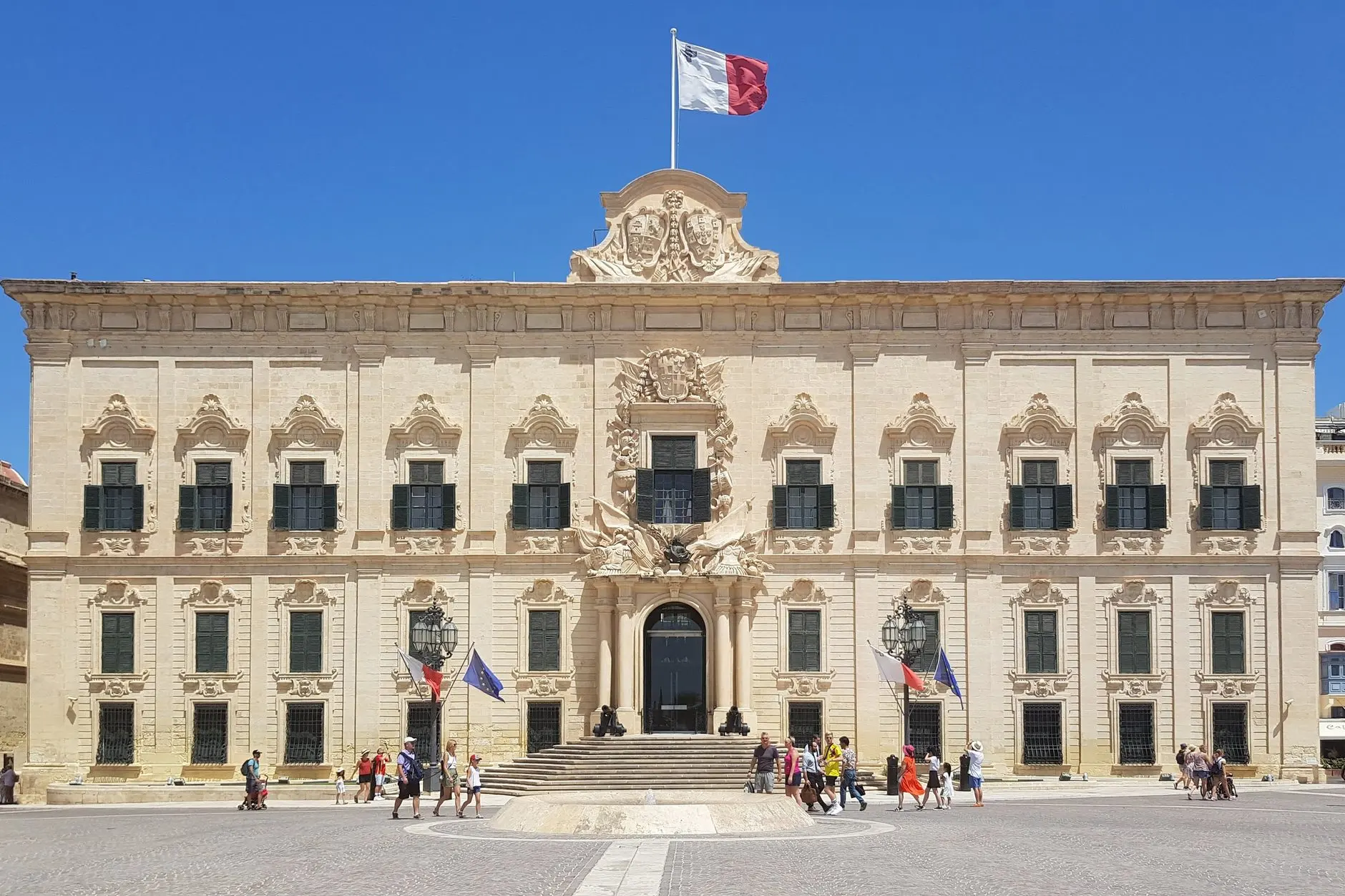
- Opening photo: Matthew Axiak, CC BY-SA 4.0, via Wikimedia Commons, cropped.
Written by the Phytogrammes team
Each journal article draws on cited primary sources: ANSM, EFSA, EUR-Lex and peer-reviewed publications. Product profiles are distinguished from documented laboratory results. Our approach.
Article published on . CBD is not a medicine.