CBD omelette: recipe, a 2 mg dose and the law in 2026
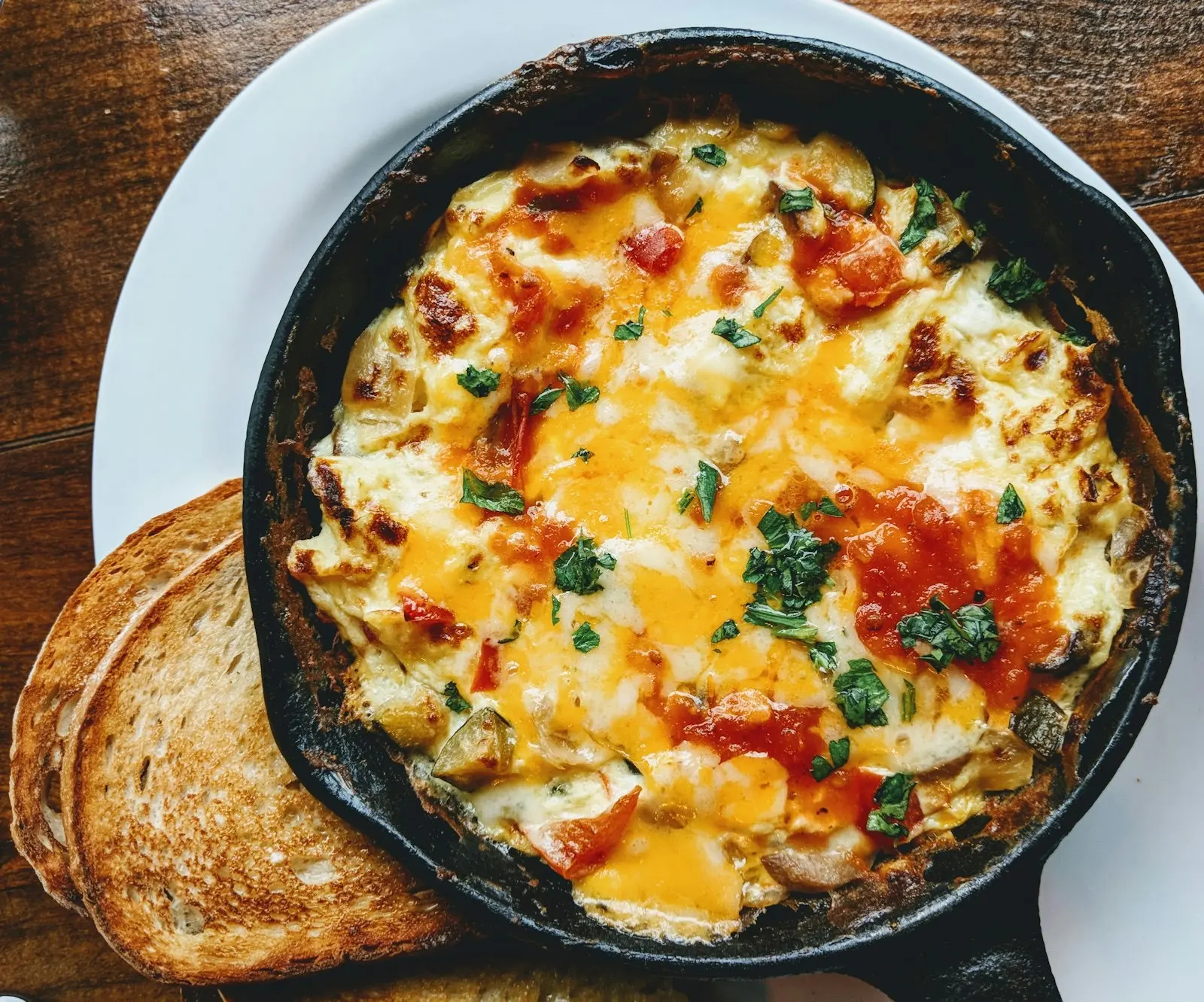
A CBD omelette is made in two stages: you cook the omelette as usual, then put the measured CBD oil on the plate, off the heat. To aim for 2 mg, the benchmark set by EFSA for a 70 kg adult, 0.02 mL of an oil at 100 mg per millilitre is enough. A cannabis omelette rich in THC is a different matter: it falls under narcotics law.
Contents
> Key takeaways > > - Since the Ministry of Agriculture notice of 20 May 2026, no food containing CBD may be sold in France; making it at home is not selling it. > - EFSA's benchmark is about 2 mg of CBD a day for 70 kg, and it excludes under-25s, pregnancy and people on medication. > - With an oil at 100 mg/mL, 2 mg fits in 0.02 mL: a graduated oral syringe measures it. > - In a 2022 study, over 80% of pure CBD heated for an hour at 220 °C had gone, partly turned into THC. > - Taken with a high-fat meal, CBD gave 4 times the exposure in a 2019 study.
Cannabis omelette or CBD omelette: what the law allows
A search for "cannabis omelette" covers two very different things. THC, the psychoactive molecule in cannabis, is classed as a narcotic in France: an omelette made with THC-rich cannabis falls under that regime, whatever the amount. CBD is not a narcotic, provided the starting product contains no more than 0.30% Δ⁹-THC.
Then there is food law. On 20 May 2026, the Ministry of Agriculture recalled that foods containing CBD are not authorised and must be withdrawn from the market, food supplements included. EFSA considers that the safety of CBD as a food has not been demonstrated. No CBD omelette may therefore be served in a restaurant or sold. Something you make at home, for yourself, is not a sale, but it is your own responsibility. The full background is in our overview of CBD regulation in 2026.
Why the oil goes on after cooking
CBD does not cope well with prolonged heat. A study published in 2022 in Frontiers in Chemistry heated 25 mg of pure CBD in a sealed vial at 220 °C. After 2 minutes, the content had barely moved; after 60 minutes, over 80% had gone, partly replaced by Δ⁹-THC and CBN. In another trial, on hemp biomass heated under pressure, the amount of CBD recovered started to fall at 160 °C.
An omelette cooks in a few minutes, far from an hour at 220 °C. But nobody has measured the loss in a real pan, and oil poured into beaten eggs touches the hot metal directly. The simplest rule sidesteps the question: the omelette cooks without CBD, and the oil goes on the plate. You then know exactly what you are eating.
CBD dissolves in fat, not in water. The cooking butter and the egg yolks are enough to hold it: oil placed on the hot omelette spreads into it instead of staying in droplets. Our guide to cooking with CBD oil compares other preparations.
The dose: 2 mg per plate, the only official benchmark
In February 2026, EFSA set a provisional safe level of 0.0275 mg of CBD per kilo of body weight per day, about 2 mg for a 70 kg adult. This benchmark applies to CBD at least 98% pure, in a food supplement. The European authority states that it cannot establish the safety of CBD for under-25s, pregnant or breastfeeding women and people taking medication. This recipe is not for them.
The calculation starts from the total CBD printed on the bottle, not the percentage: 1,000 mg in 10 mL makes 100 mg per millilitre. Divide the dose you want by that concentration.
| Oil (bottle total) | Concentration | Volume for 2 mg |
|---|---|---|
| 500 mg in 10 mL | 50 mg/mL | 0.04 mL |
| 1,000 mg in 10 mL | 100 mg/mL | 0.02 mL |
| 2,000 mg in 10 mL | 200 mg/mL | 0.01 mL |
These volumes are too small for a dropper. A 1 mL oral syringe graduated in hundredths, sold in pharmacies, can measure them. If the batch analysis gives a different content from the label, the analysis is what counts: the laboratory page explains how to read it, and our article on how much CBD per day details the EFSA benchmark.
The recipe for one
Ingredients:
- 3 eggs;
- 10 g of butter;
- salt, pepper;
- one tablespoon of chopped chives or parsley;
- 2 mg of CBD, that is 0.02 mL of an oil at 100 mg/mL.
- Beat the eggs with a fork, with salt and pepper, without CBD.
- Melt the butter over medium heat, pour in the eggs and draw the edges towards the centre for two to three minutes.
- Fold the omelette while it is still soft and slide it onto the plate. Turn off the heat.
- Draw the oil into the syringe and drizzle it over the top of the omelette, then scatter the herbs.
- Eat the whole omelette: the dose is calculated for the plate, not for a mouthful.
For two people, make two omelettes rather than one large one to share. Each person then gets their own dose on their own plate, and anyone who does not want it simply does not get it.
Fat in the meal changes what the body absorbs
A butter omelette is a fatty meal, and that matters. In a study published in 2019 in Epilepsia, eight adults with epilepsy took the same CBD capsule fasting, then after a high-fat breakfast of 840 to 860 kcal. After the meal, the peak blood level of CBD was on average 14 times higher, and total exposure 4 times greater.
Reaching the blood also takes time. A 2018 systematic review puts the peak between 0 and 4 hours after an oral dose. Do not add more oil because the first plate does not seem to "do anything". Our article on how long CBD takes to work details these times.
Why not put flower in the eggs
Flower makes the dose impossible to know. A flower at 11% CBD contains 110 mg per gram, 55 times the EFSA benchmark; a pinch of 0.1 g still brings 11 mg. And raw flower contains mostly CBDA, the acid form of CBD, which only converts with heat, under conditions a pan does not control. Our guide to decarboxylation describes this reaction.
Prolonged cooking can also form THC from CBD, as in the 2022 study. For a measurable dose, measured oil remains the only option.
Precautions
Keep the oil and any leftovers out of reach of children. Never serve a CBD omelette without telling the person who will eat it. CBD changes the activity of liver enzymes that break down many medicines, as our article on the grapefruit effect explains: if you take any treatment, ask your doctor or pharmacist.
A full-spectrum oil can contain up to 0.30% Δ⁹-THC. In France, driving after drug use is an offence as soon as the test detects THC, whatever the amount: our article on CBD and driving details the penalties. CBD is not a medicine; the only authorised cannabidiol medicine is Epidyolex.
Frequently asked questions
Can you legally make a cannabis omelette?
Only with CBD, from a starting product with no more than 0.30% Δ⁹-THC, and for your own consumption. A cannabis omelette rich in THC falls under narcotics law. No CBD food may be sold in France since the notice of 20 May 2026.
How much CBD oil should go in an omelette?
Aim for 2 mg per plate, the EFSA benchmark for a 70 kg adult: 0.02 mL of an oil at 100 mg/mL, or 0.04 mL of an oil at 50 mg/mL. Measure with an oral syringe, not a dropper.
Can you cook CBD oil with the eggs?
It is not advisable. CBD breaks down under prolonged heat and can form THC. Placed on the omelette off the heat, the oil keeps the dose you measured.
Does CBD oil change the taste of the omelette?
At 0.02 mL, very little. A neutral carrier oil, such as medium-chain triglyceride oil, is less noticeable than hemp oil with its grassy taste.
Can you make a CBD omelette for the whole family?
No. EFSA does not establish the safety of CBD under 25, during pregnancy or breastfeeding, or with medication. Make a separate plate for the adult concerned.
Written by the Phytogrammes team
Every article in this journal draws on primary sources (ANSM, EFSA, EUR-Lex, peer-reviewed publications) and on the lab's own practice: batch-by-batch HPLC analyses, measured cannabinoid profiles. Our approach.
Article published on . CBD is not a medicine.