Orange Bud CBD effects: the batch tests at 13.6% CBD
Orange Bud CBD does not get you high: the batch on sale at Phytogrammes, checked on 23 September 2026, measures 0.2% Δ⁹-THC, below the 0.3% legal limit, and 13.6% CBD. No health effect can be promised for a CBD flower in France. The name suggests an orange scent; only the batch analysis says what the flower contains.
Contents
> Key takeaways > > - Batch PG-26-29A9 shows 13.6% CBD, 1.0% CBDA, 0.7% CBG and 0.2% Δ⁹-THC. > - CBD does not have the psychoactive effect of THC, and no therapeutic claim is allowed on a flower. > - "Orange Bud" is a trade name: it guarantees neither a genetic line nor a terpene. > - Of our four fruit-named flowers, only one product page describes a limonene-dominant profile, and it is not Orange Bud. > - At the 2 g tier, 100 mg of CBD from Orange Bud costs €4.74.
What effects to expect from Orange Bud CBD
A CBD flower does not produce the high of cannabis. THC is the molecule that alters perception, and this batch contains 0.2%, below the 0.30% ceiling set by French rules. Our article does CBD get you high? explains why CBD acts differently on the CB1 receptor.
Beyond that, the law sets the frame. MILDECA points out that a CBD product may not make any therapeutic claim, on pain of criminal penalties, unless it has been authorised as a medicine. The only CBD-based medicine authorised in France is Epidyolex, prescribed for specific forms of epilepsy: see our note on CBD and Epidyolex. The experiences described in online reviews remain individual accounts.
Three precautions apply to any CBD flower, Orange Bud included:
- Medicines. CBD goes through the same liver enzymes as some treatments, including anticoagulants and anti-epileptics. Ask your doctor or pharmacist, and read our article on CBD's grapefruit effect.
- Driving. A flower at 0.2% THC can make a saliva test positive, and driving after drug use is punishable in France by 3 years in prison and a €9,000 fine.
- Pregnancy, breastfeeding, minors. The product page advises against use in these situations.
What the batch on sale measures
The Orange Bud CBD product page publishes the cannabinoid profile of batch PG-26-29A9, measured by liquid chromatography (HPLC). The chart shows it, with CBD separated from the minor cannabinoids so the small values stay readable.
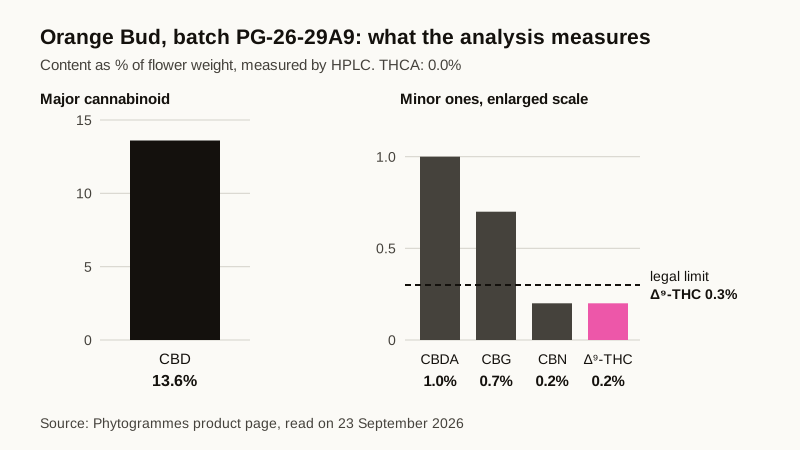
Two useful readings. First, CBDA is the acid form of CBD: heat turns it into CBD by removing a carboxyl group, with a conversion factor of 0.877. Total CBD in the batch is therefore about 13.6 + 0.877 × 1.0, or 14.5%. Our article on CBDA walks through the calculation. Second, Δ⁹-THC at 0.2% and THCA at 0.0% put the batch under the limit. The French order of 30 December 2021 sets that 0.30% ceiling, and the Conseil d'État struck down on 29 December 2022 the ban on selling flowers.
These figures apply to this batch, checked on 23 September 2026. A new batch can show a different profile: it is the batch number, not the strain name, that ties a flower to its analysis. Our guide to the certificate of analysis explains the other lines to read.
The Orange Bud name guarantees neither genetics nor aroma
Orange Bud is first of all the name of a recreational cannabis strain, taken up by hemp growers for CBD-rich flowers. Nothing forces two sellers to put the same plant behind the name. A study published in 2019 in the Journal of Cannabis Research analysed 122 samples of 30 strains bought from 20 dispensaries in three US states. It found significant genetic differences between samples sold under the same name, with most strains including at least one outlier sample.
Aroma follows the same logic. A citrus smell usually comes from limonene, a terpene that Ethan Russo's 2011 review describes as common to lemon and other citrus essential oils, and the second most widespread terpenoid in nature. But across 89,923 samples tested in six US states, another team concluded in 2022 that commercial labels do not consistently match the measured chemistry, terpenes included.
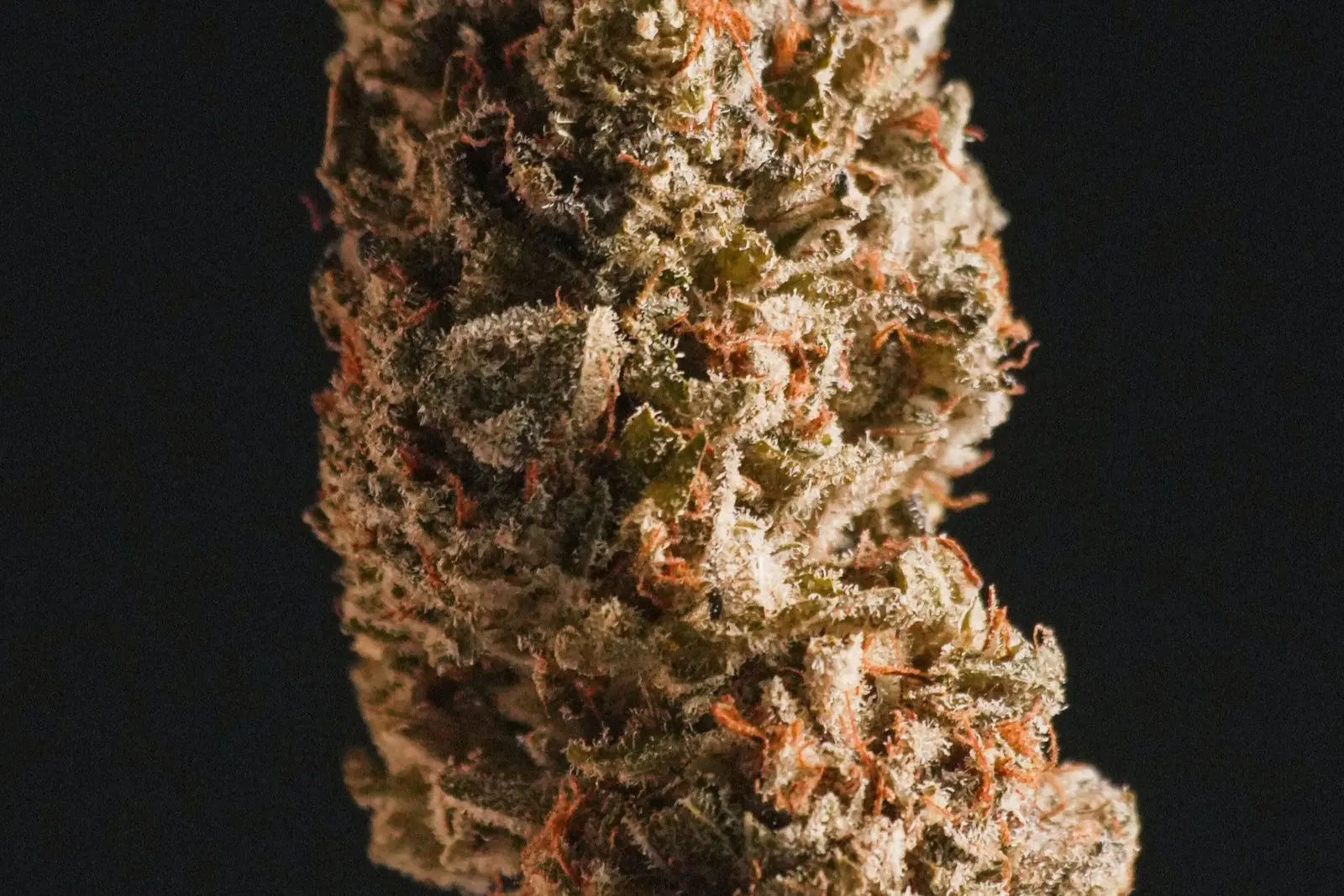
The Phytogrammes catalogue gives an example. The Orange Bud page describes a "fruity and sweet profile, humulene signature", not a limonene profile. And the orange colour visible in the photo comes from the pistils, the hair-like parts of the female flower that turn russet as it matures: it says nothing about the scent. Our article on hemp terpenes explains what they are and how they are measured.
Four fruit-named flowers, compared on their product pages
The table compares Orange Bud with two other "orange" flowers in the catalogue and with Guava Kush, the only one of the four whose page describes a limonene-dominant profile. The terpene shown is the one the product page describes; none of the four publishes a quantified terpene analysis yet. The price of 100 mg of CBD is calculated as follows: the price of one gram, divided by the milligrams of CBD it contains, multiplied by 100.
| Flower | CBD (batch) | Δ⁹-THC | Terpene described on the page | 2 g price | 100 mg of CBD at 2 g |
|---|---|---|---|---|---|
| Orange Bud | 13.6% | 0.2% | humulene | €6.45/g | €4.74 |
| Blood Orange | 11.5% | 0.2% | α-pinene | €6.45/g | €5.61 |
| Orange Fritter | 11.3% | 0.2% | β-caryophyllene | €8.95/g | €7.92 |
| Guava Kush | 13.5% | 0.2% | limonene | €4.95/g | €3.67 |
Two findings. None of the three "orange" flowers is described as limonene-dominant. And at almost the same CBD content, Guava Kush costs 23% less than Orange Bud per milligram of CBD. Prices are those displayed on 23 September 2026 at the 2 g tier; they fall with quantity, down to €1.70 per gram of Orange Bud at the 100 g tier. All of these are listed in the CBD flowers category.
Keeping the aroma of a CBD flower
Terpenes are volatile molecules: heat, light and air make them evaporate or oxidise. The Orange Bud page states a vacuum-sealed bag and storage between 10 and 20 °C, away from light. Once the bag is open, an opaque airtight jar limits losses. A smell that fades after a few weeks mostly signals lost aroma. Our guide to storing CBD flowers gives the humidity and temperature benchmarks.
Frequently asked questions
Does Orange Bud CBD get you high?
No. The batch on sale measures 0.2% Δ⁹-THC, below the 0.3% limit, and CBD does not have the psychoactive effect of THC. Those traces can, however, be enough to make a saliva test positive.
How much CBD is in Orange Bud?
Batch PG-26-29A9, checked on 23 September 2026, shows 13.6% CBD and 1.0% CBDA, or about 14.5% total CBD once the CBDA is converted. The content changes from batch to batch: go by the batch number.
Why does Orange Bud smell of citrus?
When a flower smells of citrus, it is usually limonene. But the name does not guarantee it: the page for this batch describes a fruity, sweet profile marked by humulene. Only a terpene assay by gas chromatography would settle it.
Can you make tea with Orange Bud?
No. The French agriculture ministry points out in a notice of 20 May 2026 that foods containing CBD are not authorised. Only seeds, their derivatives and leaves for infusion remain allowed, with no added cannabinoid extract.
Written by the Phytogrammes team
Every article in this journal draws on primary sources (ANSM, EFSA, EUR-Lex, peer-reviewed publications) and on the lab's own practice: batch-by-batch HPLC analyses, measured cannabinoid profiles. Our approach.
Article published on . CBD is not a medicine.