CBN + THC gummies: why they are banned in France
A gummy that combines CBN and THC is banned in France for two reasons that add up: THC is a narcotic there, and no food enriched with cannabinoids may be sold since May 2026. CBN on its own is not classified as a narcotic. The main danger of these products lies in the THC and the undeclared molecules they often contain.
Contents
> Key takeaways > > - THC is a narcotic. Hemp is only tolerated at 0.30% Δ⁹-THC or less, and no food may be enriched with cannabinoids. > - On 20 May 2026, the Ministry of Agriculture declared foods enriched with cannabinoids or THC illegal. > - Importing a narcotic is punishable by 10 years in prison and a €7,500,000 fine, even for a parcel ordered online. > - In the United States, a 2025 law caps hemp products at 0.4 mg of total THC per container from 11 December 2026. > - The ANSM and Anses have recorded several hundred poisonings linked to "CBD" products since early 2024.
Two rules that add up
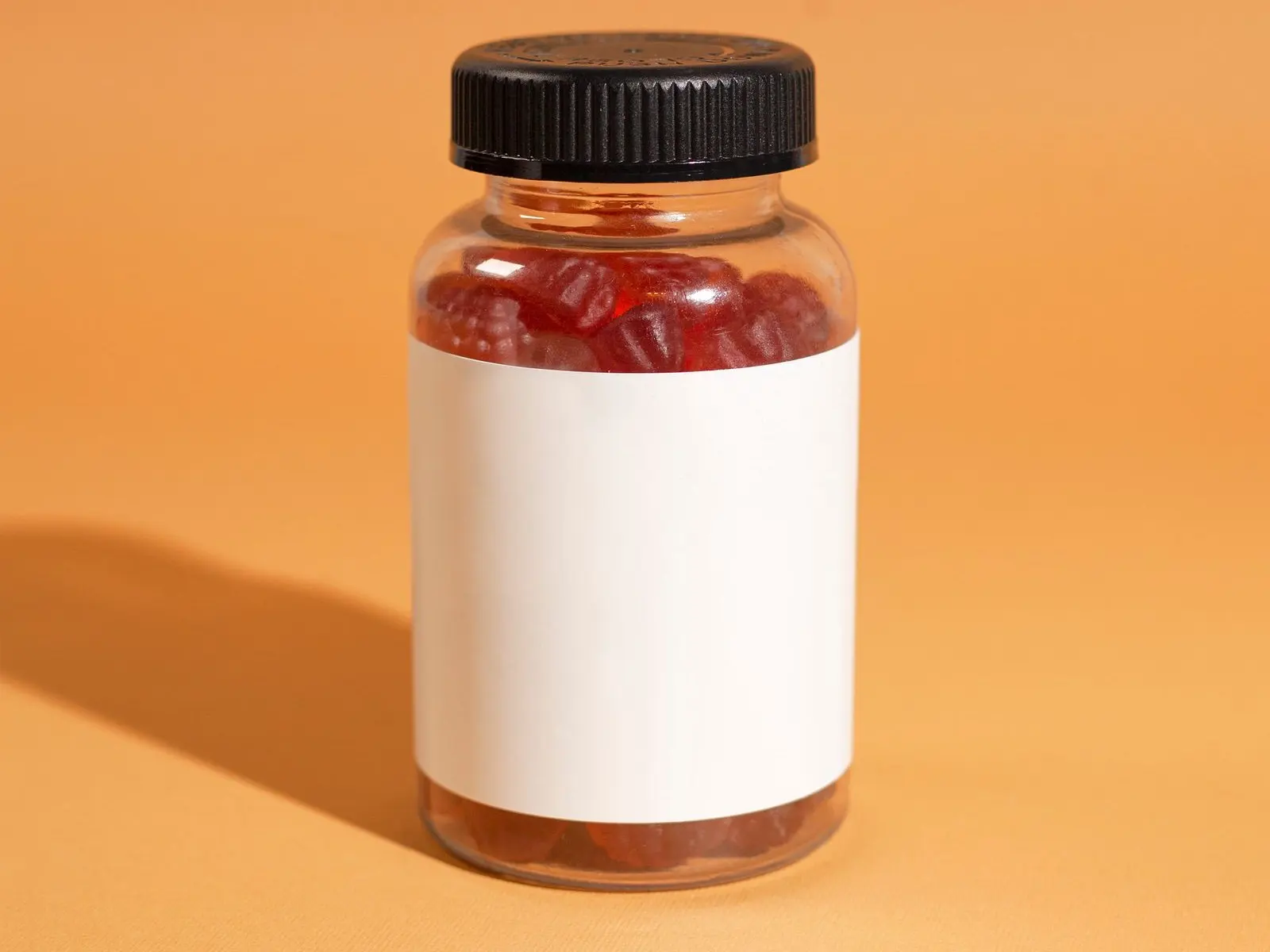
Gummies sold for sleep in the United States combine a few milligrams of CBN (cannabinol) with a few milligrams of THC. In France, two distinct rules apply to them.
First rule: THC is a narcotic. Hemp benefits from an exemption set by the decree of 30 December 2021: varieties listed in the official catalogues, no more than 0.30% Δ⁹-THC in the plant and in extracts. A product above that threshold is a narcotic. The ANSM and Anses repeat this in their press release of 19 June 2025: selling, buying and consuming it are prohibited, whatever the form. Our article on the legal THC level explains this threshold.
Second rule: food. On 20 May 2026, the Ministry of Agriculture declared foods enriched with cannabinoid extracts, THC or other narcotic molecules illegal, food supplements included. The legal basis is the EU novel food regulation: none of these ingredients has been authorised under it.
This second rule matters more than it seems. Take a 4 g gummy dosed at 5 mg of THC: THC makes up 0.125% of its mass, below the 0.30% threshold. The percentage alone would not be enough to bring it under narcotics law. The ban on enriched foods applies whatever the content. Our article on CBD gummies follows the effect of this rule on a very common format.
Why they exist in the United States
The 2018 US farm law, known as the Farm Bill, defines hemp by a maximum of 0.3% delta-9-THC on a dry weight basis. Manufacturers applied that percentage to finished products. On a 4 g gummy, 0.3% of the weight is 12 mg of THC: enough for a psychoactive effect while respecting the letter of the law. Drinks, gummies and THCA-rich products were sold on that basis.
That gap is closing. A law signed at the end of 2025 redefines hemp and limits finished products to 0.4 mg of total THC per container, THCA included. Planned for 12 November 2026, its entry into force was pushed back to 11 December 2026 by a law signed on 2 September 2026. Cannabinoids that the plant does not produce naturally lose their status from 12 November.
| Situation | Threshold applied | 4 g gummy with 5 mg of THC |
|---|---|---|
| United States, 2018 rule | 0.3% delta-9-THC on a dry weight basis | Sold as a hemp product |
| United States, from 11 December 2026 | 0.4 mg of total THC per container | Outside hemp status |
| France | 0.30% Δ⁹-THC in hemp; enriched foods banned | Banned food, narcotic beyond the hemp framework |
CBN on its own is not a narcotic
CBN forms when THC oxidises. It is not on any narcotics list. When it classified H4CBD, THCP and other derivatives from 3 June 2024, the ANSM even excluded CBN and CBNA by name from its decision. The same decision leaves THCA permitted in hemp whose THC stays below 0.3%.
CBN should not be confused with HHC, classified as a narcotic since 13 June 2023, or with THCP: our HHC timeline traces these decisions. Our article CBD vs CBN compares the chemistry of the two molecules.
Not being a narcotic does not make CBN saleable in every form. In a gummy or a capsule, it falls under the ban on enriched foods of 20 May 2026, with or without THC.
CBN: where the danger lies
CBN itself has been little studied in humans. The larger of the two controlled trials published, which appeared in 2024, followed 293 adults for seven nights at 20 mg a day. That is too little to establish a long-term safety profile, and nobody knows what repeated use over months does. Our article on CBN in France summarises both published trials.
The documented risk comes from elsewhere. In their June 2025 press release, the ANSM and Anses report several hundred poisonings since early 2024 in people who had used products presented as containing CBD. In most cases, THC or synthetic cannabinoids were the cause. The agencies cite a study carried out in 2023 by the addiction-monitoring centres of Lyon, Paris and Montpellier: 8 products out of 10 showed a CBD content different from the label.
Reported symptoms range from drowsiness and nausea to rapid heartbeat, hallucinations, loss of consciousness and seizures. The agencies add two warnings: products labelled "strong" carry the highest risk, and CBD taken with certain medicines can reduce their effectiveness or increase their side effects. An imported, unchecked gummy combines these risks. Swallowed THC adds its own: according to a 2003 pharmacology review, its psychoactive effects start 30 to 90 minutes after ingestion and last 4 to 12 hours depending on the dose, a delay that can lead people to take another gummy too soon. Our article on THC gummies details this timing.
Finally, the road. The Cour de cassation ruled on 21 June 2023 that driving after using narcotics is an offence whatever the dose. The penalty is 3 years in prison and a €9,000 fine, with 6 points removed from the licence, according to the service-public.fr page on drug driving.
Ordering from abroad: what the buyer risks
Ordering these gummies from a US website means bringing a banned product into France, and a narcotic as soon as the THC falls outside the authorised hemp framework. Article 222-36 of the French Penal Code punishes the illegal import of narcotics with 10 years in prison and a €7,500,000 fine. The text makes no exception for personal use. A seller based in France falls under article 222-37, which sets the same penalties for offering, supplying and possessing narcotics.
Legality in the country of origin changes nothing. A gummy sold freely in a US state is still banned when it arrives in France. Our article on ingested THC in France covers drinks and oils.
What remains legal in France
Flowers and resins from authorised hemp varieties, with no more than 0.30% Δ⁹-THC, remain on sale as long as they are not presented as food. So do CBD cosmetics. None of these products may claim an effect on sleep: such a claim would push it into the medicines regime. For persistent insomnia, the French National Authority for Health recommends sleep hygiene and cognitive behavioural therapy before any medication, with a doctor.
Our CBD flowers and CBD resins show their Δ⁹-THC ceiling on every product page. Our overview of CBD regulation in 2026 covers the authorised formats, and the laboratory page explains how to read an analysis.
Frequently asked questions
Can you import these gummies for personal use?
No. A THC gummy is a banned food in France, and a narcotic as soon as its THC falls outside the authorised hemp framework. Importing narcotics is punishable by 10 years in prison and a €7,500,000 fine, with no exception for personal use.
Is CBN dangerous?
The data are too thin to confirm or rule it out: the larger of the two published trials followed 293 adults for seven nights. The documented danger comes mainly from THC and synthetic cannabinoids found in mislabelled products, behind several hundred poisonings since 2024.
Is a CBN gummy without THC legal in France?
No, not as a food. CBN is not a narcotic, but on 20 May 2026 the Ministry of Agriculture declared foods enriched with extracted cannabinoids illegal.
Why are these gummies still sold in the United States?
Because the 2018 law defined hemp by a percentage of delta-9-THC. The law signed at the end of 2025 limits products to 0.4 mg of total THC per container from 11 December 2026.
What does a seller of these products risk in France?
Offering, supplying and possessing narcotics are punishable by 10 years in prison and a €7,500,000 fine under article 222-37 of the Penal Code. Selling an unauthorised food also exposes them to a market withdrawal.
Written by the Phytogrammes team
Every article in this journal draws on primary sources (ANSM, EFSA, EUR-Lex, peer-reviewed publications) and on the lab's own practice: batch-by-batch HPLC analyses, measured cannabinoid profiles. Our approach.
Article published on . CBD is not a medicine.