What does "beuh" mean? French slang for weed, and CBD
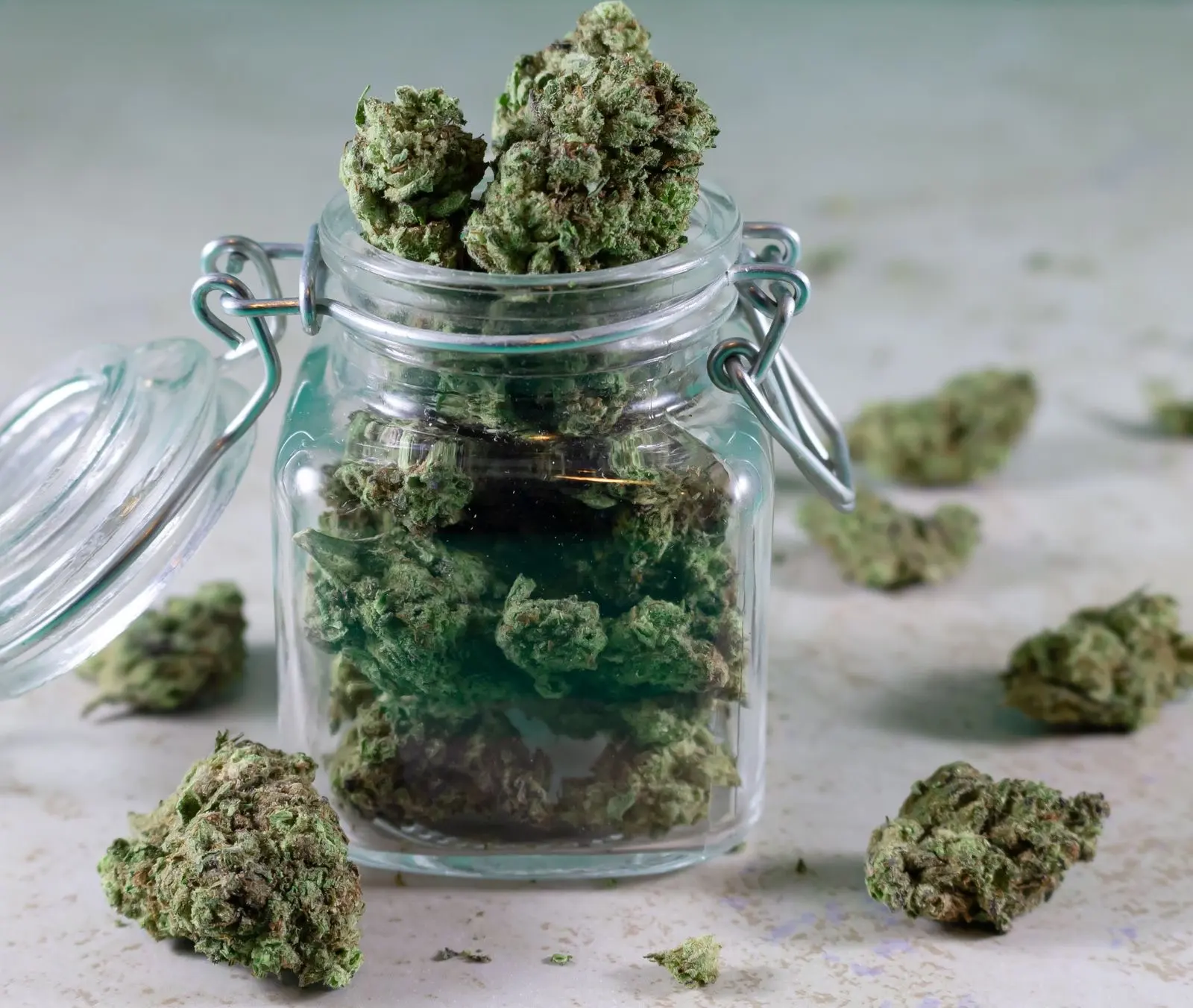
"Beuh" is a French slang word for cannabis in herb form, meaning the dried, THC-rich flowers of the plant. It comes from "herbe" (herb) turned into back-slang. This cannabis is a controlled drug in France: herb seized in 2023 averaged 14.0% THC, while authorised hemp, the source of CBD, is capped at 0.30%.
Contents
> Key takeaways > > - The Le Robert dictionary defines "beuh" as an informal feminine noun meaning "marijuana". > - "Weed" is the English equivalent; "shit" and "hasch" mean resin, not herb. > - Beuh and CBD flower come from the same species, Cannabis sativa L.: only the measured THC content sets them apart. > - Using cannabis in France is punishable by one year in prison and a €3,750 fine, or a €500 fixed fine. > - A legal CBD flower can still make a roadside saliva test positive.
What does "beuh" mean?
The Le Robert dictionary gives a short definition: "beuh", feminine noun, informal, means "marijuana". Marijuana is cannabis herb, a mix of dried leaves, stems and flowers. The word is built in verlan, the French slang that swaps syllables around: "herbe" becomes "beuher", shortened to "beuh". It is also spelt "beu".
In everyday use, "de la beuh" never refers to a legal product. The word is used for cannabis consumed for its psychoactive effect, the effect of THC (delta-9-tetrahydrocannabinol). If you ask whether "beuh" is a drug, the legal answer is yes: cannabis is on France's list of narcotics.
Beuh, weed, shit, hasch: what each word refers to
Cannabis has a rich vocabulary. The French helpline Drogues Info Service lists more than thirty street names, from "beuh" to "bubatz" by way of "zamal". They fall into two families, depending on the form of the product.
| Word | Register | Form it refers to |
|---|---|---|
| Beuh, beu | Back-slang for "herbe", informal | Herb: dried flowers and leaves |
| Herbe | Informal | Herb |
| Weed | Anglicism, informal | Herb |
| Marijuana, marie-jeanne | Standard, informal | Herb |
| Shit | Anglicism, informal | Resin |
| Hasch, haschich | Informal, standard | Resin |
| Teuchi | Back-slang for "shit" | Resin |
"Weed" is the English word for an unwanted plant, and it has entered informal French as a synonym for "beuh". Resin is called "shit" or "hasch". It is made by separating the plant's resin glands, the trichomes. Our article on the difference between flower and resin compares both forms on the CBD side.
The CBD market also borrows variety names from cannabis, such as Kush or Amnesia. The name tells you about genetic origin and aroma, never about the THC content of the batch on sale. Our comparison of five Kush CBD varieties shows this figure by figure.
Same plant, two legal statuses: what separates beuh from CBD
Botanically, beuh and a CBD flower belong to the same species, Cannabis sativa L. The difference lies in the variety and the measured chemistry. Cannabis sold as "beuh" is bred to produce a lot of THC. The hemp that CBD comes from belongs to varieties listed in the official catalogue, bred to produce very little.
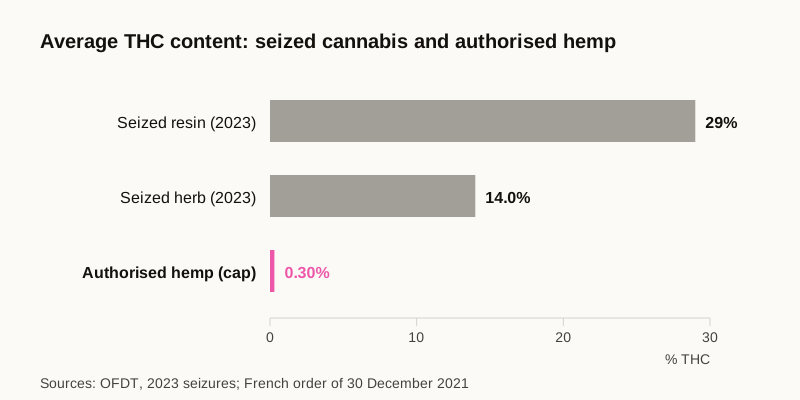
The gap is wide. According to OFDT, the French drug monitoring centre, herb seized in France averaged 14.0% THC in 2023, against 10.4% in 2011, and resin 29%, against 12.3% in 2011. The order of 30 December 2021 caps authorised hemp at 0.30% delta-9-THC and applies the same cap to extracts and products containing them. Seized herb therefore holds, on average, about 47 times more THC than this cap.
| Criterion | Beuh (cannabis) | Compliant CBD flower |
|---|---|---|
| Species | Cannabis sativa L. | Cannabis sativa L. |
| Variety | No control | Listed in the official catalogue |
| Delta-9-THC | 14.0% on average in seized herb (2023) | 0.30% at most |
| Status | Controlled drug | Sale authorised |
CBD itself is not a narcotic under the 1961 Single Convention. The Court of Justice of the European Union ruled so in the Kanavape judgment of 19 November 2020, and on 29 December 2022 the Conseil d'État, France's highest administrative court, annulled the ban on selling hemp flowers and leaves. The threshold and how it is measured are covered in our article on the legal THC level, and the botanical differences in our piece on hemp and recreational cannabis.
What French law says about beuh in 2026
Using beuh remains an offence. According to Service-public.fr, the government's official information site, drug use is punishable by one year in prison and a €3,750 fine. Since 20 August 2026, the fixed fine that can replace prosecution is €500, reduced to €400 if paid within 15 days and raised to €1,000 after 45 days.
Driving is a separate case, and it also concerns CBD. The Cour de cassation ruled on 21 June 2023 that the authorisation to sell certain hemp derivatives changes nothing to the offence of driving after drug use: it is enough for THC to be detected, whatever the dose. The penalties, raised to 3 years in prison and a €9,000 fine in 2025, are detailed in our article on CBD and driving.
How to recognise a compliant CBD product
A CBD flower and a bud of beuh cannot be told apart by eye or by smell: they share the same structure and similar terpenes, the plant's aromatic molecules. Only a lab analysis can tell. Three lines matter on the certificate of analysis:
- delta-9-THC, at 0.30% at most, and THCA, its acidic form, which turns into THC when heated;
- the batch number, which must match the product sold;
- the absence of banned cannabinoids: HHC since 2023, then H4CBD and THCP, which ANSM added to the list of narcotics in June 2024.
Our guide to reading a certificate of analysis goes through each line, and our laboratory page describes the measurement methods. A seller who plays on "beuh" or "weed" vocabulary to hint at a high should make you wary: either the product does not do what is implied, or it is not compliant. The risks of buying outside the legal framework are described in our article on buying cannabis online. The CBD flowers in the catalogue show their measured THC content.
Frequently asked questions
What does "beuh" mean?
It is an informal French word for "marijuana", according to Le Robert: cannabis herb, made of dried flowers and leaves. It comes from "herbe" turned into back-slang.
Is beuh a drug?
Yes. THC-rich cannabis is a controlled drug in France. Using it is punishable by one year in prison and a €3,750 fine, or a €500 fixed fine since 20 August 2026.
Is CBD legal beuh?
No. Both come from the same species, but a compliant CBD flower comes from an authorised variety and contains at most 0.30% delta-9-THC, against an average of 14.0% for herb seized in 2023. CBD does not produce the effect people look for under the word "beuh", as our article does CBD get you high explains.
Why do people say "weed"?
"Weed" means an unwanted plant in English. The word has entered informal French as a synonym for "beuh" and also refers to cannabis herb.
Can a CBD flower make a saliva test positive?
Yes. A compliant flower contains traces of THC, and the Cour de cassation ruled in 2023 that the product's legality does not protect the driver. Our drug testing guide details detection windows.
Written by the Phytogrammes team
Every article in this journal draws on primary sources (ANSM, EFSA, EUR-Lex, peer-reviewed publications) and on the lab's own practice: batch-by-batch HPLC analyses, measured cannabinoid profiles. Our approach.
Article published on . CBD is not a medicine.